AMD processors appear in consumer PCs, commercial laptop fleets, engineering workstations, servers, and long-life embedded equipment. The product names can look similar, but the buying criteria are not. A desktop Ryzen processor, an EPYC server CPU, and an embedded Ryzen part may all use related CPU architecture, yet they support different platforms, operating conditions, lifecycle expectations, and validation paths.
This guide explains the main AMD processor families and the applications they are built for. It is written for buyers who need to move beyond a brand name and confirm the exact processor, platform, and procurement requirements before issuing a purchase order.
What are AMD processors and why do product families matter?
AMD processors are central processing units used in desktops, laptops, workstations, servers, and embedded systems. AMD’s current processor portfolio spans consumer, commercial, workstation, data-center, and embedded products. The company’s Zen CPU architecture is used across Ryzen, Threadripper, and EPYC families, but shared architecture does not make the parts interchangeable. AMD’s processor portfolio separates these products by workload and platform for a reason.
For a purchasing team, the family name is a starting point rather than a complete specification. The exact orderable part number can determine the socket or BGA package, core count, integrated graphics, memory type, PCIe capability, thermal design power, security features, support period, and original equipment manufacturer qualification. A Ryzen 7 name alone is not enough to approve a replacement.
Before requesting a quote, identify whether the project needs a desktop CPU, mobile CPU, commercial platform, workstation processor, server CPU, or embedded solution. Then confirm the full model number and suffix against the current AMD product page or datasheet.
| Buying question | Warum das wichtig ist | Anzufordernde Nachweise |
|---|---|---|
| Exact AMD orderable part number | Similar family names can use different sockets, packages, or features. | Manufacturer part number and product-page reference |
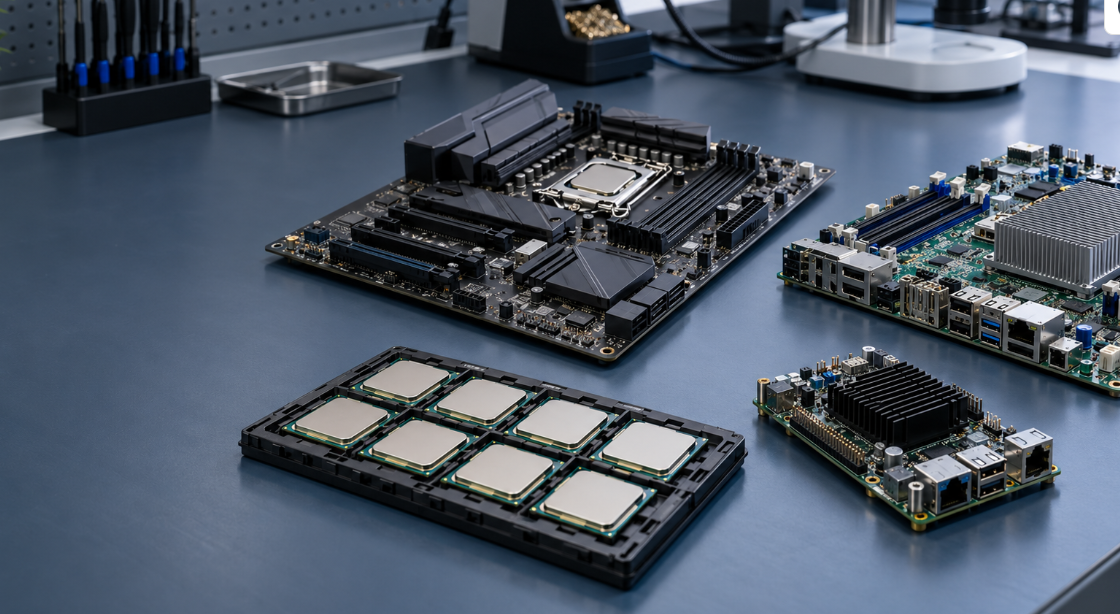
| Platform and package | A processor must match the motherboard or system design. | Socket or BGA package, chipset, BIOS requirement |
| Application and duty cycle | Desktop, server, and embedded workloads have different priorities. | Intended system, operating environment, and performance requirement |
| Lifecycle requirement | Industrial and commercial programs may require stable supply planning. | Lifecycle status and customer-specific supply requirement |
AMD Ryzen processors for consumer desktops and laptops
AMD Ryzen is the broad consumer processor family for desktop PCs and laptops. It is commonly selected for gaming systems, home computers, content creation, and general productivity. Desktop Ryzen parts are normally assessed with the motherboard socket, chipset support, memory compatibility, cooling design, and graphics card configuration. Laptop Ryzen processors are selected as part of a complete OEM system, so the laptop maker’s cooling, memory, display, battery, and firmware choices also affect the final result.
For desktop buyers, Ryzen 3, Ryzen 5, Ryzen 7, and Ryzen 9 labels generally indicate different market tiers, but they do not replace a workload review. A higher tier may offer more cores, higher clocks, more cache, or a different feature mix. Gamers may focus on game performance and graphics compatibility. A creator may care more about multicore performance, memory capacity, storage lanes, and application certification.
Some Ryzen models include integrated Radeon graphics, while others are typically paired with a discrete graphics card. AMD also offers models with 3D V-Cache technology for certain gaming-focused use cases. The right choice depends on the intended system, not on the product name alone. Review the current AMD product specifications before finalizing a build or procurement list.
For laptop programs, do not approve a CPU from its retail name alone. Confirm the complete OEM model, processor suffix, memory configuration, storage, operating system image, wireless module, and regional power adapter. These system-level details can change both user experience and service planning.
AMD Ryzen PRO processors for business systems
AMD Ryzen PRO processors are intended for commercial desktop and laptop systems. They add an enterprise-oriented platform proposition that includes AMD PRO technologies for security, manageability, stability, and support planning. AMD describes the PRO range as distinct from consumer products because business PC fleets need deployment, management, and lifecycle considerations in addition to performance.
This family fits managed office PCs, remote-work laptops, engineering desktops, and other commercial deployments where IT teams need a consistent platform. Depending on the model and system design, a buyer may also be evaluating on-device AI capability, remote-management support, operating-system image consistency, and supplier support terms.
Commercial buyers should validate the processor together with the OEM system. Security and manageability features are not a substitute for an organization’s own endpoint policy, firmware configuration, and software controls. The final purchase should be tied to the selected OEM model and its published configuration.
Request the exact processor part number, system SKU, BIOS version, operating system, warranty region, and planned availability information. If your program needs a fixed image or a multiyear rollout, record those needs in the purchase specification instead of assuming every Ryzen PRO system is identical.

AMD Ryzen Threadripper and Threadripper PRO for workstations
Ryzen Threadripper and Threadripper PRO processors are designed for high-end desktop and professional workstation environments. They are relevant when a standard desktop platform becomes a constraint, especially for workloads that need substantial CPU throughput, memory capacity, PCIe expansion, or several high-speed storage and graphics devices.
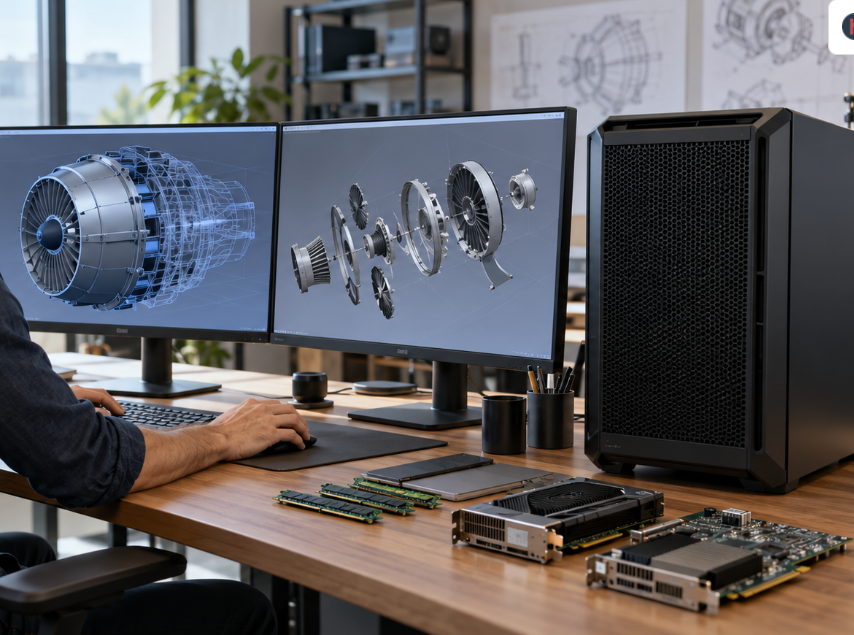
Typical workstation applications include CAD, 3D rendering, video production, simulation, software compilation, scientific analysis, and local AI development. A workstation evaluation should also consider the graphics card, RAM population, storage architecture, operating system, and application certification. CPU core count is only one part of that decision.
Threadripper PRO platforms are often used in professionally managed workstations where memory bandwidth, I/O expansion, and platform controls matter alongside compute performance. AMD’s Threadripper workstation page lists applications such as design, simulation, content creation, and AI workflows.
For a workstation purchase, confirm the exact processor, socket, motherboard, memory type and capacity, PCIe lane allocation, cooling solution, and power supply. If the application relies on a specific CAD, rendering, or engineering tool, obtain the software vendor’s recommended hardware requirements before approving a configuration.
AMD EPYC processors for servers, cloud, and data centers
AMD EPYC processors are server CPUs for data centers, cloud environments, enterprise infrastructure, and high-performance computing. They are used for virtual machines, databases, analytics, storage, web services, scientific computing, and AI-related infrastructure. Server platforms are evaluated as a system because memory channels, PCIe connectivity, network adapters, storage controllers, firmware, and power design all affect deployment.
EPYC is not a drop-in alternative for a consumer desktop processor. A server CPU must match the server motherboard socket, supported memory generation, BIOS release, chassis cooling, power budget, and virtualization or operating-system requirements. In a dual-socket platform, the two CPUs should usually match the server manufacturer’s approved configuration and the buyer’s workload design.
For cloud and virtualized environments, compare core count, per-core performance, memory capacity, I/O needs, licensing model, power limit, and rack density. For engineering or HPC workloads, memory bandwidth, interconnect design, accelerator compatibility, and software stack may matter as much as total core count.
Ask for a server bill of materials, not just an EPYC model number. The purchase file should state the processor, motherboard or server SKU, DIMM part numbers, network and storage configuration, firmware baseline, and any required compliance or support documents.
AMD embedded processors for industrial and edge computing
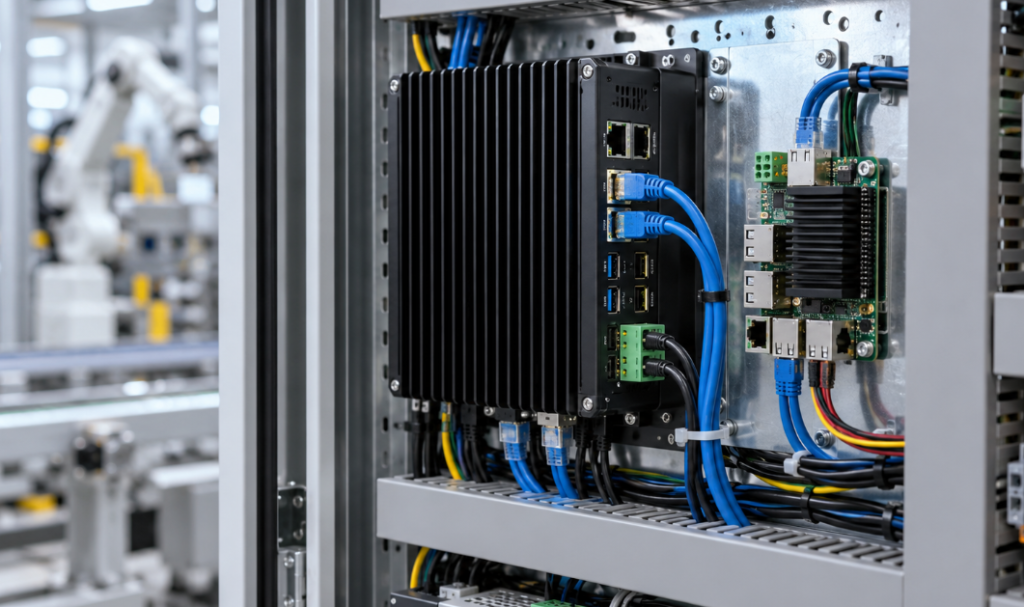
AMD also supplies embedded processor families for industrial, networking, storage, edge, retail, and other specialized systems. Embedded products are chosen differently from retail desktop CPUs. Designers and program managers may need long availability, controlled change planning, a compact BGA package, defined thermal behavior, extended environmental requirements, or a vendor-supported board design.
Applications can include industrial PCs, edge servers, network appliances, storage appliances, point-of-sale systems, digital signage, imaging equipment, and medical devices. The required processor is tied closely to the complete board and system design. A replacement may require hardware review, BIOS work, operating-system validation, thermal testing, and product certification review.
AMD’s embedded portfolio includes Ryzen Embedded and EPYC Embedded products. EPYC Embedded is positioned for networking, storage, industrial edge systems, and applications that need extended product availability. That does not mean every embedded model meets every lifecycle or environmental requirement. Check the exact product documentation and your system qualification plan.
When sourcing an embedded processor, record the complete part number, package, stepping or revision requirement, operating-temperature grade, lifecycle status, board revision, and programmed firmware relationship. Engineering approval should be required before substituting a different suffix or stepping.
How to choose and source the right AMD processor for your project
Start with the application, then narrow the processor family. A gaming desktop may need Ryzen and a compatible AM5 platform. A commercial laptop fleet may need a Ryzen PRO OEM configuration. A rendering workstation may justify Threadripper PRO. A virtualized server needs an EPYC-qualified platform. An industrial appliance may require an embedded part with a documented lifecycle plan.
Use the following checks before approving an AMD processor order:
- Match the full manufacturer part number. Verify family, series, suffix, package, socket, stepping requirement, and regional or OEM restrictions. Do not accept a family-level substitution without engineering review.
- Check platform compatibility. Confirm motherboard or system SKU, chipset, BIOS, memory type, cooling, power delivery, and PCIe requirements.
- Review lifecycle and change risk. Check the manufacturer’s current product-status information and request written clarification if the program has a long production horizon.
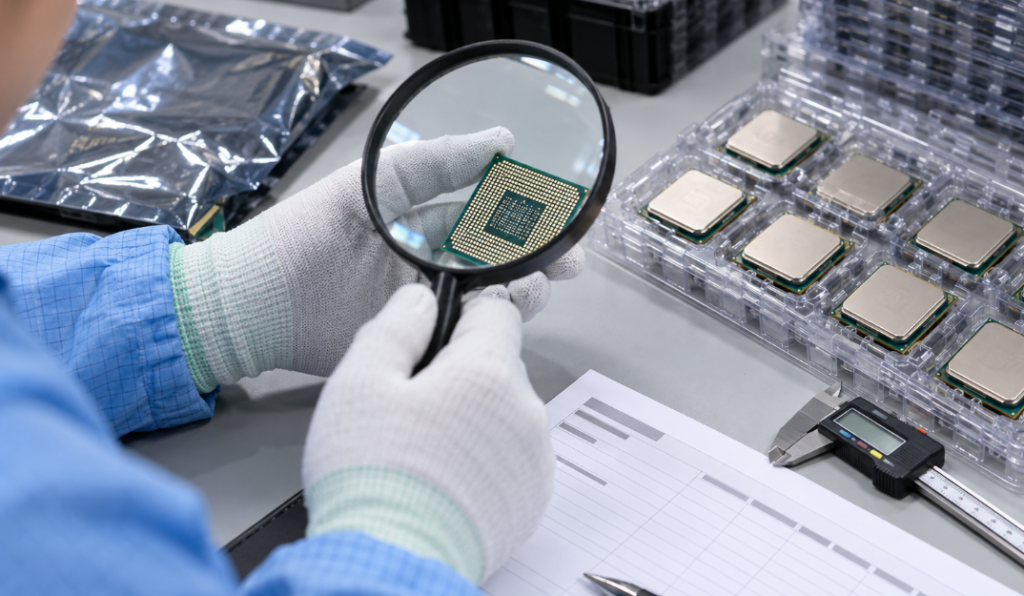
- Define quality evidence. For supply outside a clearly documented manufacturer channel, request current photos of the processor, label, packaging, quantity, date code or lot information where applicable, and available chain-of-custody documents.
- Set an inspection level that matches the risk. Receiving inspection can include package and label review, visual inspection, quantity confirmation, and documentation review. Higher-risk or safety-critical applications may require a buyer-approved external test plan. Inspection results must be interpreted by qualified personnel and do not replace application validation.
Independent sourcing can be useful when a part is difficult to locate, but it requires clearer controls. Confirm whether stock is physically on hand or supplier-held, whether lots are mixed, whether the package is original or repacked, and whether the available evidence meets your internal quality requirements. A mismatch in a label or marking is a reason to pause and investigate. It is not, by itself, proof of counterfeit material.
DuoLinks computing and semiconductor category includes processor-related products and components for computing applications. For a BOM or hard-to-find requirement, submit the full manufacturer part number, quantity, target system, date-code limits, packaging requirement, target delivery date, and documentation needs through DuoLink Electronics. DuoLink is an independent electronic-component supplier. Availability, condition, documentation, and suitability should be confirmed for each request.
Fazit
AMD processors cover several different computing markets. Ryzen is the core consumer desktop and laptop family. Ryzen PRO supports commercial systems. Threadripper and Threadripper PRO address demanding workstation configurations. EPYC supports server and data-center infrastructure. Embedded products serve system designs with specialized integration and lifecycle needs.
The safest purchasing method is to select the family by application, then verify the full part number and platform details before placing an order. For sourcing support, provide DuoLink Electronics with your approved manufacturer part number, quantity, project application, delivery requirement, and documentation expectations so the request can be reviewed against the actual supply offer.
Häufig gestellte Fragen
What is the difference between AMD Ryzen and AMD EPYC processors?
Ryzen processors are mainly used in consumer desktop and laptop systems. EPYC processors are server CPUs for platforms that need server memory, I/O, virtualization, and data-center features. They use different platform requirements and should not be treated as direct substitutes.
Is AMD Ryzen PRO the same as consumer Ryzen?
Ryzen PRO is designed for commercial systems and AMD PRO technologies add business-oriented security, manageability, stability, and support considerations. Confirm the exact processor and OEM system because feature availability depends on the selected model and platform.
Can Threadripper replace an EPYC server CPU?
Threadripper is built for high-end desktops and workstations. EPYC is designed for server platforms. A replacement decision requires engineering review of the motherboard, memory, I/O, operating system, workload, cooling, and support requirements.
What should I verify before buying an AMD processor from an independent supplier?
Verify the full manufacturer part number, package or socket, condition, lot or date-code requirement where applicable, packaging, quantity, source documentation, and platform compatibility. Agree on inspection and acceptance criteria before shipment if the application risk is high.

 German
  English
  Spanish
  French
  Chinese
  Italian