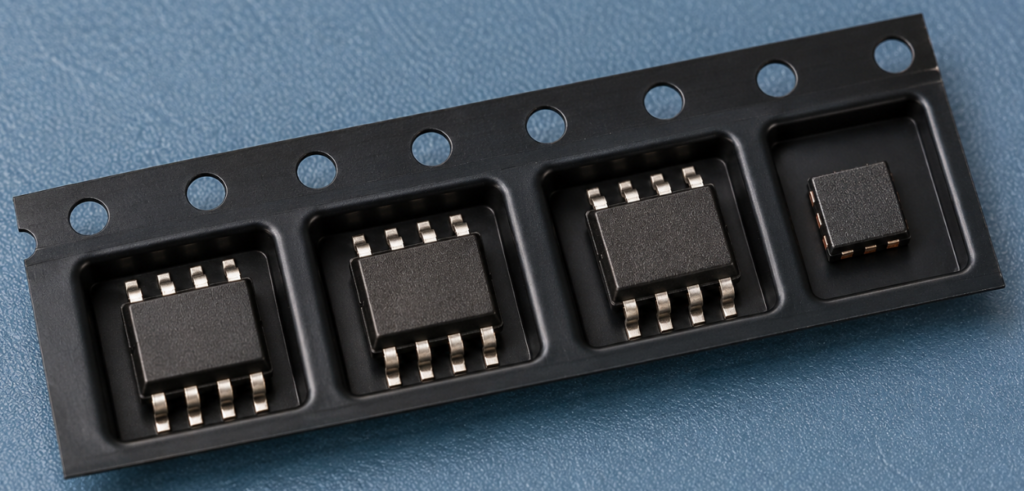
Flash memory and an EEPROM both retain data when power is removed. The practical difference is how they update it: conventional EEPROM supports small, addressable changes, while flash normally requires a larger sector or block to be erased before previously programmed data can be rewritten. Flash suits firmware and larger datasets; EEPROM often suits settings and calibration values that change during operation.
For purchasing teams, capacity is only the starting point. A memory device must also match the controller, update workload, operating voltage, package and required service life. Two chips that look alike can need different hardware connections and software.
What Are Flash Memory and EEPROM?
EEPROM stands for electrically erasable programmable read-only memory. Despite the name, it can be rewritten electrically. Dedicated data EEPROM may be built into a microcontroller, or supplied as a separate memory IC. It is commonly used for constants and persistent application values. Flash also stores data without continuous power and is widely used for executable code. Microchip distinguishes these roles in its memory documentation.
Flash comes in different forms. NOR flash supports random reads and, with compatible hardware, direct code execution. NAND flash suits larger sequential datasets, but raw NAND requires appropriate error correction and bad-block management. A NAND device, a serial NOR chip and internal microcontroller flash should not be treated as interchangeable categories.
This comparison focuses mainly on conventional serial EEPROM, embedded flash and serial NOR flash. When reviewing integrated circuits for a BOM, specify the memory technology as well as its capacity. “Nonvolatile memory, 8-pin” is not enough information to select a replacement.
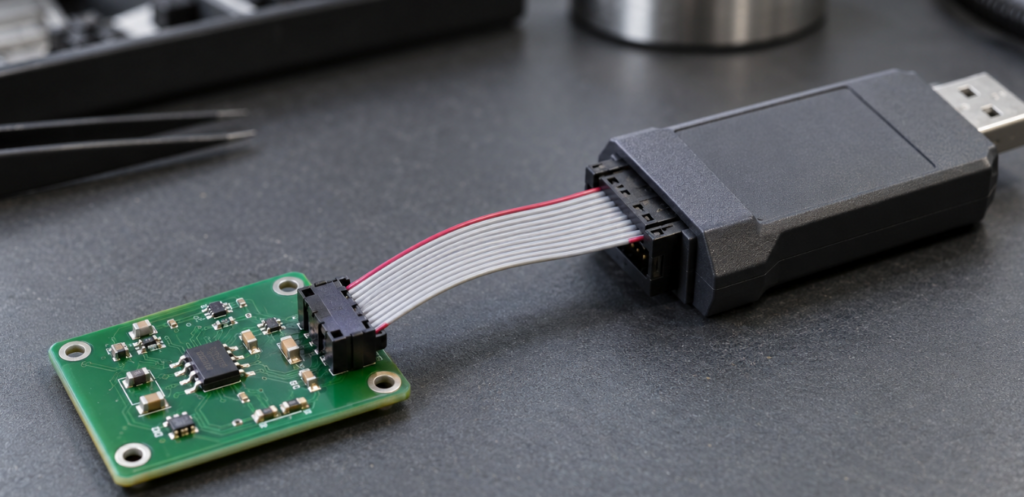
How Do Flash Memory and EEPROM Erase and Write Data?
Three different units matter: the amount software can address, the amount it can program in one operation, and the amount an erase operation affects. They do not have to be equal.
Conventional serial EEPROM usually accepts a byte write or a page write and manages the internal erase/write sequence itself. The host does not normally issue a separate sector-erase command before updating an address. Page boundaries still matter: sending a write across the boundary can wrap data within the page rather than continue into the next one, depending on the device.
For conventional NOR flash, programming changes erased bits from 1 to 0. Returning programmed bits to 1 requires erasing the containing sector. A short program operation therefore does not mean a short erase operation. Follow the specific device’s restrictions on repeated programming, alignment and any internal error-correction scheme.
Consider a four-byte setting stored beside other useful data in a flash sector. A rewrite that needs erased bits may require preserving the valid contents, erasing the sector and programming the retained data together with the change. Alternatively, software can append a new record to unused space and reclaim old records later. These are engineering choices that affect RAM requirements, timing and recovery after interrupted power.
For a concrete comparison, the Microchip 24LC256 datasheet describes a 64-byte page-write buffer. The SST26VF064B NOR device supports 256-byte program pages and 4-Kbyte sector erases. These are examples, not universal sizes.
Before approving either part, ask engineering to confirm the smallest update, the boundary rules and the maximum interruption the system can tolerate.
Flash vs EEPROM: Capacity, Speed, and Cost
“Flash is faster” is incomplete. Reading a firmware image, programming an empty page and rewriting one setting are different workloads. Interface clock frequency also differs from the time needed to finish storing data internally.
| Comparison | Flash memory | Conventional EEPROM | What buyers should confirm |
|---|---|---|---|
| Capacity | Generally suited to larger code or data storage; NOR and NAND differ substantially | Often selected for smaller persistent datasets; larger devices also exist | Required usable capacity, reserved space and growth allowance |
| Read performance | Depends on interface, access mode and controller; NOR supports random reads | Depends on interface and transaction overhead | Actual access time for the application’s transfer size |
| Small updates | May need sector management when reusing programmed locations | Usually supports direct byte or page updates | Worst-case completion time, including erase or cleanup |
| Bulk writes | Page programming can be efficient; erase and management overhead still apply | Page writes improve efficiency compared with repeated byte writes | Complete transfer time, including internal busy periods |
| Cost per bit | Generally lower in comparable mainstream applications | Generally higher | Comparable grade, package, quantity and sourcing conditions |
| Total system cost | Can include software, spare sectors and validation | Adds a device when used externally, but may simplify update management | Complete BOM and development cost |
Microchip’s automotive memory comparison illustrates the broad cost-per-bit tendency, while its NAND application note explains why NOR and NAND serve different access patterns. Neither establishes a universal price or speed ranking for every product.
For example, the 24LC256 allows a maximum 400-kHz I²C clock, but its self-timed write can take up to 5 ms. Raising the bus clock does not remove that internal write time. Procurement comparisons should use the datasheet’s maximum timing under the required conditions, rather than compare interface frequencies alone.
For quotations, request the same operating grade and commercial conditions from each supplier. A lower component price may offer little benefit if the proposed change requires a new driver, PCB revision or another qualification cycle.
How Do Endurance and Data Retention Compare?
Endurance describes how many erase/write or program/erase cycles a specified memory unit can withstand under stated conditions. Data retention describes how long stored information remains valid under stated conditions. A retention rating is not a promise that the device can be rewritten throughout that period without limit.
Published ratings vary considerably. The 24LC256 family lists more than one million erase/write cycles and retention beyond 200 years under its documented conditions. The SST26VF064B documentation specifies at least 100,000 endurance cycles and a 100-year retention parameter. These figures belong to that device and its documented qualification conditions; they are not ratings for every flash chip.
Another important detail appears in the 24LC256 family datasheet: even a write shorter than a page refreshes the remaining page data, so endurance is specified per page. Byte-addressable updates do not necessarily mean each byte has an independent wear budget.
Use the datasheet to identify the rated unit, applicable temperature and any retention-after-cycling conditions. Request clarification from the manufacturer when the required operating profile is not covered clearly. An attractive headline figure cannot settle a lifetime calculation by itself.
As an illustrative planning calculation, one update per minute produces 525,600 updates in a 365-day year. If every update stresses the same rated memory unit, that concentration of writes deserves attention. This calculation estimates workload only; it does not predict the failure date of a device.
Avoid unnecessary saves, combine changes where practical and distribute writes when the design calls for it. Engineering should calculate wear for both data and frequently updated metadata, then allow a suitable margin. The buyer’s role is to procure the approved part and grade rather than substitute a device on the strength of capacity alone.
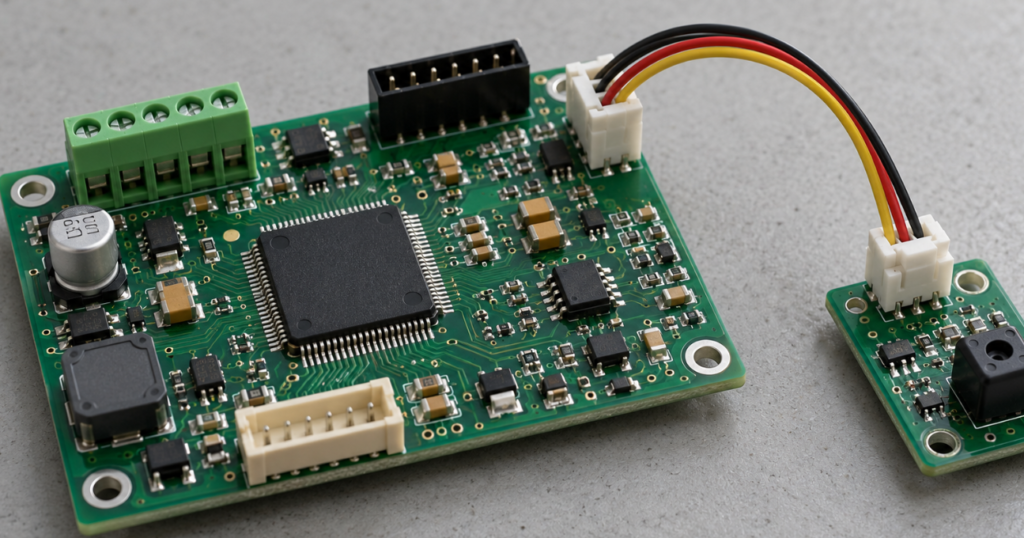
When Should You Use Flash Memory or EEPROM?
Start with the size and behavior of the data. The following choices are design starting points that require confirmation against the actual hardware and workload.
| Applicazione | Likely starting choice | Decision to resolve before sourcing |
|---|---|---|
| Firmware or boot image | Embedded flash or compatible NOR flash | Boot support, read mode, image size and update recovery |
| User settings | EEPROM or validated flash emulation | Update frequency, record size and power-loss behavior |
| Calibration parameters | EEPROM or protected flash storage | Retention conditions, write protection and recovery copies |
| Small persistent counters | EEPROM or another approved solution | Hotspot wear and required save interval |
| Larger operating logs | Flash with suitable data management | Data rate, storage duration, cleanup and wear distribution |
A device may use both technologies: flash for firmware and EEPROM for independently updated settings. Conversely, a product with infrequent configuration changes may use internal flash successfully if the software and memory allocation support it. For the wider controller decision, our Guida alla scelta dei microcontrollori places these memory requirements alongside peripherals, processing needs, power, and development support.
Treat calibration values according to the consequence of losing them. A rarely updated coefficient can still be critical. Ask engineering whether checksums, redundant records or protected factory values are needed, and specify the required retention environment.
For frequent operating data, define what actually needs to survive a power cut. Saving every transient measurement may create unnecessary wear. If the update rate exceeds the approved flash or EEPROM design, have engineering evaluate a different nonvolatile technology rather than merely order a larger part.
Can Flash Memory Replace EEPROM?
Yes, in some designs. EEPROM emulation uses software to present persistent variables or records while managing flash underneath. It does not give the physical flash cells the characteristics of a dedicated EEPROM.
STMicroelectronics application note AN4894 describes an implementation using at least two flash pages, record transfer, wear leveling and recovery mechanisms for resets or power failures. Its supported-device list matters; use the documentation and software applicable to the exact MCU family.
A purchasing decision to remove an external EEPROM should follow engineering approval. Confirm the reserved flash area, usable variable capacity, worst-case cleanup time, expected cycling and any effect on execution while flash is busy. Also check that firmware updates preserve or intentionally migrate the stored data.
Validation should interrupt power during the operations that matter: recording a change, moving valid records and erasing old space. The acceptance criterion should describe which complete record must be recovered on restart. A successful write/read test under steady power does not establish safe recovery.
An external EEPROM also needs power-loss planning; it is not automatically immune to an interrupted write. Compare the timing and recovery requirements of both validated implementations.
Flash emulation can reduce component count, but the engineering effort and reserved memory have a cost. Record the approved approach in the BOM and firmware specification so a later sourcing change does not silently alter it.
What Should Buyers Check Before Ordering Flash or EEPROM?
Begin with the complete manufacturer part number and approved datasheet revision. Similar names and identical-looking packages do not establish electrical compatibility.
Check the electrical and software match, including usable density, address format, interface, supported commands, supply range, I/O levels and startup behavior. The 24AA256 and 24LC256, for instance, share a datasheet but have different minimum supply voltages. Review write-protection behavior and page handling as part of the same approval.
For the mechanical and operating grade, verify package code, footprint, pinout, temperature range and packing option. An eight-pin EEPROM and an eight-pin serial NOR device can assign their pins differently. For automotive or other controlled applications, obtain evidence for the exact ordering code and customer-required qualification. A broad family description is insufficient.
Define the lifetime requirement with write frequency, rated wear unit, maximum operating temperature and required retention in the technical specification. A purchasing description such as “high-endurance memory” leaves too much open to interpretation.
Before accepting the offer, ask whether the devices are blank or programmed, new or otherwise disclosed, and supplied in original or repacked packaging. For programmed parts, define the approved image, revision, verification method and protection settings. State lot-mixing restrictions and documentation requirements before the order is accepted.
Request available lot information, label photographs and sourcing records in proportion to the application risk. Compare them with the quoted part number and agreed condition. Visual checks can reveal inconsistencies, but photographs alone cannot establish authenticity or demonstrate electrical performance.
Finally, distinguish listed availability from confirmed stock and agree on lead time, inspection scope and return terms. If an alternative is offered, require engineering approval before changing the BOM. DuoLink Electronics’ sourcing overview provides context for its role as an independent component supplier; the documentation available for a particular offer should be confirmed individually.
Conclusione
To differentiate flash memory and an EEPROM, look beyond capacity. Compare how each part updates data, what an erase affects, how wear is rated and what software must do to protect valid records. Flash often fits firmware and larger datasets; EEPROM often simplifies small persistent updates. The approved datasheet and application workload determine the final choice.
DuoLink Electronics is an independent electronic-component supplier offering component sourcing and BOM quotation support. To submit a memory sourcing inquiry, include the manufacturer, complete part number, quantity, application, operating grade, programming requirements and documentation needs. Availability and any proposed alternative should be confirmed before ordering.
Domande frequenti
What is the main difference between flash memory and an EEPROM?
Conventional EEPROM normally allows small updates without a separate host-issued sector erase. Flash generally erases a larger region before programmed locations can be reused. Check the specific part’s program and erase rules.
Is EEPROM always faster than flash for writing?
No. Compare complete operations at the required data size. An EEPROM write has an internal busy period; a flash update may include sector erase or record cleanup. Interface clock speed alone does not answer the question.
Does a byte write consume only one byte’s endurance?
Not necessarily. Some EEPROM devices refresh a larger internal unit during a short write. The 24LC256 family specifies endurance per page. Confirm the wear unit in the manufacturer’s documentation.


 Italian
 English
 German
 Spanish
 French
 Chinese