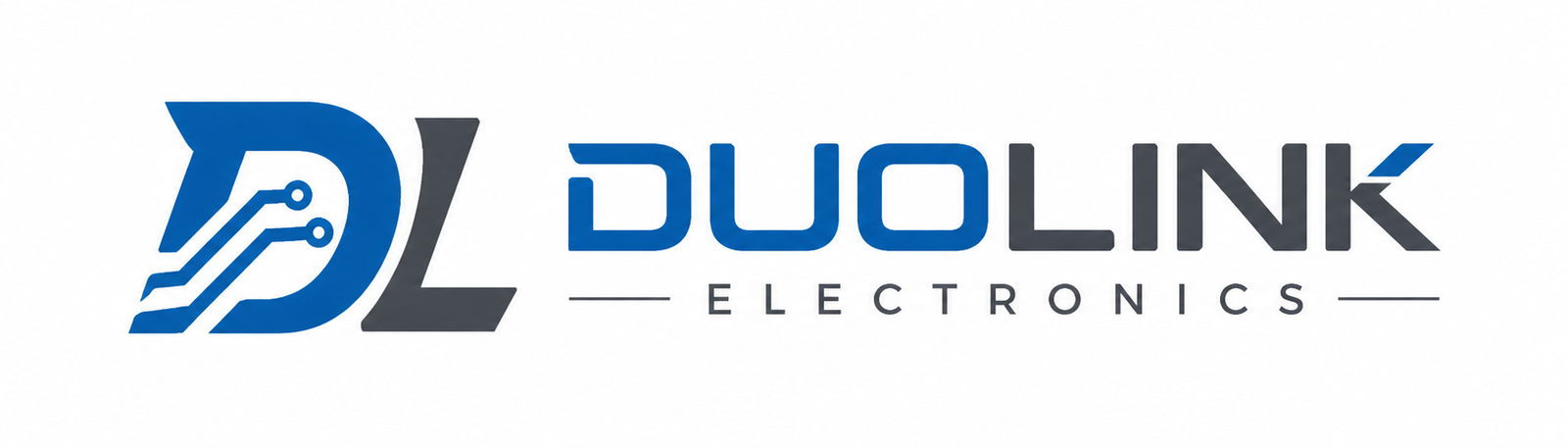
For overseas buyers, the biggest concern in purchasing electronic components is not the inability to find suppliers, but rather the problem that once a supplier is found, the model cannot be accurately confirmed, the delivery schedule is unstable, or a complete BOM list cannot be provided. Especially for products such as ICs, semiconductors, and connectors, a slight difference in model can lead to the entire batch of materials being unusable.
This is why electronic component distributors play a crucial role in the supply chain. Professional distributors can help customers reduce communication costs, integrate multiple brand resources, and confirm the model, packaging, inventory status and alternative solutions before purchasing, making the procurement process clearer and more reliable.
Duolink Electronics serves overseas customers in the fields of electronic manufacturing, industrial automation, automotive electronics, and communication equipment, providing services such as electronic component sourcing, BOM quotations, and inventory inquiries. In this article, we will start from the perspective of procurement and explain what an electronic component distributor is, as well as how to determine whether a distributor is worthy of cooperation.
What Does an Electronic Component Distributor Do?
Definition of an Electronic Component Distributor
An electronic component distributor is a company that buys parts from manufacturers and resells them to buyers who need smaller quantities, faster delivery, or a wider product mix than a single factory can offer. Rather than manufacturing anything itself, a distributor holds inventory, manages logistics, and provides technical support so purchasing teams don’t have to negotiate directly with dozens of separate factories. Some distributors specialize in a narrow product line, while others, working as a broader electronic components distributor covering integrated circuits, semiconductors, and passive parts under one roof, serve a wider base of design and procurement teams. That flexibility is a major reason engineers and buyers rely on distributors rather than sourcing everything factory-direct.
The Role Between Manufacturers and Buyers
A distributor sits between two very different worlds. Manufacturers focus on high-volume production, long lead times, and large minimum order quantities. Buyers, on the other hand, often need smaller batches, quick samples, or a mix of parts from several different brands for one project. Bridging that gap requires warehousing, quality checks, and a purchasing team that understands both sides. Good distributors also translate technical specifications between engineers and factories, which reduces the risk of ordering the wrong part number or an incompatible package type. This translation role becomes especially valuable when a project pulls components from multiple manufacturers at once.
Why Distributors Matter in Electronics Procurement
Procurement teams face constant pressure to keep production lines running without overstocking inventory. A missed shipment or counterfeit part can delay an entire product launch. This is exactly why compliance frameworks such as the RoHS Directive on hazardous substances exist, and why working with a distributor that understands these regulations matters. A reliable partner helps buyers avoid these risks by verifying part authenticity, tracking factory lead times, and keeping safety stock available for components that are prone to shortages. For smaller and mid-sized manufacturers without a large in-house sourcing department, this support often makes the difference between staying on schedule and falling behind.
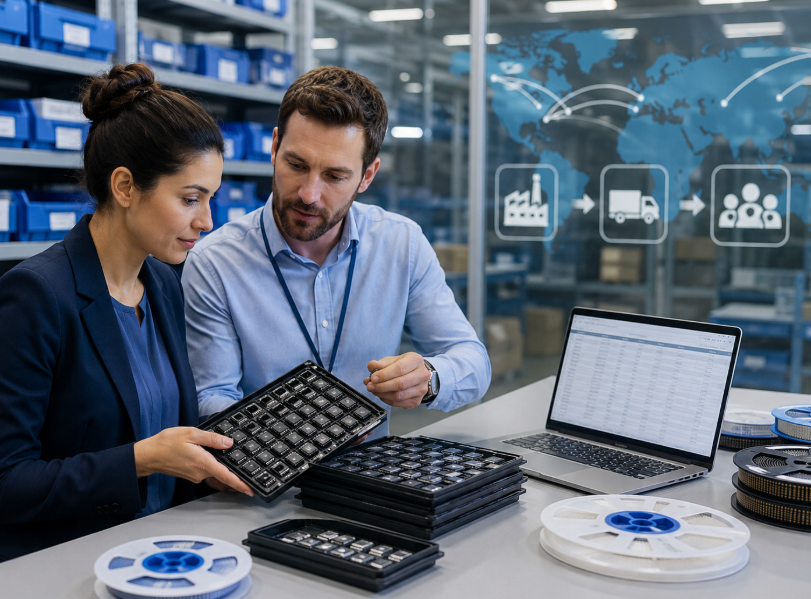
Main Types of Electronic Components Distributors Supply
Integrated Circuits and Semiconductors
Integrated circuits and semiconductors make up one of the largest categories moving through distribution channels. This includes microcontrollers, power management ICs, amplifiers, and both analog and digital chips used across consumer electronics, industrial equipment, and automotive systems. If the basic building blocks involved aren’t already familiar, our guide on what an integrated circuit is and how it functions offers useful background before comparing suppliers. Because semiconductor shortages can appear with little warning, buyers often depend on distributors to track allocation, flag upcoming shortages, and suggest functionally equivalent parts before a shortage disrupts a production run.
Passive Components, Connectors, and Relays
Passive components — resistors, capacitors, inductors — rarely get much attention, but a board simply will not function without them. Connectors and relays add another layer of complexity, since these parts must match mechanical specifications as precisely as electrical ones. A distributor that stocks a wide range of passive components alongside connectors and relays lets buyers consolidate multiple purchase orders into one shipment, which cuts down on freight costs and paperwork. Procurement teams juggling dozens of line items per BOM save real time when one supplier can fulfill most of the list.
Hard-to-Find and Obsolete Electronic Parts
Not every part on a bill of materials is still in active production. Older equipment, long product life cycles, and legacy designs frequently require components that manufacturers discontinued years ago. Locating these parts takes a different skill set than sourcing current inventory — it involves searching secondary markets, verifying authenticity more carefully, and sometimes negotiating with brokers who specialize in end-of-life stock. Distributors experienced in obsolete part sourcing can often locate a match or a suitable substitute faster than an engineering team working alone, which keeps legacy products in production longer than buyers might expect.
| Category | Examples | 典型應用案例 |
|---|---|---|
| Integrated Circuits & Semiconductors | Microcontrollers, power ICs, analog/digital chips | Consumer electronics, automotive, industrial control |
| Passive Components | Resistors, capacitors, inductors | Power supplies, filtering, signal conditioning |
| Connectors & Relays | Board-to-board connectors, automotive relays | Wiring harnesses, switching circuits |
| Obsolete / Legacy Parts | Discontinued ICs, legacy connectors | Equipment repair, long-life industrial systems |
How an Electronic Component Distributor Supports BOM Sourcing
What Is BOM Sourcing?
BOM sourcing means taking a full bill of materials — the complete list of parts required to build a product — and finding a reliable, cost-effective way to purchase every line item. A single BOM might include chips from five different manufacturers, connectors from another two, and a handful of passive components that need to match exact tolerances. Handling this manually, one supplier at a time, eats up hours that an engineering or purchasing team could spend elsewhere. Distributors streamline the process by accepting a full BOM upload and returning availability, lead time, and alternative options in one pass.
Part Number Matching and Availability Checking
Every manufacturer part number carries specific details about package type, tolerance, voltage rating, and more. A distributor’s sourcing team cross-references each line against current stock, verifies whether a part is still active in production, and flags any discrepancies before an order gets placed. This step catches costly mistakes early — ordering the wrong footprint or an end-of-life revision can derail an entire build. Buyers comparing analog versus digital IC options for a design, for example, often lean on a distributor’s technical team to confirm which variant actually matches their BOM requirements.
Alternative Parts When Components Are Unavailable
Shortages happen, and when they do, having a cross-reference option ready can save weeks of downtime. Many footprint and pinout specifications follow JEDEC standards, which makes it possible to identify a functionally compatible alternative from a different manufacturer without redesigning the board. A distributor familiar with these standards can suggest substitutes that meet the same electrical and mechanical requirements, then confirm the replacement part performs correctly before it ships. This kind of substitution support is one of the more overlooked benefits of working with an experienced electronic parts supplier rather than sourcing directly from a single factory.
Why Buyers Use Electronic Component Distributors
Faster Access to Different Brands and Categories
Few projects rely on a single manufacturer for every part. Buyers typically need chips from one brand, connectors from another, and passive components from a third — and coordinating separate purchase orders with each factory quickly becomes inefficient. An IC distributor carrying multiple brands under one account lets purchasing teams place a single order instead of managing three or four separate supplier relationships, each with its own minimum order quantity and shipping schedule.
Support for Small, Medium, and Production Orders
Startups building a prototype need a handful of samples. Established manufacturers scaling up need thousands of units delivered on a strict schedule. Distributors generally accommodate both ends of that spectrum, which factories often cannot do on their own since large-volume production lines aren’t built around small sample runs. This flexibility gives smaller companies a path to the same components larger competitors use, without committing to volumes they can’t yet justify.
Reducing Purchasing Time and Supplier Communication
Coordinating with multiple factories across different time zones, each with its own quoting process, adds friction to every purchase. Working with one distributor consolidates that communication into a single point of contact who understands the full order history and can answer technical questions quickly. Purchasing teams that have made this switch often report cutting sourcing time significantly, simply because they’re no longer chasing quotes from several separate vendors for one BOM.

Key Factors to Check Before Choosing a Distributor
Product Authenticity and Quality Control
Counterfeit components remain a real risk in the electronics supply chain, particularly for high-demand or shortage-prone parts. Ask any distributor how they verify authenticity before a part reaches your dock — traceability documentation, incoming inspection, and quality management systems aligned with standards like ISO 9001 are reasonable things to expect. A distributor unwilling to answer these questions directly is worth treating with caution, regardless of how competitive their pricing looks on paper.
Manufacturer Part Number Verification
Beyond authenticity, buyers need confirmation that the exact manufacturer part number, date code, and revision match what the BOM calls for. Datasheets change between revisions, and a part that looks identical on the surface can behave differently in a circuit. A distributor’s sourcing team should verify these details against the original manufacturer’s documentation before confirming an order, not after the parts have already shipped.
Delivery Time, Packaging, and Documentation
Moisture-sensitive components need proper packaging and handling, and many buyers require compliance paperwork such as certificates of conformity before parts can even enter their facility. Ask upfront about typical lead times, packaging standards, and what documentation ships with each order. A distributor that provides this information proactively, rather than only when asked, usually reflects a more mature and organized operation overall.
| 因子 | 製造商 | Distributor |
|---|---|---|
| Minimum Order Quantity | Typically high | Flexible, often low |
| Brand Variety | Single brand only | Multiple brands available |
| Lead Time for Small Orders | Often long or unavailable | Generally faster |
| Technical Cross-Referencing | Limited to its own product line | Cross-brand alternatives available |
| 最適合 | Large, single-brand production runs | Mixed BOMs, samples, flexible order sizes |
Distributor vs. Manufacturer: What Is the Difference?
When to Buy from a Manufacturer
Buying direct from a manufacturer makes sense when a project needs a single part number in very large volume, and the factory’s minimum order quantity fits comfortably within that plan. Large-scale production lines with predictable, long-term demand often negotiate pricing and lead times directly with the factory, cutting out the distribution layer entirely.
When a Distributor Is More Flexible
Smaller orders, mixed BOMs, or projects still in the prototyping stage rarely meet a manufacturer’s minimum order requirements. A distributor fills that gap by breaking large factory shipments into smaller, buyer-friendly quantities and keeping stock on hand for parts that would otherwise require a long factory lead time. This flexibility extends to payment terms and shipping options as well, which smaller manufacturers particularly value.
How Distributors Help with Multi-Brand Purchasing
Few products rely on a single chip manufacturer from start to finish. A design might combine a microcontroller from one brand, power management ICs from another, and connectors from a third — and a distributor carrying all three under one account turns three separate supplier relationships into one purchase order. This consolidation becomes especially valuable during global shortages, when buyers need to compare stock across brands quickly instead of contacting each factory separately.

How Duolink Helps with Electronic Component Sourcing
BOM Upload and Quotation Support
Duolink accepts full BOM uploads and returns availability, pricing structure, and lead time information without requiring buyers to submit each line item separately. This saves purchasing teams the back-and-forth that usually comes with sourcing dozens of parts across multiple categories, and it gives engineers a clear picture of which parts are ready to ship immediately versus which ones need a longer lead time. Buyers who want to start this process can reach the team directly through the 聯絡我們.
Sourcing ICs, Semiconductors, Connectors, and Passive Components
Duolink’s inventory spans integrated circuits, semiconductors, connectors, relays, and passive components, serving industries ranging from industrial automation to automotive electronics. This range matters because most real-world BOMs mix categories rather than sticking to one, and having a single distributor cover most of a design’s needs reduces the number of vendors a purchasing team has to manage.
Supporting Samples, Production Orders, and Difficult-to-Find Parts
Whether a buyer needs five samples for a prototype or several thousand units for a production run, Duolink structures its sourcing process to handle both without forcing smaller orders into an inconvenient minimum. For parts that are harder to locate — discontinued components, legacy revisions, or chips affected by shortage cycles — the sourcing team searches available channels and verifies authenticity before confirming stock, rather than passing that risk on to the buyer.
If you’re currently sourcing electronic components for an upcoming project, Duolink Electronics works as an independent distributor supplying integrated circuits, semiconductors, passive components, connectors, and other electronic parts. Our team supports BOM sourcing, part number verification, stock availability checks, and sourcing for hard-to-find components. If this matches what you’re looking for, leave us a message on our website or reach our team directly through WhatsApp.
常見問題
電子元件經銷商的工作內容是什麼?
電子元件經銷商協助買家向不同製造商採購積體電路(IC)、半導體、連接器、被動元件及其他電子零件。經銷商可提供庫存查詢、物料清單(BOM)報價、零件編號核實及出貨安排等服務。.
為什麼買家會透過經銷商購買,而不是直接向製造商採購?
許多製造商要求大宗訂單或較長的交貨期。相較之下,經銷商在處理小批量訂單、混合物料清單、樣品、緊急零件以及多品牌採購方面,具有更大的彈性。.
經銷商能否協助採購物料清單(BOM)中的零件?
是的。買家可以將物料清單(BOM)傳送給經銷商,採購團隊便能確認庫存狀況、交期、包裝類型、所需數量,以及可能的替代零件。.
經銷商能否協助尋找已停產或難以尋得的零件?
是的。部分經銷商可以協助尋找已停產、容易缺貨或難以尋得的零件。對於這類零件,買家應特別留意其真偽、包裝狀況及可追溯性。.
申請報價時,我應該提供哪些資料?
您可以提供零件編號、數量、製造商、目標交貨時間,以及任何特殊要求,例如符合 RoHS 規範、原廠包裝、日期代碼或可接受的替代品。.

 Chinese
  English
  German
  Spanish
  French
  Italian