
Choose the microcontroller that meets your timing, memory, peripheral, and production requirements with the least development risk. An AVR can be a practical choice when your team already has compatible AVR firmware and tools. A PIC can be equally practical when its peripherals or your existing PIC design reduce the work needed to reach production. Neither family wins every comparison.
This PIC vs AVR guide focuses on 8-bit PIC16/PIC18 and 8-bit AVR microcontrollers. Comparing an 8-bit AVR with a 16-bit PIC24 or a 32-bit PIC would answer a different question. Both PIC and AVR are now Microchip product families, so choosing between them does not diversify the semiconductor manufacturer.
For OEM and EMS buyers, the decision also involves the exact ordering code, programming setup, and supply documentation. At DuoLink Electronics, our BOM sourcing support connects these purchasing details with the engineer-approved component list. A similar family name or package description is not enough to approve a replacement.
What Is a PIC Microcontroller?
A PIC microcontroller integrates a processor, memory, and peripherals for embedded control. Within the 8-bit portfolio, PIC16 and PIC18 devices cover tasks such as reading sensors, controlling outputs, managing timing, and communicating with other components.
PIC16 and PIC18 do not share every architectural detail. Their instruction sets, memory organization, interrupt features, and peripheral options vary by family and device generation. Treating every PIC as an older entry-level PIC16 can rule out useful newer parts before you examine them.
Many newer devices include peripherals that can handle selected operations without continuous CPU intervention. Depending on the part, these may include configurable logic, waveform-generation functions, or analog-to-digital converters with computation features. The useful question is whether those blocks support your actual signal path and timing requirements.
Before shortlisting a PIC, map the required functions to the proposed package’s pin diagram. Check which functions can operate together and reserve access to the programming interface. A peripheral listed on a product page may share pins with another function your board needs.
What Is an AVR Microcontroller?
An AVR microcontroller is a programmable embedded controller built around the AVR architecture. The 8-bit range includes tinyAVR, megaAVR, and newer AVR families with different memory sizes, peripheral sets, and programming interfaces.
Classic ATmega devices are familiar to many developers through AVR-based Arduino boards. That familiarity can shorten an initial prototype, but an Arduino board and a bare AVR IC are different purchasing items. The board adds supporting hardware, and its software environment can hide clock, bootloader, and pin-mapping decisions that matter in production.
Newer AVR devices also differ substantially from older ATmega designs. Features such as event routing and configurable logic can reduce software work on suitable parts; you should check their availability on the exact device rather than assume every AVR includes them.
If you plan to reuse an AVR library, confirm support for the selected chip, compiler, and peripheral implementation. Code written for one ATmega does not automatically run unchanged on a newer AVR family. Build and test the functions your product needs before committing the BOM.
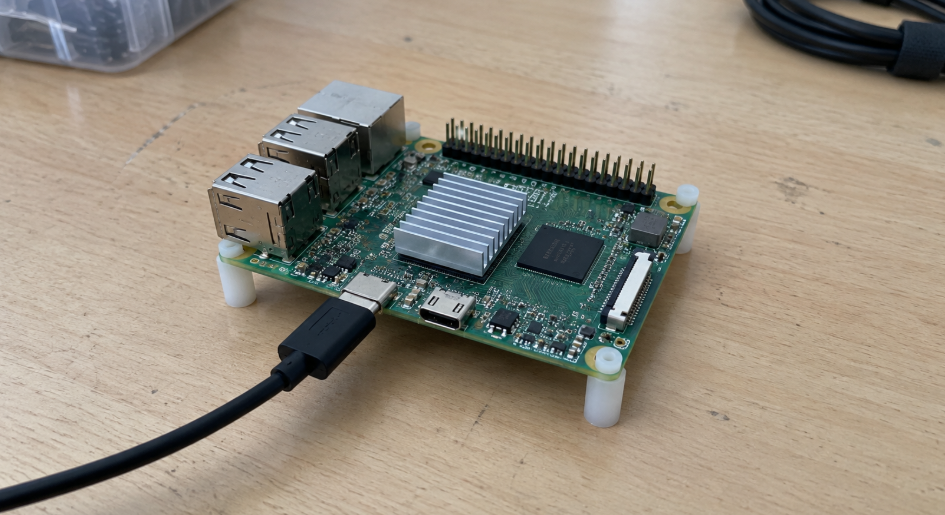
PIC vs AVR: Key Differences in Architecture and Performance
Both architectures use separate program and data memory spaces, but their instruction execution and register organization differ. These differences affect compiled code, interrupt handling, and how much processing fits within a timing window.
Microchip’s AVR instruction-timing documentation explains that a register-to-register arithmetic or logic operation can complete in one CPU clock cycle. Other instructions take longer. For conventional PIC16/PIC18 cores, the instruction cycle commonly corresponds to four oscillator periods, with some instructions requiring multiple instruction cycles.
That distinction makes a direct MHz comparison misleading. It does not establish a fixed application-speed ratio: the two architectures can require different instruction sequences, and hardware peripherals can remove work from the CPU.
| Comparison point | 8-bit PIC16/PIC18 | AVR de 8 bits | Qué hay que comprobar |
|---|---|---|---|
| CPU execution | Many instructions complete in one instruction cycle; oscillator-to-instruction timing needs attention | Many instructions complete in one CPU cycle; some require more | Timing for the compiled workload, including branches and memory access |
| Registers and data access | Working-register and memory-bank behavior varies between PIC16 and PIC18 | Register-file architecture; details vary across AVR cores | Generated code for frequently executed routines |
| Interrupt handling | Priorities, vectors, and context handling depend on the device | Vector and interrupt-controller features depend on the device | Worst-case response time under realistic interrupt load |
| Hardware offload | Selected devices offer core-independent logic, analog, and timing functions | Selected devices offer event routing, configurable logic, and other hardware functions | Whether the required blocks connect and run in the intended operating mode |
| Migration | Moving between PIC families can require firmware and hardware changes | Moving between AVR families can require firmware and hardware changes | Pinout, registers, tool support, and full application validation |
For a useful benchmark, compile a representative control loop on both shortlisted devices. Include sensor acquisition, communications, calculations, and interrupt activity. Record compiler settings, supply voltage, clock configuration, execution time, and code size.
If both meet the deadline comfortably, a small benchmark advantage may matter less than lower development effort or a simpler PCB. If timing margin is narrow, investigate worst-case behavior before approving either part.
How Do Memory, Power Consumption, and Peripherals Compare?
Compare usable memory with the compiled application
Flash stores firmware, SRAM holds working data, and nonvolatile data memory can retain settings. Check all three separately. Communication buffers, library state, stack usage, and future firmware additions can make SRAM the limiting resource even when program memory appears sufficient.
Memory units deserve particular attention. Some PIC16 documentation describes program storage in 14-bit words, whereas AVR Flash capacities are commonly listed in bytes. Do not compare the headline numbers without checking their units. The compiled application and linker report provide a better capacity check than a family-level memory chart.
Reserve space for the actual update method. A bootloader, configuration records, or an image-validation routine can consume resources beyond the main application. Also check the endurance and retention requirements for settings that change frequently.
Measure power under the same operating conditions
Neither family is universally lower power. Sleep current alone cannot predict battery life when the product repeatedly wakes to sample a sensor, process data, or communicate.
Compare active current, sleep mode, wake-up time, enabled peripherals, and the time needed to finish each task. Use the same supply voltage and temperature conditions, and distinguish typical datasheet values from guaranteed limits. On the finished board, regulators, sensors, pull-ups, and indicator LEDs can dominate consumption.
A peripheral that lets the CPU remain asleep may help more than a small difference in active current. Verify that the specific peripheral and clock source remain available in the chosen sleep mode.
Check peripheral details beyond their names
Both families offer devices with timers, pulse-width modulation, analog functions, and serial interfaces. Microchip’s 8-bit PIC and AVR portfolio also shows newer devices aimed at particular connectivity and control tasks.
An ADC’s resolution does not establish its accuracy or suitability for your sensor. Review reference options, input range, acquisition requirements, and conversion timing. For timers and PWM, check resolution at the target frequency, output routing, and synchronization needs. For communications, verify the number of simultaneous interfaces and their available pins.
Choose the part that implements the required functions within the electrical and timing limits, with enough room for expected product changes.
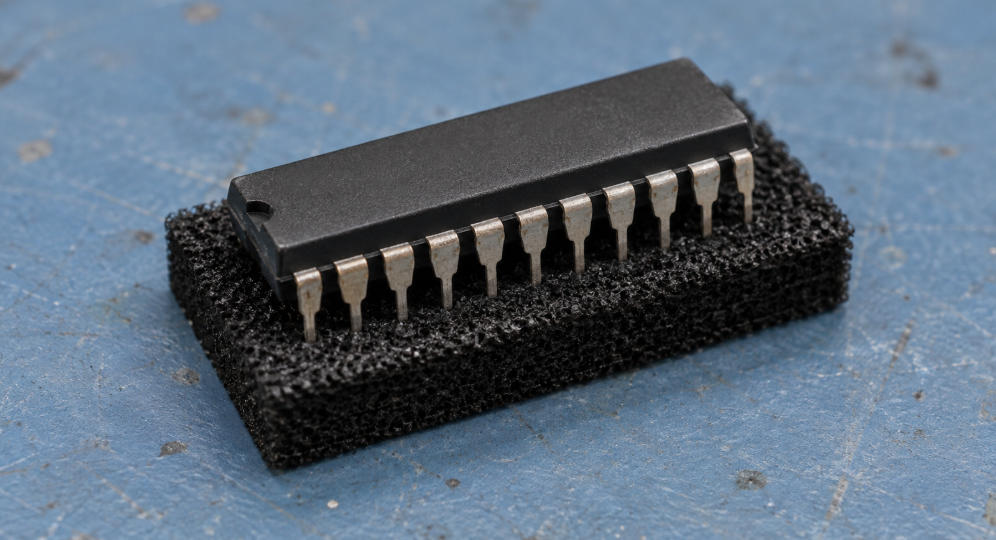
Which Is Easier to Program: PIC or AVR?
AVR can be easier to start with when your team already uses compatible AVR boards, libraries, and programming tools. PIC can be easier for a team maintaining a proven PIC product or using device-specific code-generation support. The easier option depends on the work your team already knows how to do.
Microchip provides development tools for both families. Its MPLAB development page links current software, device-support information, and migration guidance. Verify the exact combination of IDE, compiler, device pack, debugger, and operating system before standardizing a new project.
The hardware programming interface is another selection constraint. PIC16/PIC18 commonly use In-Circuit Serial Programming, or ICSP. AVR interfaces vary: many newer devices use the Unified Program and Debug Interface, or UPDI, while older devices may use ISP or other interfaces. A familiar connector does not prove electrical or programming compatibility.
Before ordering production quantities, demonstrate a complete program-and-verify cycle on the intended board. Confirm that reset circuitry, shared pins, and external loads do not interfere with programming. Save the firmware revision, configuration bits or fuses, programmer settings, and verification procedure together.
This check can expose a practical problem early: a prototype may upload successfully through a bootloader while the production fixture still lacks a reliable way to program a blank chip.
Which Microcontroller Fits Your Application?
Start with the product requirements, then shortlist specific devices. Both PIC and AVR can serve many compact embedded applications; the decisive feature is often a peripheral, pin assignment, or existing firmware asset.
| Application or project condition | Useful selection direction | Approval check |
|---|---|---|
| Existing PIC-based product | Evaluate the approved PIC and closely related options first | Reuse of firmware, PCB, and production programming |
| Existing AVR firmware or AVR-based prototype | Evaluate compatible AVR devices first | Library portability, board-to-chip changes, and tool support |
| Battery-powered sensor | Compare low-power candidates from both portfolios | Measured energy per operating cycle and sleep-mode behavior |
| Timing-sensitive control | Prioritize the required timer, PWM, analog, and hardware-routing features | Worst-case timing, fault response, and output behavior |
| Multiple serial connections | Shortlist by simultaneous interface and pin requirements | Pin conflicts, buffering, and communication load |
| Long production or service life | Compare exact part status and supply conditions | Lifecycle information, change notices, and approved sourcing plan |
For a new design, write down the non-negotiable requirements before requesting samples: supply range, temperature range, usable I/O, memory budget, interfaces, timing deadlines, and programming access. Reject a candidate when it fails one of these requirements rather than compensating with an attractive feature elsewhere.
If the application needs substantial networking software, large data buffers, or processing beyond the shortlisted devices’ capacity, widen the search to other MCU classes. Leave enough processing and memory margin for the planned firmware.
For a supply-driven redesign, our sourcing team can help check candidate ordering codes and availability through DuoLink’s Microchip component range. Engineering approval must still establish compatibility; PIC and AVR are not drop-in alternatives to each other.
What Should You Check Before Buying PIC or AVR Microcontrollers?
Release the purchase order against a complete, approved manufacturer part number. A base device name may omit package, temperature, speed, or shipment-format details. Those details can change assembly compatibility or the conditions under which the part meets its specifications.
For example, our listing for the PIC18F4550-I/PT identifies a particular ordering code. A quotation for another package should return to engineering review before purchasing accepts it. The same discipline applies to AVR suffixes and speed grades.
Before confirming an order, resolve these points with the supplier:
- Identity and lifecycle: Match the full ordering code, package, operating grade, current manufacturer status, and relevant errata or change notices.
- Supply conditions: Confirm quantity, packaging format, quoted delivery timing, and whether the offered material is supplier-held or physically available for shipment.
- Lot and documentation: Agree date-code or single-lot requirements and the records available for the offered material. Request relevant part-level material declarations when required by your market or customer.
- Programming state: Specify blank devices or approved preprogrammed material. For programmed parts, control firmware revision, configuration settings, verification, and acceptance criteria.
- Receiving and acceptance: Agree inspection scope, ESD and moisture-handling requirements where applicable, discrepancy handling, and return terms before shipment.
For EU projects, identify the required RoHS and REACH documentation for the exact part. Automotive, medical, and other controlled applications may introduce additional customer or qualification requirements. Shipping destination alone does not establish whether an MCU is approved for the end use.
DuoLink Electronics is an independent supplier; a product listing does not establish manufacturer authorization or a guaranteed traceability chain. Our BOM support can help clarify part numbers, quantities, packaging, and sourcing requirements. Ask which records are available for the particular offered lot rather than assuming every source provides the same evidence.
If a package, suffix, lot record, or marking conflicts with the approved requirement, hold acceptance and seek clarification. Visual consistency is a screening observation, not proof of authenticity. Any additional testing should follow an agreed risk-based plan and documented acceptance criteria.
Conclusión
The right PIC vs AVR choice depends on specific devices and the work required to put them into production. Compare the compiled application, usable memory, peripheral behavior, power profile, and programming process. Then check the complete ordering code and supply conditions before releasing the BOM.
If you need sourcing support, send DuoLink Electronics your part numbers or BOM with quantities, delivery targets, package requirements, and documentation needs. We can help clarify the purchasing options for your engineer-approved parts, including hard-to-find requirements, while confirming availability and supporting records for the individual inquiry.
Preguntas frecuentes
Is AVR faster than PIC at the same clock frequency?
Many AVR instructions complete in one CPU cycle, while conventional PIC16/PIC18 instruction timing commonly uses four oscillator periods per instruction cycle. That does not establish an application-speed ratio. Compare compiled routines, interrupt behavior, and peripheral offload on the actual devices.
Can an AVR replace a PIC without changing the PCB or firmware?
Generally, no. Pinouts, peripheral registers, instruction sets, configuration settings, and programming interfaces differ. Treat a PIC-to-AVR move as a redesign requiring hardware review, firmware porting, and validation.
Which is better for a battery-powered product?
Compare specific low-power devices under your operating cycle. Active time, wake-up behavior, available sleep-mode peripherals, and board-level leakage matter alongside sleep current. Measure the complete board before approving battery-life expectations.
Can the same programmer support both PIC and AVR?
Some Microchip tools support devices from both families. Confirm the exact device-support list, interface, adapter, target voltage, and software version. Support for one PIC or AVR does not establish support for every device.
What should an RFQ include for PIC or AVR microcontrollers?
Provide the complete manufacturer part number, quantity, package and operating-grade requirements, packaging format, delivery target, programming state, and required lot or compliance records. Identify any approved alternatives separately so they cannot be substituted without review.



 Spanish
 English
 German
 French
 Chinese
 Italian