
Microchip microcontrollers cover everything from small control loops to connected industrial equipment. The ten devices below span 8-bit PIC and AVR architectures, Arm Cortex-M devices in the SAM range, and MIPS-based PIC32 hardware. The right choice depends on your firmware, interfaces, memory needs, and production plans.
The list covers both maintenance purchases and new design candidates. Microchip currently marks the ATmega328P as Non recommandé pour les nouvelles conceptions, a distinction that matters when planning a product with several years of production ahead.
At DuoLink Electronics, we support Microchip part-number and BOM inquiries. For a useful quotation, we need the complete ordering code rather than only the device name. Package, temperature grade, packing format, and any programming requirements can change what your purchasing team should accept.
The table offers a starting comparison. Memory figures describe the named device; package options, electrical limits, and current errata still require review before design approval.
| Microcontroller | Architecture | Program Flash / SRAM | Practical selection angle |
|---|---|---|---|
| PIC16F877A | 8-bit PIC | 8K × 14-bit words / 368 B | Maintaining established PIC control boards |
| PIC16F18877 | Enhanced 8-bit PIC | 56 KB / 4 KB | Peripheral-driven control and analog monitoring |
| PIC18F47Q10 | PIC18 8 bits | 128 KB / 3,615 B | Larger PIC firmware and real-time control |
| ATmega328P | 8-bit AVR | 32 KB / 2 KB | Existing AVR products; review NRND status |
| ATmega2560 | 8-bit AVR | 256 KB / 8 KB | I/O-heavy designs with several serial links |
| ATmega4809 | 8-bit AVR | 48 KB / 6 KB | Compact control with event-driven peripherals |
| AVR128DA48 | 8-bit AVR | 128 KB / 16 KB | Analog-rich control with more working memory |
| ATSAMD21G18A | Arm Cortex-M0+ | 256 KB / 32 KB | Compact 32-bit control and USB applications |
| ATSAME54P20A | Arm Cortex-M4F | 1 MB / 256 KB | Connected equipment and floating-point workloads |
| PIC32MZ2048EFH144 | MIPS32 M-Class | 2 MB / 512 KB | Larger connected applications and complex firmware |
PIC16 program-memory word organization differs from byte-oriented devices; capacity alone does not predict how much application code will fit. Clock rates also cannot be compared directly across these architectures.
PIC16F877A
The PIC16F877A makes sense when an approved product already relies on its hardware and firmware. It provides eight 10-bit ADC channels, serial communications, and capture/compare/PWM functions in a familiar 8-bit platform. Its limited SRAM calls for careful buffer and variable allocation.
Microchip lists it as in production and identifies the PIC16F18877 as a newer device. That makes the PIC16F877A a reasonable maintenance candidate, while a new project should compare newer PIC options before committing.
For purchasing, check the complete suffix and package drawing. A through-hole device and a surface-mount version cannot be treated as interchangeable stock. Replacement parts also need the correct firmware and configuration settings; a blank MCU will not restore a working controller by itself.
Treat any proposed migration to PIC16F18877 as an engineering change. Review the pin functions, peripheral registers, oscillator setup, programming method, and application behavior before approving a revised BOM.
PIC16F18877
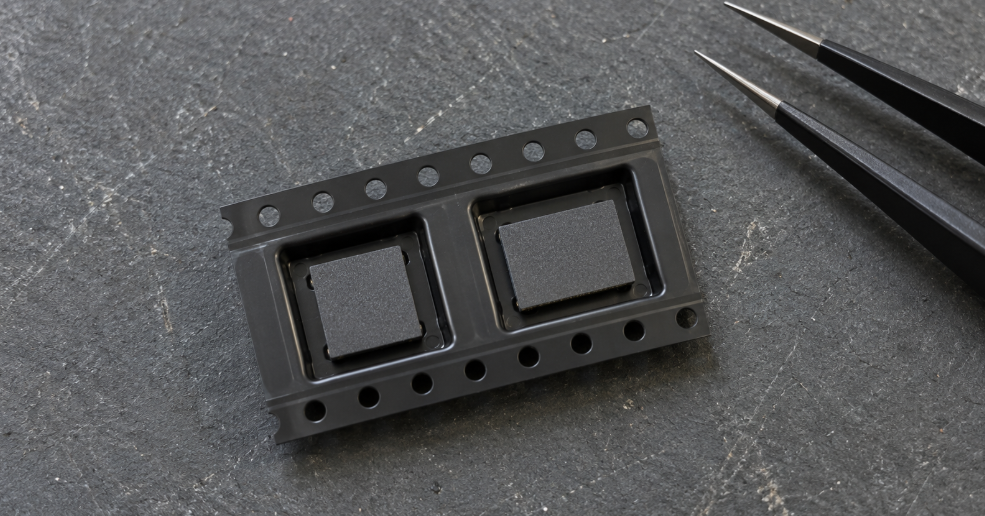
The PIC16F18877 has 56 KB of program Flash, 4 KB of RAM, and a 32 MHz internal oscillator. Its core independent peripherals can handle selected hardware tasks without continuous CPU intervention. The ADC with computation, configurable logic, and timing peripherals suit monitoring and control applications.
The purchasing advantage comes from selecting the right combination of peripherals early. Engineering should map the actual analog inputs, PWM outputs, and communication signals onto the intended package. A feature appearing in a family overview does not establish that every signal can be used simultaneously on your board.
For an existing PIC16F877A product, use Microchip’s PIC16F18877 documentation to build a migration checklist. A shared manufacturer and similar package outline do not establish firmware or pin compatibility.
Request samples in the intended production package before committing to volume. Evaluation hardware helps test the concept, but your own board must confirm signal routing, startup behavior, and programming access.
PIC18F47Q10
The PIC18F47Q10 brings 128 KB of program Flash, 3,615 bytes of SRAM, a 64 MHz internal oscillator, and configurable control peripherals to the PIC18 range. It is a candidate for controllers whose code has outgrown a smaller PIC but whose workload still fits an 8-bit architecture.
Its Flash capacity should not distract from the SRAM budget. Communication buffers, software stacks, and temporary data all share a much smaller working-memory resource. Ask engineering for a measured memory-use report with realistic messages and interrupt activity.
Also confirm the required supply conditions and input thresholds against the exact device datasheet. Supply-voltage compatibility involves more than matching a nominal board voltage.
Before ordering, settle whether the MCU will arrive blank or whether programming is separately required. If programming is arranged, define the firmware release, configuration bits, verification method, and code-protection settings in the purchasing specification.
ATmega328P
The ATmega328P combines 32 KB of Flash, 2 KB of SRAM, and 1 KB of EEPROM. It remains relevant to installed designs built around this AVR platform. Its small working memory suits modest control tasks, but leaves little room for large buffers.
Microchip’s ATmega328P product page currently states Non recommandé pour les nouvelles conceptions. This is a design-selection warning; it does not by itself mean the part has been discontinued or that every ordering code is unavailable. Recheck the status and applicable notices when making a production commitment.
For a new product, compare current AVR alternatives and budget for hardware and firmware validation. For an existing product, retain the exact approved ordering code and build a supply plan around forecast demand and any manufacturer notices.
Do not substitute ATmega328, ATmega328PB, or another similarly named part without engineering review. Package choice can also affect available ADC channels, so a generic ATmega328P description is insufficient for purchase approval.
ATmega2560
With 256 KB of Flash, 8 KB of SRAM, four USARTs, and extensive general-purpose I/O, the ATmega2560 suits established AVR designs that need many connections and several independent serial links.
Count the interfaces your product will use at the same time. Pins assigned to timers, analog inputs, programming, or external interfaces reduce what remains available for general-purpose signals. A headline I/O count does not replace a completed pin-assignment review.
The large program memory also does not remove SRAM constraints. Check stack headroom and communication buffers under the final workload, especially when several serial ports receive data together.
For sourcing, preserve the speed and temperature requirements in the complete ordering code. Have engineering confirm the permitted frequency at the intended supply voltage. Incoming quality checks should include lead condition and packaging consistency; visual appearance alone cannot authenticate a device.
ATmega4809
The ATmega4809 has 48 KB of Flash, 6 KB of SRAM, and operates up to 20 MHz. Its event system lets peripherals coordinate selected tasks in hardware, which can reduce CPU involvement in compact control applications.
It uses the Unified Program and Debug Interface, or UPDI. A fixture designed for an older AVR programming interface may therefore need a different connection and supported programmer. Verify production tooling before the board layout is released.
Moving from an ATmega328P also requires firmware work. Register definitions, peripheral initialization, interrupt behavior, and pin assignments need review even when both devices use an AVR core.
For procurement, specify the intended package and full ordering code rather than copying the MCU name from a development-board description. Confirm that programming access remains available after assembly and that the chosen tool supports the exact device.
AVR128DA48
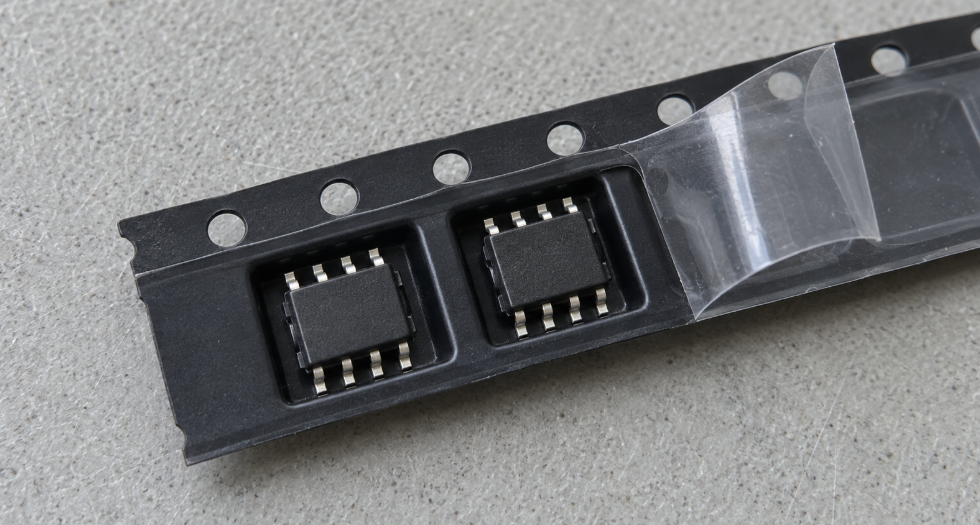
The AVR128DA48 expands the 8-bit shortlist with 128 KB of Flash, 16 KB of SRAM, and operation up to 24 MHz. The AVR DA family includes a 12-bit differential ADC, a 10-bit DAC, and other analog and control peripherals. This makes the device worth evaluating when analog functions and working memory matter more than moving to a 32-bit core.
Match the analog specification to the measurement task. ADC resolution describes the output code width; it does not guarantee complete system accuracy. Reference quality, input circuitry, calibration, noise, and sampling conditions still affect the result.
Review peripheral availability and pin sharing for the exact 48-pin device. Confirm that the production programmer supports UPDI and that the circuit allows reliable access.
For a proposed alternate, compare both the hardware and the software effort. An AVR128DA48 may be a sound redesign candidate, but it is not an automatic replacement for an ATmega2560 or ATmega4809. Agree on the qualification plan before purchasing substitute stock.
ATSAMD21G18A
The ATSAMD21G18A provides an Arm Cortex-M0+ core running up to 48 MHz, 256 KB of Flash, and 32 KB of SRAM. Its USB capability and configurable serial communication modules make it a candidate for compact embedded products needing more software headroom than a small 8-bit device.
Configurable serial modules can simplify interface planning, but pin multiplexing still limits the combinations available. Engineering should confirm the selected UART, SPI, and I²C routes together with the USB and debug connections.
When migrating from a 5 V design, review every connected signal against the SAM D21 electrical limits. Do not assume that a peripheral board or connector using 5 V can connect directly to the MCU pins.
For purchasing, retain the complete ordering code, including the device revision letter and package suffix. Confirm temperature requirements and packing format separately. A development-board name or the shortened SAM D21 family name does not identify the production component precisely enough.
ATSAME54P20A
The ATSAME54P20A steps up to an Arm Cortex-M4 core with a floating-point unit, operation up to 120 MHz, 1 MB of Flash, and 256 KB of SRAM. It is worth evaluating for equipment that combines control, communications, and more demanding numeric processing.
A larger MCU also brings a larger integration task. Before committing, build the intended software with its actual drivers and middleware, then measure memory use and processing headroom. An empty demonstration project gives little evidence about the final application.
Create a peripheral and pin-allocation plan for the exact device. Where the design uses external communication hardware, include those supporting parts in the BOM review rather than budgeting only for the MCU.
For an OEM or EMS purchase, agree on the full temperature-grade and package requirements. General industrial suitability does not establish automotive qualification or functional-safety approval. Those requirements need evidence for the applicable ordering code and finished system.
PIC32MZ2048EFH144
The PIC32MZ2048EFH144 uses a MIPS32 M-Class architecture and offers 2 MB of Flash and 512 KB of SRAM. It belongs on the shortlist for larger connected applications with substantial firmware, buffering, or processing needs.
Microchip’s PIC32MZ EF platform includes Ethernet, USB, and CAN connectivity options. Confirm the exact device’s peripherals, pin allocation, and required external circuitry. An Ethernet MAC, for example, does not eliminate the need to plan the physical interface hardware.
Use the exact datasheet speed grade and operating conditions when setting the clock requirement. Microchip’s family-level material and evaluation boards show different clock figures; the family’s headline maximum should not become a blanket purchase specification.
The 144-pin device also calls for careful package matching. Pin count alone does not establish body size or PCB footprint. Compare the package drawing and approved land pattern before accepting a quote.
For technical review, use the PIC32MZ EF family datasheet and current errata. Moving from SAM or 8-bit PIC hardware requires software and system validation across architectures.
Conclusion
Choose Microchip microcontrollers around the application and the product’s remaining service life. PIC16F877A and ATmega328P purchases often concern maintaining approved hardware. PIC16F18877, PIC18F47Q10, ATmega4809, and AVR128DA48 offer different routes for 8-bit control. ATmega2560 remains useful where established AVR software and extensive I/O matter, while the SAM and PIC32 devices address larger software and processing needs.
Before issuing a purchase order, resolve the following evidence with engineering, quality, and the supplier. Our BOM procurement guide explains how to keep these requirements attached to each line item.
| Check | Evidence to agree before ordering |
|---|---|
| Exact identity | Complete manufacturer ordering code, package, temperature grade, and packing format |
| Design approval | Approved BOM, applicable datasheet and errata, validated firmware and programming setup |
| Supply plan | Current lifecycle information, confirmed quantity, quoted lead time, and change-notification arrangements |
| Lot requirements | Agreed date-code limits, mixed-lot policy, packaging condition, and available source documents |
| Quality and compliance | Required screening or testing scope, acceptance criteria, and applicable manufacturer declarations |
We support Microchip sourcing inquiries as an independent electronic-component supplier. Send the exact part numbers, quantities, delivery destination, target application, and documentation needs. If a quotation differs from your approved package or grade, clarify the mismatch before acceptance. Availability, supporting records, and any testing arrangements must be confirmed for the particular order.
Foire aux questions
Which Microchip microcontrollers should I consider for a new embedded design?
Start with the required interfaces, analog functions, memory, power budget, and supported tools. PIC16F18877, PIC18F47Q10, ATmega4809, AVR128DA48, and the listed SAM and PIC32 devices address different workloads. Review the current lifecycle status of the exact device before selection.
Is the ATmega328P discontinued?
Microchip currently marks it Not Recommended for New Designs. That status alone is not a discontinuation notice. Check current manufacturer notices and confirm the exact ordering code’s supply position before planning continued production.
Can PIC16F18877 directly replace PIC16F877A?
Do not approve it on the newer-device recommendation alone. Compare the pinout, electrical characteristics, peripherals, configuration settings, firmware, and programming process. Validate the revised board and firmware before updating the production BOM.
Does a blank MCU include my product firmware?
Do not assume it does. Specify whether you require blank devices, a defined bootloader, or a particular application image. If programming is arranged, agree on the release identifier, configuration data, verification process, and protection settings.
What should overseas buyers include in an MCU RFQ?
Provide the complete ordering code, quantity, delivery schedule, temperature and package requirements, and whether programming is required. Add any date-code limits, lot restrictions, traceability expectations, compliance documents, and inspection requirements so the supplier can confirm what is available.



 French
 English
 German
 Spanish
 Chinese
 Italian