Choosing an electronic components distributor is not the same as choosing a one-time seller. A seller can fill one urgent order. A long-term distributor becomes part of your supply chain, your quality process, and often your project schedule. That difference matters.
During more than 15 years in the electronic components industry, I have seen buyers focus on the first quote and miss the harder questions. Who owns the stock? Can the lot be traced? Has the exact suffix been checked? What happens if the parts fail incoming inspection? Will the supplier still respond after payment?
These questions decide whether cooperation stays smooth after the first order. Duolink Electronics was built around the same practical buying needs: checking part numbers, confirming inventory and lead time, reviewing key parameters, supporting BOM sourcing, and helping buyers locate hard-to-find components.
The best Electronic Component Distributor for your business is not always the largest company, the closest company, or the company with the broadest online catalog. It is the supplier that can match its controls to your risk. A prototype buyer, an industrial automation manufacturer, and a medical device company may order the same IC, yet they should not use the same approval process.
This guide gives you a practical way to evaluate distributors before you build a long-term relationship. It covers source verification, quality control, inventory, delivery, purchasing terms, technical support, and after-sales handling. You can use it for an initial supplier audit, a trial order, or an annual supplier review.
Why a Good Electronic Component Distributor Matters
Protecting Component Quality and Authenticity
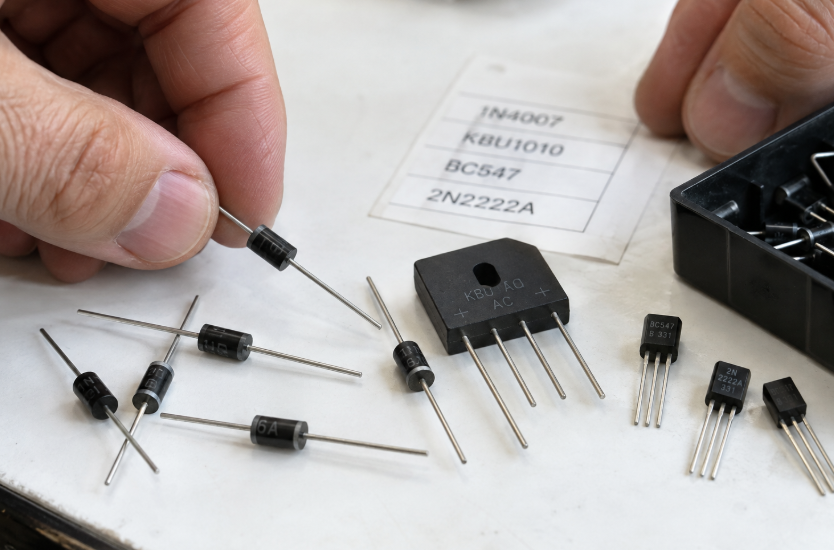
A component can look correct and still be wrong for your build. The manufacturer name may match, while the package, temperature grade, speed grade, lead finish, revision, or packing method does not. One missing suffix can change the electrical limits or qualification level.
For this reason, quality starts before inspection. It starts when the distributor reads your request.
A reliable distributor should confirm the complete manufacturer part number, not a shortened description. The team should also check quantity, package, date-code needs, lot requirements, RoHS status, moisture sensitivity, packing format, and any customer drawing or approved-vendor-list rule. When something is unclear, the supplier should ask before quoting.
Authenticity also depends on source control. Parts bought through an original component manufacturer or an authorized channel usually offer the clearest path of traceability. The independent market can solve shortage, allocation, and end-of-life problems, but it requires stronger supplier screening, document review, incoming inspection, and risk-based testing.
Do not accept “100% original” as evidence. It is a sales phrase, not a quality record. Ask what the distributor can show: source type, original packaging photos, lot and date codes, certificate documents, inspection results, and the steps used to approve the upstream supplier.
A serious distributor will explain the limits of the available traceability instead of hiding them.
Improving Supply Chain Stability
Stable supply does not mean that every part is always in stock. No distributor can control factory allocation, transport disruption, product discontinuation, or sudden demand changes. Stability means the supplier gives you accurate information early enough to act.
A strong distributor separates facts from estimates. “Available” should not be used as one broad status. Owned warehouse stock, verified partner stock, broker-listed stock, and factory lead-time supply carry different levels of certainty. Your quote should make the difference clear.
Long-term cooperation also gives the distributor a better view of your demand pattern. With rolling forecasts, target delivery windows, approved alternates, and lifecycle priorities, the supplier can watch critical lines before they become urgent. That is more useful than waiting for a line-down request.
For recurring BOM purchases, look for a distributor that can consolidate several brands while keeping each line traceable. Consolidation can reduce order handling and logistics work, but it should never blur source information. Each line still needs its own manufacturer, part number, quantity, source status, lead time, and quality-document plan.
Reducing Procurement and Project Risk
The wrong component creates more than a purchasing problem. It can stop assembly, trigger engineering review, delay customer delivery, raise rework, or damage finished products. A low-risk purchasing decision must therefore consider the full effect on the project.
I suggest dividing risk into four areas:
- Part risk: Is the component obsolete, allocated, safety-related, programmable, moisture-sensitive, or difficult to test?
- Source risk: Is the source authorized, fully traceable, partly traceable, or open market?
- Schedule risk: How much time exists for inspection, replacement, or engineering approval?
- Business risk: What happens if the lot is late, mixed, nonconforming, or rejected?
This approach keeps your supplier decision tied to the real use of the part. A common resistor for a lab fixture does not need the same control plan as a microcontroller used in a long-life industrial controller.
The distributor should understand that difference and adjust the sourcing route, documents, and test plan.

Evaluate the Distributor’s Qualifications and Industry Reputation
Company Qualifications and Operating Experience
Begin with the legal and operational basics. Confirm the company’s registered name, business address, contact channels, years of operation, payment account name, and main service scope.
Check whether sales, purchasing, quality, warehouse, and after-sales roles are clearly assigned. A distributor that depends on one person for every task may respond quickly at first, yet struggle when an order becomes complex.
Experience should be relevant to your needs. Ask which component groups the team handles most often. A supplier may understand passive parts but have limited control over programmable ICs, memory, RF devices, or aerospace-grade components. Product knowledge affects quote accuracy, packaging checks, storage, and alternate-part advice.
You should also learn how the distributor manages customer data. BOM files can reveal product architecture, expected volumes, and future programs. Ask who can access your files, how long records are kept, whether documents can be shared with upstream sources, and whether a nondisclosure agreement is available.
A detailed company profile and sourcing capability can help you prepare questions, but website text alone is not approval evidence. Use it as the start of due diligence, then verify the claims through documents, calls, sample orders, and performance history.
Industry Certifications and Customer Reputation
Certifications can show that a distributor has documented processes, but a logo does not prove that those processes are followed on your order.
Always request the certificate, scope, issuing body, site address, and validity date. The scope matters. A certificate for one location or activity may not cover the warehouse, inspection lab, or sales entity handling your purchase.
Match the quality system to your industry. ISO 9001 may be a useful base for general quality management. Aerospace, defense, automotive, medical, and other controlled industries may require added standards, customer approvals, or documented counterfeit-avoidance controls.
Do not ask only, “Are you certified?” Ask, “Which part of your process does the certification cover, and how will it apply to this lot?”
Customer reputation needs the same care. Public reviews can show communication patterns, but they rarely prove technical quality. Better evidence includes repeat business, references from similar industries, clear complaint records, and a documented corrective-action process.
When possible, ask a reference about delivery accuracy, document quality, responsiveness during a problem, and the speed of return or replacement handling.
Use the following evidence table during supplier qualification:
| Evaluation Area | Evidence to Request | Warning Sign |
|---|---|---|
| Legal identity | Registration details, bank account match, physical address | Payment requested to an unrelated entity |
| Quality system | Current certificate, scope, procedures, audit records when available | Logo shown without a valid certificate or scope |
| Source management | Approved-supplier process, source category, purchase records | Refusal to explain where stock comes from |
| Traceability | Lot/date-code data, labels, packing records, certificates | “Original” stated with no supporting records |
| Inspection | Written flow, equipment list, sample plan, report format | One visual check presented as complete testing |
| Complaints and returns | RMA flow, quarantine rules, corrective action | No written process after shipment |
| Data protection | NDA option, access control, document handling | BOM shared broadly without permission |
Manufacturer Authorization and Supply Channels
Authorization is not always a company-wide status. It may apply to one manufacturer, one product family, or one sales region.
A distributor that is authorized for Brand A should not be assumed to be authorized for Brand B. Verify the relationship through the manufacturer’s official channel locator or written confirmation when authorization is important to your project.
You also need to know which channel applies to the quoted line. A company may sell some parts through authorized agreements and source other parts independently. Ask the supplier to mark the source type on the quote or order confirmation. This small step prevents a common misunderstanding.
Independent distributors have an important role. They can locate factory excess, OEM or EMS surplus, discontinued stock, and components that are not available through normal catalog channels. The value is flexibility. The trade-off is that you need more visibility into provenance and more control over inspection.
A trustworthy independent Electronic Component Distributor will not pretend that open-market stock has factory-level traceability when it does not. The supplier should state what is known, what is missing, what checks are planned, and what return terms apply if the lot fails agreed inspection criteria.
Examine the Distributor’s Quality Control Capability
Product Source and Lot Traceability
Traceability is the ability to connect the delivered parts to records about their source, identity, and movement. It is not one document. A Certificate of Conformance can be useful, but it does not automatically prove the full chain back to the manufacturer.
I use a simple three-level model when reviewing offers:
- Level A: Manufacturer or authorized-channel traceability with matching factory or franchised-distributor records.
- Level B: A known commercial source with consistent purchase, packing, lot, and shipping records, but no full authorized chain.
- Level C: Limited provenance from the open market. The part may still be usable, but the quality plan must account for the missing history.
Ask the distributor to keep lots separate. Mixed date codes, mixed countries of origin, or mixed packaging can hide differences in storage history and manufacturing revision.
If mixed lots are unavoidable, they should be declared before shipment and identified in the packing list.
For each line, request the information that matters to your application: manufacturer, full part number, quantity, package, lot code, date code, country of origin when available, packing format, moisture-sensitivity status, and source category.
High-risk parts may also need chain-of-custody records, original label images, or purchase-document review.
Traceability should continue after delivery. The distributor must be able to connect your invoice and packing list to the inspection record and upstream lot. When a defect appears months later, this link supports containment, root-cause work, and recall decisions.
Inspection Process and Quality Reports
A good quality report tells you what was checked, how it was checked, how many samples were checked, and what result was accepted.
A page filled with photos but no method or criteria may look professional while giving little protection.
Basic incoming inspection often includes quantity, package condition, label review, part marking, body and lead condition, lot consistency, packing method, and visible signs of rework or contamination. The inspection team should compare the lot with reliable manufacturer data and known-good reference information when available.
Moisture-sensitive surface-mount devices need special attention. Dry packing, desiccant, humidity indicator cards, moisture barrier bags, MSL labels, and exposure history can affect assembly yield and reliability.
The official IPC/JEDEC J-STD-033 information describes standardized methods for handling, packing, shipping, and using moisture- and reflow-sensitive components. Your distributor does not need to quote the standard in every email, but its warehouse and packing controls should match the risk of the device.
Extra testing should be selected by risk, not added as a marketing package. X-ray can help review internal construction and bond-wire patterns. XRF can screen material composition or lead finish. Electrical testing can check key functions or parameters. Decapsulation may support die verification. Solderability testing may be needed for aged leads or long-stored stock.
Each method answers a different question.
| Risk Level | Typical Conditions | Recommended Verification Approach |
|---|---|---|
| Lower | Current production, authorized source, strong traceability, noncritical use | Document review, label and package check, standard incoming inspection |
| Medium | Independent source, older date code, partial traceability, production use | Enhanced visual inspection, lot consistency review, X-ray or XRF where relevant, agreed sampling |
| Higher | Obsolete or scarce part, limited provenance, safety-related use, high failure impact | Customer-approved test plan, multiple inspection methods, electrical or destructive analysis as justified, strict quarantine and disposition |
Do not ask for every test on every order. That can add time, consume samples, and create reports that are not linked to the real failure risk.
Ask the distributor or a qualified third-party lab to explain why each method is suitable for the part type and application.
Quality reports should identify the tested lot, sample size, equipment, calibration status where relevant, test conditions, acceptance criteria, results, images, inspector, and date.
For destructive tests, agree on sample ownership and replacement quantity before work begins.
Counterfeit and Refurbished-Part Prevention
Counterfeit prevention begins with purchasing controls. Inspection alone cannot repair a weak source decision.
The distributor should approve upstream suppliers, set source-risk levels, review performance, and restrict who can buy from unapproved channels.
After receipt, the lot should remain in quarantine until required checks are complete. Suspect material must be separated from saleable inventory. If the lot is rejected, it should not return to normal stock by accident.
Ask how the distributor labels, stores, reports, and disposes of suspect or confirmed counterfeit parts.
Refurbished components need close review because they may have been removed from boards, cleaned, resurfaced, re-marked, or re-tinned. Warning signs can include inconsistent surface texture, marking differences, solder residue, damaged leads, unusual indents, mixed body shapes, or packaging that does not match the manufacturer’s normal method.
None of these signs alone proves a part is counterfeit. They are reasons for deeper review.
Your purchase order should define what “new and unused” means. State whether programmed, reclaimed, refurbished, reconditioned, or previously mounted parts are prohibited.
For obsolete material, do not rely on assumptions. Write the condition requirement into the order and require disclosure before shipment.
Environmental compliance is another document area that needs care. The European Commission explains that the RoHS Directive restricts certain hazardous substances in electrical and electronic equipment.
REACH duties can also affect articles and substances, and the ECHA Candidate List changes over time. Ask for part-specific declarations from a credible source and check the declaration date. A generic statement from the distributor is not always enough for your finished product.
The distributor should never imply that a compliance declaration proves authenticity. RoHS, REACH, traceability, and counterfeit inspection answer different questions. You may need all of them, but one cannot replace the others.

Evaluate Inventory and Supply Capability
Brand and Product-Line Coverage
A broad catalog is useful only when the distributor can support the lines you actually buy.
Review your BOM history and identify the brands, technologies, and packages that create the most work. Then ask how the distributor covers those areas.
For mixed BOM sourcing, product knowledge across semiconductors, passives, electromechanical parts, and connectors can reduce communication gaps. Still, depth matters more than category count.
A supplier handling integrated circuits and related devices should understand suffix control, package variations, lifecycle status, MSL handling, and programmable-device concerns—not only the base part name. The same principle applies to relays, capacitors, crystals, power devices, and connectors.
Ask whether the distributor can support samples, pilot builds, maintenance quantities, and repeat production. Some channels are strong for small engineering orders but weak at scheduled supply. Others can support production volume but cannot split standard packs.
Your long-term partner should explain where it is strong and where another channel is safer.
A capable distributor should also understand application needs. Automotive, industrial, medical, communication, and computing projects may require different temperature grades, qualification levels, lifecycle expectations, and documentation.
The sales team does not need to design your product, yet it must know when to involve engineering or quality staff.
Inventory Accuracy and Delivery Stability
“Stock” is one of the most misused words in component sourcing. Before you rely on a delivery date, ask where the goods are and who controls them.
Useful inventory categories include:
- Owned stock: Physically held by the distributor.
- Consigned or controlled stock: Held under a defined arrangement and available for allocation.
- Verified partner stock: Confirmed with a qualified upstream supplier, but not yet owned.
- Market-listed stock: Shown by a broker or database and not yet physically verified.
- Factory or authorized lead-time supply: Not in stock; delivery depends on a future commit.
The quote should state which category applies. For urgent or high-risk orders, request current photos showing labels, quantity, date code, and packaging.
Photos are not complete proof, but they help confirm that the offer refers to a real lot.
A stable distributor tracks the gap between quoted lead time and actual shipment. Ask for on-time delivery performance, but also ask how it is calculated.
A percentage has little value if the promised date changes after the purchase order. The better measure is whether the supplier meets the original confirmed date or gives an early, documented update when conditions change.
Order follow-up should include milestone checks: purchase confirmation, upstream allocation, receipt at the distributor, inspection completion, packing, export documents, dispatch, and tracking.
You should not need to chase the supplier for each step.
Shortage and Obsolete-Component Sourcing
Shortage and end-of-life sourcing are where an independent Electronic Component Distributor can add real value.
Authorized stock may be unavailable, minimum packs may be too large, or the original manufacturer may have stopped production. A global sourcing network can uncover factory excess, OEM surplus, or older distributor inventory.
The harder the part is to find, the more disciplined the process must become. Scarcity raises the chance of false stock, mixed lots, poor storage, and counterfeit offers.
Do not lower your evidence standard because the schedule is tight. Tight schedules require faster decisions, not weaker controls.
For obsolete parts, check lifecycle status, last-time-buy notices, known replacements, package changes, and software impact. Older date codes are not automatically bad. Storage condition, moisture control, oxidation, packing integrity, and part technology can matter more than age alone.
The acceptance plan should be based on evidence and assembly risk.
Ask the distributor to provide more than one path when possible: original part from a qualified source, pin-compatible alternate, functional alternate requiring engineering review, or a controlled redesign option.
This gives procurement and engineering time to compare risk instead of accepting the first available lot.
Long-term cooperation should also reduce future obsolescence risk. Share a list of critical parts, expected production life, annual usage, approved alternates, and last-time-buy rules.
A distributor that monitors lifecycle changes can warn you before the market becomes urgent.
Compare Quotations and Procurement Terms
Quote Transparency and Commercial Reasonableness
A useful quotation allows you to compare like with like. It should show the exact manufacturer part number, manufacturer, quantity, packing, condition, source category, lead time, shipment point, validity, compliance documents, and inspection plan.
When these details are missing, a lower quote may describe a different product or a weaker source.
Pay attention to the wording around availability. “In stock,” “available,” “subject to prior sale,” and “lead time after order” can mean very different things.
Ask when the stock was last verified and whether the quantity is reserved after order confirmation.
Commercial reasonableness is not the same as choosing the lowest offer. Compare the quote with lifecycle status, market availability, date code, traceability, testing, return terms, and delivery certainty.
A large gap from every other qualified offer should trigger questions. It may be a genuine opportunity, but it may also reflect old information, incomplete documents, mixed condition, or a source that has not been verified.
Never let a vague quote become a precise purchase order. Resolve unclear terms before payment. Once the order is placed, each assumption becomes harder to correct.
MOQ, Payment Method, and Account Terms
Minimum order quantity affects more than cash flow. It can create excess stock, storage risk, and future obsolescence.
Ask whether the quantity is tied to a factory pack, full reel, tray, tube, or upstream seller’s minimum. A distributor may be able to split a pack, but the remaining quantity and repacking method can affect traceability and moisture control.
Payment terms should match the stage of the relationship and the risk of the order. New suppliers may require tighter payment control. As performance becomes proven, both sides can discuss more flexible account terms.
The key is to keep the paying entity, selling entity, invoice, bank account, and shipping documents consistent.
Review cancellation and return conditions before placing orders for nonstandard, allocated, programmed, obsolete, or specially tested material.
NCNR terms may be reasonable when the distributor makes a firm upstream commitment, but they should not remove your right to reject parts that do not meet the written specification.
Currency, tax, customs responsibility, Incoterms, freight method, insurance, and import documentation should also be clear.
Overseas buyers often compare the component quote but miss the work needed to bring the shipment into their country.
Total Procurement Cost Assessment
The purchase decision should include the cost of risk and effort, not just the unit quote.
Poor documentation can add engineering hours. Unstable lead time can force expedited freight. A weak return process can leave unusable material in your warehouse. Excess MOQ can become dead stock.
Use a comparison table that focuses on decision factors without reducing everything to one number:
| Quote Element | Why It Matters | What to Confirm |
|---|---|---|
| Exact part and suffix | Prevents grade, package, or revision mismatch | Manufacturer data and your approved specification |
| Source and traceability | Sets counterfeit and quality risk | Source category, documents, chain limits |
| Quantity and packing | Affects assembly, storage, and excess | Reel/tray/tube, split pack, resealing method |
| Lead-time basis | Separates estimate from verified commit | Owned, partner, market, or factory supply |
| Date and lot codes | Supports consistency and change control | Single or mixed lots, declared before shipment |
| Inspection and testing | Shows how risk will be controlled | Method, sample size, report, acceptance criteria |
| Return and warranty terms | Defines recovery when material fails | RMA window, evidence needed, remedy, freight responsibility |
| Logistics and import terms | Affects landed effort and schedule | Incoterm, freight, insurance, customs documents |
| Payment structure | Controls financial exposure | Entity match, milestones, account terms |
For long-term cooperation, compare supplier performance over several orders.
A distributor that gives accurate commitments, complete documents, and fast problem resolution may create lower total procurement cost even when another quote appears more attractive at first glance.
Judge Service Capability and Long-Term Cooperation Value
RFQ Response and Order-Follow-Up Efficiency
Fast response is useful, but a fast incomplete answer creates more work. Measure the quality of the RFQ response.
Does the salesperson confirm the exact suffix? Are unknown items marked clearly? Does the quote separate stock from lead time? Are alternatives identified as suggestions rather than approved replacements?
A professional response should be easy to audit. You should be able to connect the quote, your purchase order, the supplier confirmation, inspection record, packing list, invoice, and shipment.
Changes must be recorded, not buried in chat messages.
For repeat orders, agree on communication rules. Define who receives schedule updates, who approves substitutions, who handles quality questions, and who can accept split shipments.
This prevents delay when the main buyer or salesperson is unavailable.
I recommend a controlled qualification period before naming a distributor as a strategic supplier. Use several orders with different risk levels. Review quote accuracy, document completeness, delivery performance, packaging, communication, and after-sales handling.
A small order can test basic service, but one easy order cannot prove long-term capability.
Technical Support and Alternative-Part Recommendations
Alternative-part support can save a project, but it must be handled with discipline. A distributor may identify candidates. Engineering must approve the change.
A serious cross-reference review should compare function, pinout, package, supply voltage, current, power, frequency, tolerance, temperature range, qualification level, timing, communication interface, memory size, software impact, and lifecycle.
For analog, RF, power, timing, and sensor parts, small parameter differences can change system behavior.
Ask the distributor to provide the manufacturer datasheet and a side-by-side parameter comparison. The words “compatible” or “replacement” are not enough.
The supplier should also identify the differences, not only the matching features.
Programmable devices require extra care. Firmware, bootloader, security settings, memory map, programming voltage, revision, and toolchain support may block a substitution that looks correct on paper.
For connectors and mechanical parts, mating interface, keying, plating, pitch, height, retention, and material rating must be checked.
A long-term distributor learns which alternates your engineers have already approved. Keeping an approved-alternate list can shorten future sourcing time and reduce emergency redesign work.
After-Sales Service and Problem-Resolution Process
The real quality of a supplier often becomes visible after a problem appears.
Before the first order, ask how nonconforming material is handled.
A clear process should include complaint intake, lot identification, quarantine, evidence review, return authorization, replacement or other agreed remedy, root-cause analysis when appropriate, and corrective action.
The distributor should give you one owner for the issue and a response schedule.
Do not accept a return process that depends only on the upstream seller. Your contract is with the distributor. The distributor must coordinate the upstream investigation while keeping you informed.
For technical complaints, agree on the evidence needed. This may include incoming inspection photos, assembly records, failure symptoms, test data, affected quantity, and samples.
At the same time, the distributor should not use an excessive evidence request to delay a valid claim.
Track these long-term supplier indicators: original-confirmed-date performance, quantity accuracy, document accuracy, nonconformance rate, response time, RMA closure time, corrective-action quality, and the number of unexpected source or lot changes.
Review trends, not one isolated score.
The strongest relationship is transparent on both sides. Buyers should provide complete specifications, realistic forecasts, prompt approvals, and clear complaint data. Distributors should provide honest availability, controlled sourcing, reliable documents, and early warnings.
That is how trust becomes a working process rather than a slogan.

Conclusion
Choosing an Electronic Component Distributor for long-term cooperation requires more than checking a catalog and comparing quotations.
You need to verify the supplier’s legal identity, experience, quality system, source controls, traceability, inspection process, inventory status, delivery discipline, commercial terms, technical support, and after-sales response.
Start with the risk of the part and its application. Use the safest practical channel. Ask for evidence that matches the risk. Keep every requirement in writing. Then test the supplier through controlled orders and measure actual performance.
A good distributor will not promise that every component is easy to find or that every delivery risk can disappear. The better sign is honest communication, clear records, and a process that helps you make a safe decision when the market is difficult.
Duolink Electronics is an independent electronic components supplier supporting integrated circuits, semiconductors, passive components, connectors, and other electronic parts.
The team provides BOM sourcing support, part-number review, inventory checks, lead-time confirmation, alternative-part assistance, and hard-to-find component sourcing for overseas buyers. These service areas are described on the company’s website and About Us page.
When you are reviewing a BOM, checking a difficult part number, or qualifying a new supply route, send the required manufacturer part numbers, quantities, package needs, target schedule, and document requirements through the Duolink Electronics contact .
Clear input allows the sourcing team to check the right stock and return a more useful answer.
Frequently Asked Questions
What Should I Check Before Choosing an Electronic Component Distributor?
Check the distributor’s company background, product sources, quality control process, inventory accuracy, delivery ability, and after-sales service. You should also confirm whether the supplier can provide traceability documents and inspection reports when required.
What Is the Difference Between an Authorized and an Independent Distributor?
An authorized distributor has a formal agreement with a component manufacturer. An independent distributor sources parts from different qualified channels and is often useful for shortage, obsolete, or hard-to-find components.
How Can I Reduce the Risk of Counterfeit Components?
Ask for the full part number, source information, date code, lot code, packaging photos, and inspection records. For higher-risk parts, you may also request additional testing such as X-ray, XRF, or electrical testing.
How Can I Confirm That the Distributor Has Real Stock?
Ask whether the parts are physically stored in the distributor’s warehouse or held by a verified supply partner. You can also request recent product and label photos before placing the order.
Can an Electronic Component Distributor Help With BOM Sourcing?
Yes. A professional distributor can review your BOM, check part numbers, confirm stock and lead times, source multiple brands, and suggest possible alternatives for unavailable components.


 English
  German
  Spanish
  French
  Chinese
  Italian