
Counterfeit electronic components do not always look fake. Some are reclaimed parts cleaned and sold as new. Others are lower-grade devices remarked as industrial or automotive versions. A shipment may even contain genuine parts mixed with used, damaged, or unrelated components.
During my 15 years in electronic component sourcing, I have learned that buyers rarely uncover a problem through one dramatic clue. The truth usually appears through several small inconsistencies: a seal that looks different, an unusual date code, a label that does not match the reel, or a supplier who cannot explain where the stock came from.
Visual inspection is a useful starting point, but it cannot confirm authenticity by itself. Your decision should combine packaging inspection, datasheet comparison, traceability review, supplier evaluation, and risk-based testing. The following ten signs will help you decide when electronic components need deeper verification.
1. Packaging That Looks Reused or Tampered With
Original packaging protects electronic components from moisture, electrostatic discharge, contamination, and physical damage. It also carries information that connects the parts to a manufacturer, lot, and production history.
Packaging damage is not always evidence of counterfeiting. Warehouses may open an outer carton for counting or split a reel to fill a smaller order. The supplier should still be able to explain the change and maintain correct identification.
Damaged Seals and Repacked Moisture Barrier Bags
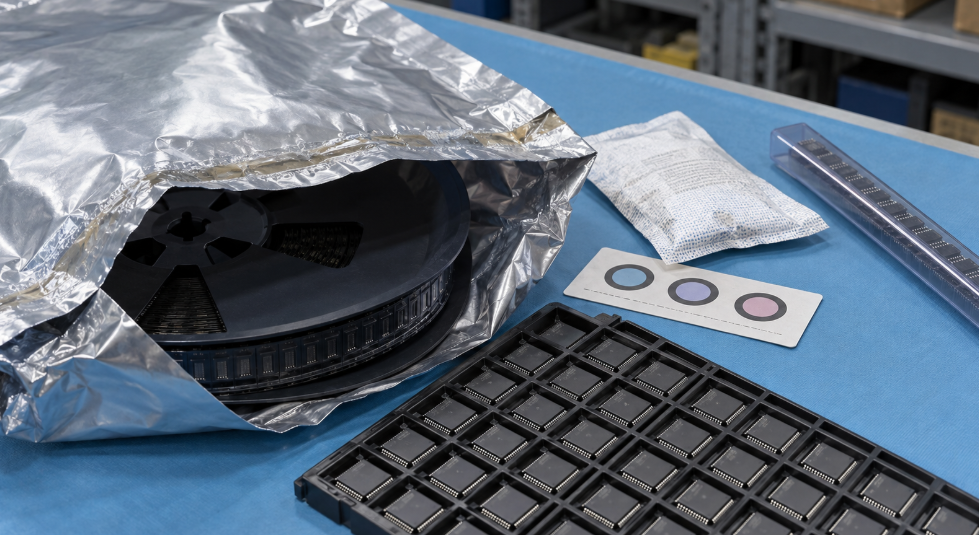
Look closely at the heat seal on a moisture barrier bag. An original seal is usually straight, even, and consistent across its length. Warning signs include double seal lines, melted areas, uneven edges, punctures, heavy creasing around the opening, or a new seal placed below an older one.
For moisture-sensitive devices, check whether the bag contains the expected desiccant and humidity indicator card. You should also review the moisture sensitivity level, seal date, and floor-life information.
The JEDEC handling standard for moisture-sensitive devices provides an established framework for packing, storing, shipping, and using moisture-sensitive surface-mount components. Missing moisture controls may indicate repacking, but they also create a separate reliability risk even when the devices are genuine.
Incorrect Reels, Trays, or ESD Packaging
Compare the reel, tray, tube, and protective materials with the component manufacturer’s normal packaging. Check reel diameter, pocket dimensions, cover tape, sprocket holes, tray markings, tube plugs, and ESD symbols.
A plain reel is not automatically suspicious. Independent distributors sometimes receive partial quantities or transfer components with the buyer’s approval. What matters is whether the supplier declares the transfer and preserves the original lot information.
Unexplained packaging changes are more concerning. A manufacturer label on a generic reel, mixed tray brands, poorly fitting pockets, or non-ESD material around sensitive devices should trigger further review.
Missing Moisture and Handling Information
For devices with moisture sensitivity requirements, you would normally expect clear handling information. This may include:
| Packaging item | What to verify | Risk raised by an abnormal result |
|---|---|---|
| Humidity indicator card | Correct type, readable spots, acceptable humidity condition | Moisture exposure or improper repacking |
| Desiccant | Present, intact, and suitable for the bag size | Weak moisture protection |
| MSL label | Correct level and floor-life instructions | Incorrect handling requirements |
| Seal date | Reasonable and consistent with other records | Repacking or poor stock control |
| ESD marking | Suitable packaging for the device | Electrostatic damage risk |
If the supplier claims the parts are factory sealed but these controls are missing, ask for original packaging photographs, packing history, and an explanation before accepting the lot.
2. Labels With Inconsistent Information
A packaging label should connect the physical stock with the purchase order and manufacturer data. Good counterfeit labels can look clean at first glance, so do not judge them by print quality alone.
Fonts, Barcodes, and Printing Quality
Compare the label with a verified manufacturer label from a similar period. Review font shape, character spacing, logo proportions, line alignment, label size, print density, barcode format, and field order.
Scan every barcode instead of only checking whether it looks sharp. The decoded value should agree with the printed manufacturer part number, quantity, lot code, and date code. A barcode that leads to unrelated data is a stronger warning than a minor font difference.
Manufacturers change label designs over time. Use a date-appropriate reference when possible. Comparing an older factory label with a current template may create a false alarm.
Label Data That Does Not Match the Components
Check the full manufacturer part number, not only the base number. A suffix may define the package, temperature grade, packing method, qualification status, lead finish, or shipment format.
Next, confirm that the label quantity matches the actual count and that the stated package matches the reel pockets, trays, or tubes. Compare the country of origin, lot code, date code, and moisture sensitivity information with the markings on the components.
A genuine label placed on unrelated stock can look perfect. The connection between the label and the parts matters more than the label by itself.
Signs of Relabeling or Label Replacement
Look for adhesive residue, torn paper fibers, different surface color around the label, overlapping labels, bubbles, lifted corners, and label dimensions that do not fit the normal placement area.
Use side lighting to examine the area underneath and around the label. A second outline may reveal that an earlier label was removed. If two labels are present, record both before attempting to separate them.
Ask the supplier why a label was replaced and who performed the work. A controlled warehouse relabeling process should produce records linking the new label to the original source information.
3. Incorrect Logos, Part Numbers, or Markings
Component markings help identify the manufacturer, device, assembly site, production period, and orientation. Counterfeiters may remove original markings and apply a new identity to used or lower-grade parts.
Manufacturer Logo and Font Differences
Compare the logo and marking style with official datasheets, manufacturer package drawings, and known-genuine parts from a similar production period. Inspect the shape of letters, spacing, line breaks, symbol placement, and distance from package edges.
Do not reject a lot only because the font looks slightly different. Manufacturers may use several assembly sites, marking machines, or approved subcontractors. The better question is whether the entire marking structure makes sense for that device and date.
Inspect several units across the reel or tray. A single printing variation may be normal. Random changes in logo size, character position, or marking depth across one lot deserve more attention.
Invalid or Incomplete Part Numbers
Search the full part number in the manufacturer’s current and archived documentation. Confirm that every suffix exists and matches the claimed package, temperature range, speed grade, qualification level, and packing option.
Counterfeit parts often use plausible combinations that were never released. One character may turn a commercial device into a claimed industrial or automotive version.
This check matters greatly when sourcing integrated circuits and other package-sensitive devices. Two parts with nearly identical top markings may have different voltage limits, operating temperatures, memory sizes, or qualification requirements.
Poor Laser Etching or Ink Printing
Inspect the markings under magnification and angled light. Watch for uneven depth, broken character edges, spelling errors, poor alignment, inconsistent brightness, or text that crosses a mold feature in an unusual way.
Laser marks that appear unusually bright may have been applied after resurfacing. Ink that wipes away too easily can also raise concern. Solvent or scrape testing should only be performed under a controlled inspection procedure because an uncontrolled test can damage genuine parts or produce misleading results.
Marking quality is one piece of evidence. Pair it with surface inspection, package measurements, traceability, and electrical testing.
4. Suspicious Date Codes and Lot Codes
Date and lot codes help buyers connect components to a production period and manufacturing batch. They are useful screening tools, but their formats vary widely between manufacturers and product families.
Date Codes That Conflict With Product Lifecycle
Check the product introduction date, end-of-life notice, last-time-buy date, and final shipment date. A component marked with a production date long after the manufacturer stopped making it requires an explanation.
Be careful with warehouse receipt dates, repack dates, and distributor labels. These are not the same as the device manufacturing date. Ask which date each field represents before drawing a conclusion.
Archived datasheets, product change notices, discontinuation notices, and manufacturer support can help you determine whether the code is reasonable.
Mixed Codes Within a Supposedly Uniform Lot
Inspect samples from the beginning, middle, and end of a reel or across several trays. If a shipment sold as one factory lot contains widely separated date codes, different assembly codes, or several marking formats, it may have been consolidated from multiple sources.
Mixed date codes can be acceptable when the quotation and order allow mixed lots. The risk appears when the supplier describes the stock as a uniform original lot, but the physical evidence says otherwise.
For production purchasing, state your date-code and lot-homogeneity requirements in the purchase order. This removes uncertainty before shipment.
Codes That Cannot Be Verified
A date code may use a year-week format, an internal trace code, or a combination of assembly and wafer information. Do not assume every four-digit number follows the same system.
Request the manufacturer’s marking convention or ask the supplier to show how the code connects to its source documents. Codes that conflict with the package, lifecycle, country of origin, or other units in the lot should move the shipment into a higher inspection level.

5. Resurfaced or Blacktopped Component Bodies
Blacktopping is the application of a new surface coating after original markings have been removed or covered. The part can then receive a different part number, date code, speed grade, or brand marking.
Uneven Surface Texture and Color
Examine the body under low magnification with light coming from several angles. A resurfaced area may appear smoother, rougher, darker, or more reflective than the sides and bottom of the package.
Compare multiple components. Genuine molded packages can show minor color variation, yet their texture and mold features usually remain consistent within the same lot.
Pay attention to coatings that stop near package edges, cover only the marked face, or collect around small recesses. These boundaries may be more revealing than the color itself.
Sanding, Grinding, and Chemical Residue
Directional scratches can indicate that the original marking was mechanically removed. Rounded edges, flattened mold texture, polishing marks, dust in corners, or residue around leads may point to grinding or chemical cleaning.
Some normal manufacturing and handling processes leave marks. You need to consider their direction, location, and consistency. Random handling scratches differ from repeated parallel lines across the marked surface.
If the commercial or application risk is high, a qualified laboratory can use advanced inspection methods such as scanning acoustic microscopy, material analysis, radiography, or controlled surface testing.
Covered Mold Marks and Pin-One Indicators
Mold cavities, ejector marks, pin-one indicators, and package depressions should match the manufacturer’s package drawing and normal construction.
A surface coating may partly fill an orientation dimple or soften the edge of a mold mark. Pin-one indicators that differ in depth or position across a single lot also deserve investigation.
Incorrect orientation marks create more than an authenticity concern. They can cause assembly errors and board damage if operators rely on the false indicator.
6. Leads and Terminations Showing Previous Use
Many counterfeit electronic components begin as parts removed from discarded or decommissioned equipment. Cleaning and refinishing may improve their appearance, but the leads often retain evidence of earlier assembly.
Solder Residue and Flux Contamination
Inspect leads, terminations, and the underside of the package under magnification. Look for old solder, flux residue, discoloration, uneven wetting areas, cleaning marks, and small solder beads.
Genuine components may have factory-applied solder finishes. The pattern should still match the component type and manufacturing process. Localized solder deposits or residue at the same height on several leads may indicate removal from a printed circuit board.
Residue can also affect solderability and long-term reliability. Authentication and assembly quality need to be evaluated separately.
Bent, Scratched, or Refinished Leads
Used parts may be straightened after removal. Warning signs include different lead angles, inconsistent coplanarity, tool marks, exposed base metal, cracked plating, or unusually thick solder coating.
Compare lead width, pitch, length, and finish with the package drawing. Inspect where the lead enters the body; this area can reveal mechanical stress that surface cleaning cannot hide.
A solderability test may help assess assembly suitability. X-ray fluorescence can examine plating composition when finish authenticity or material compliance is a concern.
Irregular BGA Solder Balls
BGA packages require careful underside inspection. Check ball diameter, roundness, pitch, color, height, and alignment. Missing balls, bridged balls, flux residue, scratched substrate surfaces, or inconsistent ball shape may indicate prior use or reballing.
Reballing is not always fraudulent when it is declared and performed under an approved process. Selling a reballed device as new and unused is a different matter.
Because visual inspection cannot reveal internal die and bond-wire construction, high-risk BGA purchases may also require X-ray comparison and electrical verification.
7. Package Dimensions or Weight Outside Specifications
Counterfeiters may copy the outside appearance of a component without matching the original die, lead frame, molding compound, or package tooling. Physical measurement can reveal differences that markings alone cannot show.
Measurements That Differ From the Datasheet
Use calibrated equipment to measure body length, width, height, lead pitch, standoff, terminal length, and relevant package features. Compare the results with the manufacturer’s package drawing and its stated tolerances.
Do not compare a measured value with a typical value as if it were an acceptance limit. Use the minimum and maximum limits shown in the drawing.
A single out-of-tolerance measurement may come from damage or a measuring error. Recheck the instrument, method, and sample before escalating the finding.
Weight Differences From Known-Genuine Samples
Weight comparison works best when you have a documented genuine sample with the same full part number, package, and production configuration. Use a suitable balance and measure several units rather than relying on one part.
A meaningful weight difference may point to a different die size, lead frame, package material, or internal construction. Small differences can also result from normal process variation.
Weight is a screening method, not final proof. Use it to decide whether X-ray, decapsulation, or electrical testing is justified.
Package Geometry That Varies Across the Lot
Compare chamfers, edges, mold seams, ejector marks, pin-one features, lead shapes, and body profiles across multiple units. Components from the same manufacturing lot should show a reasonable level of consistency.
Large variation may indicate mixed sources, reclaimed stock, or several package generations combined into one shipment. Before rejecting the material, check whether the manufacturer used more than one approved assembly site or package supplier.

8. Inconsistent Appearance Within the Same Lot
One component can look convincing. A full row often tells a different story. Place several units side by side under the same lighting and compare them as a group.
Differences in Marking Position and Clarity
Check whether text begins at the same location, follows the same baseline, and has similar depth or ink density. Small process variation is normal. Large random shifts, changing fonts, or alternating laser intensity are harder to explain in a uniform lot.
Inspect units from different parts of the packaging. Do not let the supplier select only the cleanest sample for review.
Mixed Surface Finishes or Package Styles
Look for changes in body gloss, molding texture, edge profile, lead color, terminal coating, and mold marks. A shipment may contain original parts from several production periods, reclaimed devices, or look-alike packages.
The correct response depends on what was ordered. Mixed manufacturer lots may be usable when disclosed and approved. They should not be represented as one traceable factory lot.
Evidence That Parts Came From Multiple Sources
Build an evidence map linking each packaging level to the physical parts. The outer carton, inner box, moisture barrier bag, reel, and components should tell a compatible story.
| Evidence group | Compatible condition | Warning condition |
|---|---|---|
| Labels | Matching part number, quantity, lot, and package | Conflicting data between packaging levels |
| Components | Consistent markings and package construction | Several fonts, finishes, or date ranges |
| Documents | Records tied to the shipped lot | Generic files with no shipment connection |
| Supplier explanation | Clear, recorded, and technically plausible | Changing or unsupported answers |
If the lot appears mixed, quarantine it before assembly. Record the anomalies with clear photographs and preserve the packaging for investigation.
9. Missing or Unverifiable Traceability Documents
Traceability is more than a certificate included with the shipment. It is the ability to connect the material to its source, part number, lot, handling history, and transaction records.
Incomplete Certificates of Conformance
A useful Certificate of Conformance should identify the issuing company, customer or order reference, manufacturer, complete part number, quantity, lot or date code, and authorized signatory where applicable.
A generic certificate that only says “parts are genuine” gives you little evidence. Check whether the document refers to the actual shipment and whether its issuer had control of the material.
A CoC supports traceability. It does not replace physical inspection or testing.
Documents That Conflict With Shipment Details
Compare the purchase order, quotation, packing list, CoC, test report, country-of-origin statement, and physical labels. Part numbers, quantities, lot codes, and manufacturer details should agree.
Watch for edited fields, inconsistent company names, missing report numbers, unclear laboratory details, or test results that do not identify the tested samples.
If a report was issued by a third-party laboratory, ask whether its report number can be verified directly with the laboratory.
An Unclear Chain of Custody
Ask the supplier to explain how the components moved from the original manufacturer or authorized channel to the current inventory. The required depth should reflect the application risk and source type.
IPC-1782 traceability guidance describes different levels of traceability for electronic products and supply chains. The practical lesson for buyers is simple: traceability requirements should be defined before the order, recorded at each transfer, and connected to the actual lot.
For parts used in automotive electronic systems, industrial controls, medical equipment, or other reliability-sensitive products, weak chain-of-custody evidence should lead to stronger testing and approval controls.

10. Supplier Claims That Cannot Be Supported
Counterfeit risk begins before the shipment arrives. A supplier’s response to reasonable verification questions often reveals whether its quality controls are real or only sales language.
Unusually Easy Availability of Obsolete Parts
When a discontinued or heavily constrained part suddenly appears in a large quantity, ask where the inventory came from, when it was acquired, how it was stored, and whether the lot is homogeneous.
Old stock can be genuine and usable. Its age raises additional questions about oxidation, moisture exposure, packaging integrity, solderability, and storage conditions.
Confirm the lifecycle status with the original manufacturer. Match the reported date codes with production history and request lot photographs before placing the order.
Reluctance to Provide Samples or Inspection Records
A responsible supplier should be willing to discuss packaging, labels, date codes, lot condition, and available traceability. For a higher-risk order, ask for current photographs that show the complete label and several actual parts.
Stock photographs and cropped label images provide limited value. Request images with a reference connected to your inquiry so you know the material was inspected for your order.
Samples can support dimensional, visual, solderability, X-ray, or electrical checks. Make sure the production shipment matches the approved sample lot.
No Clear Process for Handling Nonconforming Parts
Ask what happens when incoming inspection finds a mismatch. A usable process should include quarantine, identification, review, test escalation, customer notification, supplier corrective action, and controlled return or disposal.
The supplier should be able to preserve evidence and prevent suspect stock from returning to available inventory. Its quality system should also show who can approve release after an investigation.
Do not rely on claims such as “100% original” without supporting records. A mature supplier explains what it checks, what it cannot confirm, and which additional tests are available.
Conclusion
No single sign can prove that electronic components are counterfeit. A damaged bag may result from warehouse handling. A font variation may come from a different assembly site. An old date code may belong to genuine, properly stored inventory.
The core approach is to compare independent evidence. Packaging, labels, part markings, dimensions, lot consistency, documentation, supplier history, and test results should support the same identity. When several details conflict, stop the material before it reaches production and raise the verification level.
Duolink Electronics is an independent electronic components supplier supporting integrated circuits, semiconductors, passive components, connectors, and other electronic parts. Our team assists overseas buyers with BOM sourcing, part-number review, inventory checks, and hard-to-find component procurement. If you have an RFQ or BOM requirement, leave a message through our website so our sourcing team can review the details.
Frequently Asked Questions
Can visual inspection confirm that electronic components are genuine?
No. Visual inspection can identify suspect markings, resurfacing, used leads, packaging problems, and lot inconsistencies. Stronger confirmation may require traceability review, X-ray inspection, material analysis, electrical testing, or decapsulation.
What documents should I request before buying obsolete components?
Request the full manufacturer part number, quantity, date and lot codes, packaging photographs, available chain-of-custody records, CoC, storage information, and relevant inspection reports. Each document should connect to the offered lot.
Does a valid date code prove that a component is authentic?
No. Date codes can be copied or remarked. Verify the code against the product lifecycle, manufacturer format, package style, labels, lot records, and physical condition.
When should a buyer request X-ray inspection?
X-ray inspection is useful for high-risk, high-value, obsolete, safety-related, or poorly traceable parts. It can compare die size, lead-frame structure, bond wires, voids, and internal consistency without opening the package.
What should I do if only part of a shipment looks suspicious?
Quarantine the full lot and stop it from entering production. Record the packaging and component differences, notify the supplier, expand the sample size, and define additional testing before releasing any units.




 English
  German
  Spanish
  French
  Chinese
  Italian