The chip market in 2026 cannot be simply explained by the phrase “will there be a shortage?” There are some chips whose inventory is still relatively stable, but for certain categories, such as memory chips, power management ICs, automotive electronic-related chips, and some microcontrollers, there have already been issues with extended delivery times, price fluctuations, and supply uncertainty.
For overseas buyers, what they really need to focus on is not whether there is a “total shortage” in the market, but whether there are high-risk component numbers in their BOM. A delay in the delivery of a key chip could affect the production plan for the entire batch of products, especially in the context of the continuous growth in demand for AI, data centers, electric vehicles, and industrial equipment.
Duolink Electronics, as an independent electronic component supplier, has long provided support to customers in sourcing ICs, semiconductors, connectors, passive components, and hard-to-find materials. This article will start from the perspective of procurement and analyze the actual changes in the chip market in 2026, as well as how buyers can proactively reduce supply risks.
A brief overview of the chip market in 2026.
Ask ten people in procurement whether there’s a chip shortage in 2026, and you’ll get ten different answers. Some will tell you memory prices have gone through the roof. Others will say their microcontroller orders shipped on time last month. Both are correct, and that’s exactly the problem with treating 2026 as a single, uniform “shortage” the way the industry did back in 2021.
What’s actually happening is a patchwork of tight allocation, extended lead times, and outright scarcity that varies sharply by chip category, packaging node, and even by which fab produced the die. A buyer sourcing DRAM is fighting a completely different battle than a buyer sourcing a basic op-amp.
Why is the market different from the 2020–2021 shortage
The 2021 shortage traced back to a demand shock. COVID lockdowns pushed consumer electronics orders through the roof right as automakers slashed their own forecasts, assuming car sales would collapse. When demand snapped back, fabs couldn’t reallocate capacity fast enough, and the whole industry spent two years digging out.
2026 looks different at the root. This time, artificial intelligence infrastructure spending is the primary driver, not a temporary demand spike. Synopsys CEO Sassine Ghazi told CNBC that the current chip crunch will likely persist through 2026 and into 2027, and he pointed to a structural cause rather than a cyclical one: most memory output from the top manufacturers is being routed directly into AI infrastructure, leaving other markets starved of capacity. That’s a fundamentally different problem than a temporary order spike working its way through the system.
Layer on top of that a set of raw-material disruptions that didn’t exist in 2021. Strikes on Qatar’s Ras Laffan industrial hub disrupted one of the world’s largest helium production sites, sending fabs in South Korea into rationing mode within days. Helium isn’t optional in wafer fabrication — it’s essential for cooling and leak detection, and there’s no substitute at scale.
Shortage, allocation, and long lead time: what buyers should know
It helps to separate three terms that get used interchangeably but mean different things for your BOM. A true shortage means the part simply isn’t being made in sufficient volume anywhere. Allocation means the part exists, but manufacturers are rationing it to preferred or high-volume customers first. Long lead time means the part is available, but you’re waiting weeks or months longer than you used to.
Most of what buyers are experiencing in 2026 falls into allocation and long lead time rather than a hard shortage. That distinction matters for your sourcing strategy. A hard shortage means you need a redesign. Allocation and long lead time mean you need better forecasting, stronger distributor relationships, and earlier commitment dates.
Why some chips may be tight while others remain stable
Fab capacity isn’t a single pool of interchangeable output. Advanced-node logic, high-bandwidth memory, and mature-node analog chips are made on different equipment, in different facilities, often by different companies entirely. A crunch in HBM production doesn’t automatically mean your 8-bit microcontroller order gets delayed, because those parts rarely compete for the same manufacturing lines.
That’s why blanket statements like “there’s a chip shortage” don’t help you plan. You need to know which category your specific parts fall into, because the risk profile for each one is completely different heading into next year.
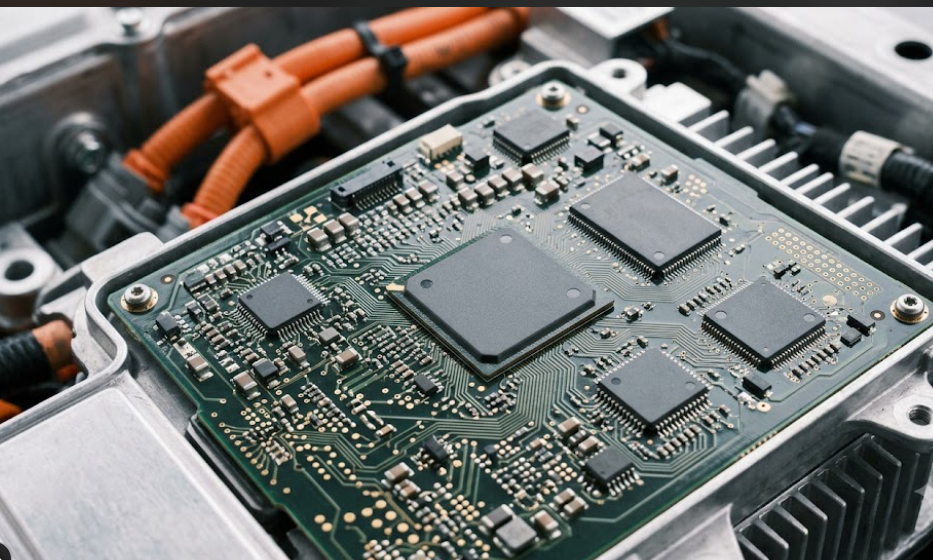
Why AI Demand Is Putting Pressure on Chip Supply
The scale of AI infrastructure spending in 2026 is difficult to overstate, and it’s reshaping where semiconductor capacity goes before it reaches anyone else.
The growing demand for AI processors, GPUs, and HBM
Big tech companies are on track to spend roughly $650 billion on AI infrastructure in 2026, an increase of about 80% over the prior year’s already record-setting total. That spending doesn’t just buy finished servers. It buys forward commitments on GPU capacity, high-bandwidth memory, and advanced packaging slots years in advance, effectively reserving fab output before smaller buyers even place their orders.
High-bandwidth memory sits at the center of this. It requires specialized manufacturing steps that memory makers can’t simply redirect from standard DRAM lines overnight, so every wafer devoted to HBM is a wafer not available for the DRAM and NAND that go into laptops, phones, and industrial equipment.
How data centers are competing for advanced semiconductor capacity
Hyperscalers aren’t just buying chips anymore — they’re buying certainty. Multi-year supply contracts, prepayments, and equity stakes in fabrication capacity have become common tools for locking in access ahead of smaller customers. If you’re sourcing components for a mid-size manufacturing operation, you’re effectively competing against buyers with far deeper pockets and far longer planning horizons for the same underlying wafer capacity.
This dynamic explains why technology manufacturers have started warning customers directly about rising prices and shrinking inventory tied to AI-driven demand. When the largest buyers in the world are willing to pay a premium for guaranteed supply, everyone further down the chain feels the squeeze in the form of longer waits and tighter allocation.
Why AI demand can affect memory and other related components
Memory shortages rarely stay contained to memory. When DRAM and NAND get expensive and scarce, engineers redesign boards to use less of it, switch to alternative memory architectures, or delay product launches entirely. Those redesign decisions ripple outward into demand for supporting components — power management ICs, voltage regulators, and passive components all see secondary demand shifts as engineering teams scramble to adapt their bills of materials.
Automakers are already feeling this collision directly, competing with consumer electronics, appliance, and aerospace manufacturers for a limited pool of DRAM and NAND supply. That’s a level of cross-industry competition for memory that simply didn’t exist a few years ago.
Automotive Chips May Face New Supply Risks
The automotive sector learned hard lessons in 2021, and many manufacturers built more resilient sourcing strategies afterward. Even so, 2026 is testing those strategies in new ways.
EVs, ADAS, and smart vehicles need more semiconductors
Modern vehicles are rolling computers. A typical new vehicle now contains up to 3,000 individual chips, spanning everything from basic sensor ICs to advanced driver-assistance processors. Electric vehicles push that number even higher, since battery management, power conversion, and thermal control all demand dedicated semiconductor content that combustion vehicles never needed.
If your organization designs or sources components for automotive electronics applications, that growing chip count means your BOM risk exposure is expanding faster than in most other industries, even as vehicle production volumes stay relatively flat.
Why mature-node chips still matter in automotive electronics
It’s tempting to assume automotive supply risk is all about cutting-edge processors, but the reality is more mundane. The majority of automotive semiconductor content runs on mature process nodes — the same older manufacturing lines used for basic microcontrollers, power management ICs, and analog sensors. Those mature-node fabs haven’t seen the same capacity investment as advanced-node facilities, because the profit margins on legacy chips are thinner.
That underinvestment creates a quieter risk. While headlines focus on advanced AI chips, the mature-node capacity that automotive suppliers depend on has grown tighter without attracting nearly the same attention or new fab investment.
How automakers are securing long-term chip supply
Tesla has already indicated the DRAM shortage will affect its 2026 production, with CEO Elon Musk framing the choice bluntly as needing to either accept capacity limits or invest in building fab capability of its own. Most automakers can’t build a fab, so they’re pursuing more practical alternatives: multi-year supply agreements directly with chipmakers, expanded approved vendor lists, and closer collaboration with independent distributors who can source hard-to-find part numbers when a primary supplier hits allocation limits.

Which Types of Chips Could Be Harder to Source in 2026?
Not every category faces the same pressure. Here’s a practical breakdown for buyers building 2026 sourcing plans.
| Chip Category | Primary Pressure Source | Typical 2026 Risk Level |
|---|---|---|
| Memory (DRAM, NAND, HBM) | AI data center demand, limited fab conversion capacity | High |
| Power semiconductors (SiC, PMICs, VRMs) | AI data center power density, EV adoption | High to Moderate |
| Microcontrollers & sensors | Legacy fab underinvestment, automotive demand | Moderate |
| Analog ICs (general purpose) | Mature-node capacity constraints | Moderate to Low |
| Discrete passives (resistors, capacitors) | Raw material costs, MLCC demand from AI boards | Moderate |
Memory chips: DRAM, NAND, and storage components
Memory remains the highest-risk category by a wide margin. Because expanding memory manufacturing capacity takes a minimum of roughly two years to come online, the current crunch has no fast fix regardless of how aggressively manufacturers invest today. If your product depends on standard DRAM or NAND, build extra lead time into every 2026 forecast, and don’t assume last year’s pricing will hold.
Power semiconductors for EVs and industrial equipment
Power delivery components like PMICs, VRMs, and high-voltage silicon carbide modules are facing lead times of 20 to 30-plus weeks, driven largely by the extreme power density requirements of modern AI data center racks. Industrial equipment manufacturers and EV suppliers are now competing against data center buyers for the same power semiconductor capacity, which is a genuinely new dynamic compared to prior shortage cycles.
Microcontrollers, sensors, and analog ICs in critical applications
These categories generally face moderate rather than severe pressure, but “moderate” still means longer lead times and tighter allocation than buyers were used to a few years ago. If you’re working through a microcontroller selection process for a new design, it’s worth verifying current lead times and stock levels before finalizing your architecture, rather than assuming availability will match historical patterns.
What Causes Chip Shortages Beyond Demand?
Demand gets most of the attention, but supply-side constraints deserve equal weight in any 2026 sourcing strategy.
Limited fab capacity and long production cycles
Building a new fab takes years, not months, and that mismatch between decision speed and construction speed is a permanent feature of this industry. Organizations like SEMI track global fab capacity investment closely, and their data consistently shows that even well-funded expansion projects take three to five years from groundbreaking to meaningful output. That lag means today’s capacity decisions won’t relieve today’s shortages — they’ll relieve shortages in 2028 or later.
Geopolitical risks and export restrictions
Trade policy has become a genuine supply variable rather than a background concern. Export restrictions on critical materials like tungsten, combined with rising prices, have led analysts to forecast another supply deficit in 2026. Tungsten isn’t a household name in electronics sourcing, but it’s essential to chip manufacturing equipment and appears in several fabrication processes at advanced nodes, with no practical large-scale substitute available.
The Semiconductor Industry Association regularly publishes analysis on how export controls and trade policy shifts affect global chip availability, and it’s worth monitoring as a standing part of your risk management process rather than something you check only during a crisis.
Supplier concentration and weak visibility across the supply chain
Many buyers don’t realize how concentrated certain material inputs actually are until a disruption hits. Helium, tungsten, and rare gases used in fabrication often trace back to a small number of geographic sources, which means a single regional disruption can ripple through the entire industry within days. Weak visibility compounds this problem — if you don’t know which fab, which region, or which raw material sits behind a given part number, you can’t assess your real exposure until it’s already too late to react.

How Buyers Can Prepare for Possible Chip Supply Tightness
None of this means you’re powerless. Buyers who plan deliberately tend to weather allocation cycles far better than those who react after the fact.
| Preparation Step | Why It Matters in 2026 | Typical Timeframe |
|---|---|---|
| Early BOM planning | Locks in allocation before hyperscalers absorb capacity | 6–12 months ahead |
| Lifecycle & alternate part verification | Avoids last-minute redesign when a part goes end-of-life | Ongoing, quarterly review |
| Diversified distributor relationships | Provides backup channels when primary suppliers hit allocation | Continuous |
Plan BOM requirements earlier
The single biggest lever you control is timing. Waiting until a design is finalized to start BOM sourcing conversations puts you at the back of the allocation queue, competing against buyers who committed months earlier. Start sourcing conversations during the design phase, not after it, and get formal quotes on lead-sensitive parts as early as your engineering process allows.
Verify lifecycle status and alternative part numbers
Every part on your BOM should have a documented lifecycle status and at least one qualified alternative. This is also the right moment to confirm compliance documentation is current — checking RoHS and REACH status alongside lifecycle data saves you from discovering a compliance gap during a last-minute substitution. Distributors with strong parametric search tools and manufacturer relationships can often surface cross-references you wouldn’t find through a standard catalog search.
Work with reliable sourcing partners for hard-to-find components
When a critical part goes on allocation, your distributor relationships determine how quickly you find a path forward. Independent distributors who maintain direct manufacturer relationships and real inventory visibility can frequently locate stock that isn’t showing up through standard channels, particularly for parts sitting in that moderate-risk category where availability shifts week to week.
Conclusion
The chip market in 2026 is not experiencing a complete shortage, but it cannot be said to be completely stable either. For storage chips, power chips, automotive electronic-related ICs, and some mature process components, there have already been situations such as extended delivery times, tight supply, or uncertain inventory.
For the procurement team, what is more important now is not to wait until there is a shortage before temporarily finding materials. Instead, they should proactively check the BOM risks, confirm the lifecycle, inventory status, and alternative models of key part numbers. The earlier the sourcing planning is done, the less risk there will be of affecting the production progress due to a single chip later on.
If you’re currently searching for electronic components and want a sourcing partner who understands what’s actually happening in this market, Duolink Electronics is an independent distributor of integrated circuits, semiconductors, passive components, connectors, and other electronic parts. We support customers with BOM sourcing, part number verification, stock availability checks, and procurement of hard-to-find components. If you have a sourcing need, reach out through our website and our team will help you find a path forward.
Frequently Asked Questions
Is there really a chip shortage in 2026?
Not every chip is in shortage in 2026. Some standard parts are still available, but memory chips, power semiconductors, automotive chips, and certain mature-node ICs are facing tighter supply, longer lead times, or allocation pressure.
Which chips are most likely to be hard to source in 2026?
Memory chips such as DRAM, NAND, and HBM are among the highest-risk categories. Power management ICs, microcontrollers, sensors, and chips used in EVs, AI servers, and industrial equipment may also become harder to source depending on the part number and manufacturer.
Why is AI demand affecting chip availability?
AI data centers require large volumes of GPUs, HBM memory, power semiconductors, and advanced packaging capacity. When major technology companies reserve this capacity early, smaller buyers may face longer lead times or limited allocation for related chip categories.
How can buyers reduce chip supply risk?
Buyers should review their BOM earlier, confirm lifecycle status, prepare alternative part numbers, and avoid relying on only one supplier. For critical components, it is better to check stock and lead time before the part becomes urgent.


 English
  German
  Spanish
  French
  Chinese
  Italian