
From smartphones, computers, and household appliances, to automotive electronics, industrial control equipment, and medical instruments, almost all modern electronic products cannot do without integrated circuits inside. It is usually just a small black chip, but internally it integrates a large number of transistors, resistors, capacitors, and other electronic structures, capable of performing tasks such as data processing, signal amplification, device control, information storage, and power management. It is precisely because integrated circuits can achieve complex functions in a very small space that electronic devices can continuously develop towards smaller sizes, higher performance, and lower power consumption.
However, integrated circuits are not a single type of product. Microcontrollers, microprocessors, memory chips, operational amplifiers, power management ICs, and communication interface chips all fall under the category of integrated circuits, but they differ significantly in terms of their functions, structures, and application scenarios. For engineers, procurement personnel, and product development teams, understanding the characteristics of different ICs not only helps in making correct component selections but also reduces issues such as mismatched models, incorrect packaging, insufficient performance, and incompatible substitute materials. This article will introduce the basic definition, main types, core functions, and common applications of integrated circuits.
What Is an Integrated Circuit?
Integrated Circuit Definition
An integrated circuit, or IC, is a complete electronic circuit built onto a single piece of semiconductor material, usually silicon. Instead of wiring together separate transistors, resistors, and capacitors on a board, all of those elements are fabricated together on one chip. That single chip can then perform a function that would otherwise need dozens or even thousands of discrete parts. For a board-level comparison with discrete devices, see our overview of common PCB components and the different functions those component families perform.
Think of it this way. A discrete circuit is like building a house brick by brick on-site. An integrated circuit is like ordering a prefabricated room that arrives finished, tested, and ready to bolt into place. The end result does the same job, but the IC version is smaller, more reliable, and far cheaper to produce at scale.
This single shift, moving from discrete components to integrated ones, is the reason modern electronics exist in their current form. Without it, a smartphone would be the size of a refrigerator, and a server rack would need its own power substation.
How an IC Works
Inside an IC, electrical signals travel through microscopic pathways etched directly into the semiconductor. These pathways connect transistors that switch on and off, resistors that control current flow, and capacitors that store charge, all working together according to a specific circuit design.
The chip receives input signals, whether that is voltage, digital data, or an analog waveform, processes them according to its internal logic, and produces an output. A microcontroller IC might read a button press and turn on an LED. A power management IC might take a noisy 12V input and output a clean, regulated 3.3V rail. The complexity hides inside the package, but the function is always: receive, process, output.
What makes this remarkable is scale. A modern processor IC can contain billions of transistors packed into an area smaller than your fingernail. Every one of those transistors has to work correctly, every time, across millions of units. That level of precision is why IC manufacturing is one of the most demanding processes in all of industrial production.
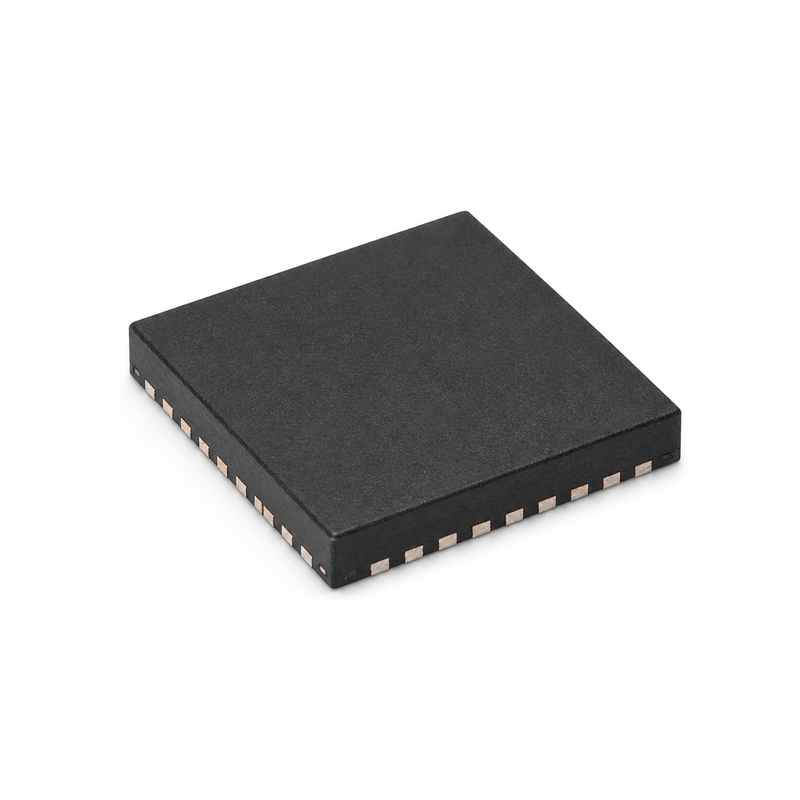
Main Components Inside an Integrated Circuit
Every IC is built from a handful of fundamental building blocks, repeated and combined in different patterns depending on the chip’s purpose.
| Component | Function Inside the IC |
|---|---|
| Transistors | Act as switches or amplifiers, the core building block of digital and analog logic |
| Resistors | Control current flow and set voltage levels at specific points in the circuit |
| Capacitors | Store and release charge, used for filtering, timing, and stabilizing voltage |
| Diodes | Allow current to flow in one direction, used for protection and signal rectification |
| Interconnects | Microscopic metal traces that link components together inside the chip |
Designers arrange these elements into functional blocks, such as amplifiers, logic gates, or memory cells, and then connect those blocks to build the complete circuit. The arrangement is what separates a simple voltage regulator from a multi-core processor. Same basic ingredients, vastly different outcomes depending on how they are combined.
How Are Integrated Circuits Manufactured?
Understanding the manufacturing process matters more than most buyers realize. When you know how an IC is actually made, you start to understand why lead times stretch, why certain packages cost more to produce, and why a “simple” chip shortage can ripple through an entire industry for months.
Semiconductor Materials and Wafer Fabrication
IC production starts with a thin, polished disc of silicon called a wafer. Silicon is chosen because it is abundant, stable, and has the right electrical properties to act as a semiconductor, meaning it can either conduct or block electricity depending on how it is treated.
Manufacturers grow large silicon crystals, slice them into wafers, and polish each one to a mirror finish. This wafer becomes the foundation for hundreds or thousands of individual chips, all built in parallel across its surface. The size of the wafer, commonly 200mm or 300mm in diameter, directly affects how many chips a single production run can yield, which is part of why larger fabs can produce at lower cost per unit.
Photolithography, Etching, and Doping
Once the wafer is ready, fabrication plants use photolithography to project circuit patterns onto its surface using light and photosensitive chemicals. This step defines exactly where transistors, wires, and other structures will form.
After the pattern is set, etching removes material from specific areas to carve out the circuit structure, while doping introduces tiny amounts of other elements into the silicon to change its electrical behavior in precise locations. These steps repeat dozens of times, building up layer after layer until the full circuit takes shape.
This is also where most of the variation between IC manufacturers comes from. A foundry with tighter process control and smaller transition nodes can pack more transistors into the same area, which is why two chips with similar specs can still differ noticeably in power consumption, heat output, and price.
IC Packaging and Final Testing
Once fabrication finishes, the wafer is cut into individual dies, and each die gets mounted into a protective package. This packaging step is not just cosmetic. It protects the delicate silicon from moisture, physical damage, and electrical interference, while also providing the metal leads or balls that let the chip connect to a printed circuit board.
Before any IC ships, it goes through electrical testing to confirm it meets its specified performance. Chips that fail are discarded, and the ones that pass get marked, sorted, and packed for distribution. This is also the stage where counterfeit risk enters the supply chain, since untested or recycled dies can sometimes be repackaged and sold as new. Working with a supplier that verifies authenticity at intake is one of the most underrated protections a buyer can have, and it is something worth asking about directly rather than assuming.
Main Types of Integrated Circuits
Not every IC does the same job, and sourcing the wrong category for your application is one of the most common and most expensive mistakes in early-stage design.
Analog, Digital, and Mixed-Signal ICs
Analog ICs process continuous signals, things like sound, temperature, or light intensity, that vary smoothly rather than switching between discrete states. Operational amplifiers and voltage regulators fall into this category. They are the chips that interface with the real, messy, analog world.
Digital ICs, by contrast, work entirely in binary, processing signals that are either on or off. Logic gates, digital signal processors, and most memory chips belong here. They excel at computation, storage, and decision-making, but they cannot directly interpret analog inputs without help.
Mixed-signal ICs bridge the two. An analog-to-digital converter takes a continuous analog signal and translates it into digital data a processor can understand. A digital-to-analog converter does the reverse. These chips sit at the boundary between the physical world and digital computation, and they show up in nearly every sensor-driven design you will ever specify.
Microcontrollers, Microprocessors, and Memory ICs
Microcontrollers combine a processor core, memory, and input/output peripherals all on one chip, making them ideal for embedded control tasks like running a motor driver or managing a small appliance. Microprocessors, on the other hand, typically need external memory and support chips, but offer significantly more raw computing power, which is why they show up in computers and servers rather than embedded gadgets.
Memory ICs store data, either temporarily through volatile memory like RAM, or permanently through non-volatile memory like flash. Choosing between these categories depends entirely on your application’s need for speed, persistence, and power consumption, and getting it wrong usually means a board respin.
Power Management, Interface, and Communication ICs
Power management ICs regulate, convert, and distribute electrical power throughout a device, keeping every other component supplied with clean, stable voltage. A buck converter that steps down a higher input voltage to a lower, regulated output is a classic example, and it is often the chip that determines how efficiently the rest of your design runs.
Interface ICs handle communication between different parts of a system, translating signals between protocols like USB, I2C, or SPI so different chips can talk to each other reliably. Communication ICs go a step further, managing data transmission over networks, whether that is a CAN bus in a vehicle or a wireless radio link in an IoT sensor.
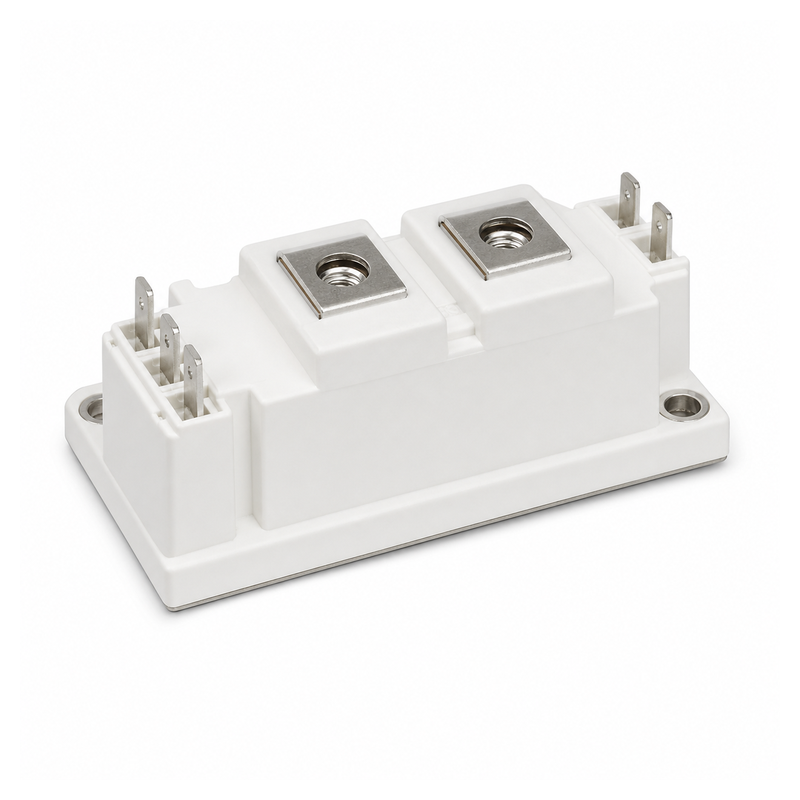
What Are the Main Functions of an Integrated Circuit?
Stepping back from categories, it helps to think in terms of what an IC is actually accomplishing inside a finished product. Every chip you will ever source falls into one or more of these functional roles.
Signal Processing and Amplification
Many ICs exist to take a weak or noisy signal and clean it up, strengthen it, or extract useful information from it. An audio amplifier IC boosts a small signal from a microphone into something powerful enough to drive a speaker. A signal conditioning IC filters out noise so a sensor reading stays accurate. Without this layer of processing, most real-world signals would be too faint or too corrupted to use directly.
Data Processing, Storage, and Control
This is the function most people picture when they hear “chip.” Processors execute instructions, memory ICs hold data and program code, and controller ICs manage the timing and sequencing of operations across a system. Together, these functions are what allow a device to actually think, remember, and act rather than just pass electricity through wires.
Voltage Regulation and Power Management
Every electronic system depends on stable power, and that stability rarely comes for free. Power ICs convert input voltage into the precise levels each component needs, protect against overcurrent and overheating, and manage how power flows during startup, operation, and shutdown. A poorly chosen power IC can cause instability that looks like a software bug for weeks before anyone traces it back to the power rail, which is a frustration I have seen play out in more design reviews than I can count.
Common Integrated Circuit Packages
Package selection affects far more than how a chip looks. It determines how it mounts to your board, how much heat it can dissipate, and how forgiving it is during assembly.
Through-Hole and Surface-Mount Packages
Through-hole packages have leads that pass through holes drilled in the PCB and are soldered on the opposite side. They are mechanically strong and easy to handle by hand, which makes them common in prototyping, power electronics, and applications that need to withstand physical stress or vibration.
Surface-mount packages sit directly on the board surface and solder to pads without any drilled holes. They are smaller, support higher-density layouts, and dominate modern production because they work well with automated assembly. If your design needs to shrink or scale into high-volume manufacturing, surface-mount is almost always the direction you are heading.
DIP, SOIC, QFP, QFN, and BGA Packages
| Package | Mount Type | Typical Use Case |
|---|---|---|
| DIP | Through-hole | Prototyping, simple control circuits, hobbyist and educational boards |
| SOIC | Surface-mount | General-purpose ICs needing a balance of size and hand-solderability |
| QFP | Surface-mount | Higher pin-count chips like microcontrollers and signal processors |
| QFN | Surface-mount | Compact designs needing good thermal performance without leads |
| BGA | Surface-mount | High pin-count, high-performance chips like processors and FPGAs |
As pin count and performance requirements climb, packages generally shift from DIP toward QFN and BGA, trading easy hand assembly for density and thermal performance. There is no universally “best” package. There is only the right package for your specific combination of pin count, thermal load, and production method.
How Package Type Affects PCB Design
Package choice drives PCB layout decisions in ways that are easy to underestimate during early design. BGA packages, for instance, often require careful via placement and multiple board layers to break out all the connections underneath the chip, since there are no exposed leads around the edges to solder directly. QFN packages need exposed thermal pads connected to copper planes to manage heat effectively, and skipping that detail can lead to thermal throttling or premature failure in the field.
Smaller packages also tighten your tolerances for solder paste application and reflow profiles. A board designed around hand-solderable SOIC packages will need a different manufacturing approach entirely if a later revision swaps in a fine-pitch QFN. This is exactly the kind of detail that should be confirmed with your component supplier before finalizing a layout, not discovered after the first prototype run comes back with intermittent connections.
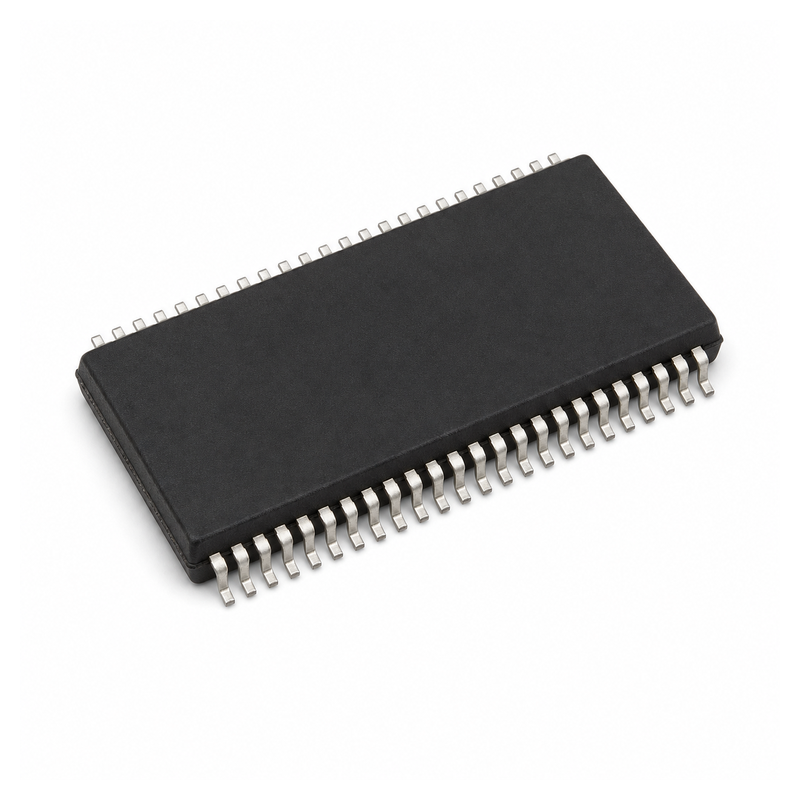
Applications of Integrated Circuits
ICs sit inside nearly every modern device, but the specific demands placed on them shift significantly depending on the industry.
Consumer Electronics and Computing
Smartphones, laptops, and wearables rely on dense, power-efficient ICs that balance performance against battery life. Processors, memory chips, and power management ICs work together constantly, switching between performance and low-power states depending on what the user is doing at any given moment. Cost and size pressure here are intense, since consumer products live or die on margin and form factor.
Automotive and Industrial Automation
Automotive ICs face a completely different set of demands. They need to survive extreme temperature swings, electrical noise, and vibration over a lifespan measured in years, not months. Automotive-grade qualification, often denoted by AEC-Q100 certification, exists specifically because a chip failure in a vehicle carries far higher stakes than a glitch in a consumer gadget.
Industrial automation shares similar reliability demands. PLCs, motor drives, and sensor interfaces in factory equipment need to run continuously, often in harsh environments with dust, heat, and electrical interference, for years without failure. Downtime in an industrial setting has a direct cost attached to it, which makes component reliability a financial decision as much as a technical one.
Medical, Communication, and Aerospace Systems
Medical devices demand ICs with exceptional precision and reliability, since errors in monitoring or diagnostic equipment carry direct consequences for patient safety. Communication systems, from 5G infrastructure to wireless sensor networks, rely on specialized RF and signal processing ICs that need to maintain performance across challenging electromagnetic environments.
Aerospace and defense applications push reliability requirements even further, often requiring components that meet strict qualification standards and have documented, traceable sourcing. In these sectors, the chip’s specification sheet is only part of the story. The documentation trail behind it matters just as much as the silicon itself.
How to Select the Right Integrated Circuit
This is where sourcing experience actually pays off. Datasheets tell you the numbers, but choosing the right IC means reading between those numbers and understanding how they apply to your specific design and supply situation.
Check Electrical and Performance Specifications
Start with the fundamentals: voltage range, current rating, frequency response, and power consumption. These need to match your circuit’s actual operating conditions, not just its nominal ones. A regulator rated for your typical load but not your peak load will work fine in testing and then fail intermittently in the field, which is one of the more frustrating issues to diagnose after the fact.
Pay close attention to tolerance and accuracy specifications too. A resistor with a 1% tolerance behaves very differently in a precision measurement circuit than a 5% tolerance part, even though both might look interchangeable at first glance on a BOM.
Consider Package, Temperature, and Application Requirements
Match the package type to your assembly process and thermal needs, as covered earlier. Then check the operating temperature range against your actual deployment environment. A commercial-grade chip rated for 0°C to 70°C will not survive long in an outdoor industrial enclosure that swings well below freezing in winter and well above 70°C in direct summer sun.
Also consider mechanical constraints. Board space, height restrictions inside an enclosure, and proximity to heat-sensitive components can all eliminate certain package options before you even get to electrical specifications.
Verify Manufacturer, Lifecycle, Availability, and Alternatives
This is the step most engineers skip, and it is the one that causes the most pain later. Check the part’s lifecycle status. Is it active production, or is it approaching end-of-life? A chip that looks perfect on paper but gets discontinued in eighteen months creates a redesign problem you do not want to inherit.
Confirm the manufacturer is established and the part has a traceable supply history. Counterfeit and gray-market components are a real risk in this industry, particularly for parts experiencing shortages or sudden demand spikes. Buying from an authorized or reputable distribution channel, and asking direct questions about sourcing and inspection practices, protects your build far more than chasing the lowest unit cost.
Finally, identify pin-compatible or functionally equivalent alternatives before you need them, not after a shortage hits. Having a qualified second-source option ready in your design files can be the difference between a one-day delay and a three-month production halt. This kind of forward planning is exactly what separates a resilient BOM from a fragile one, and it is a habit worth building into every new design from day one.
Conclusion
An integrated circuit is far more than a small black rectangle on a PCB. It is a complete, engineered system packed onto a sliver of silicon, built through a manufacturing process that demands extraordinary precision at every step. Understanding how ICs are made, what types exist, and how to evaluate them for your specific application turns component selection from guesswork into a repeatable, reliable process.
Whether you are designing a new product or managing an existing BOM through a supply shortage, the fundamentals stay the same: match the specifications to your real operating conditions, choose a package that fits your assembly process and thermal needs, and always verify lifecycle status and sourcing before you commit.
If you are also looking for electronic components, Duolink Electronics is an independent electronic component distributor supplying integrated circuits, semiconductors, passive components, connectors, and other electronic parts from a network of trusted manufacturers. As an electronic components supplier with broad inventory access, our team supports BOM sourcing, part number lookups, stock checks, and sourcing for hard-to-find or obsolete components. If you have a requirement, feel free to leave us a message on our website or reach out to our team directly on WhatsApp.
Frequently Asked Questions
How do I confirm if an integrated circuit is the correct part for my BOM?
The safest way is to check the full manufacturer part number, package type, voltage range, temperature grade, pin count, and lifecycle status. For ICs, even a small difference in suffix, package code, or temperature rating may affect PCB compatibility or product reliability.
Why is package type important when sourcing ICs?
Package type affects PCB layout, soldering process, thermal performance, and assembly cost. For example, SOIC, QFN, QFP, and BGA packages may have similar functions but very different mounting requirements. Before purchasing, buyers should confirm whether the package matches the original PCB design and production process.
Can one IC be replaced by another similar part?
Sometimes, but it must be checked carefully. A replacement IC should be compared by electrical specifications, pin configuration, package size, operating temperature, and firmware or system compatibility. For production BOMs, it is better to test samples before approving a substitute part.
What information should I provide when requesting an IC quotation?
Please provide the manufacturer part number, required quantity, package type, target delivery time, and whether you accept alternatives. If you have a BOM list, you can send the full file so the supplier can check availability, lead time, and possible replacement options more accurately.


 English
  German
  Spanish
  French
  Chinese
  Italian