Choosing an STMicroelectronics distributor takes more than searching for a part number and asking whether it is available. The same ST component may appear through several supply channels, with different date codes, lot structures, packaging conditions, traceability levels, and delivery schedules.
Those differences matter.
A microcontroller with the correct family name may still have the wrong memory size, temperature grade, package, or programmed option. A power device may look identical from the outside while carrying a different voltage rating or qualification level. Even genuine components can create production problems when they have been stored poorly, exposed to moisture, mixed across lots, or packed without proper electrostatic protection.
After more than 15 years in electronic component sourcing, I have learned that the quality of a distributor becomes clear through the questions they can answer before an order is placed. A reliable supplier should explain where the parts are located, what documentation is available, how the goods will be inspected, and what happens when the original requirement cannot be met.
The following ten questions can help you evaluate an STMicroelectronics distributor with more confidence.
1. Is the Distributor Authorized to Sell STMicroelectronics Products?
The first step is to understand what type of supplier you are dealing with. An authorized STMicroelectronics distributor and an independent distributor may both supply ST parts, yet their sourcing models are different.
Authorized and Independent Distribution Channels
An authorized distributor has a formal sales relationship with STMicroelectronics. Products normally move from the manufacturer into the distributor’s approved supply chain. Buyers can check ST’s official sales office and distributor directory when verifying an authorization claim. ST also identifies global e-commerce distributors through this directory.
An independent distributor does not have that direct authorization relationship. It may source products from OEM excess inventory, contract manufacturers, regional distributors, approved resellers, original equipment producers, or other verified supply channels.
| Area | Authorized Distributor | Independent Distributor |
|---|---|---|
| Manufacturer relationship | Directly approved by STMicroelectronics | No direct manufacturer authorization |
| Typical sourcing route | Manufacturer-controlled distribution channel | Multiple verified market channels |
| Traceability | Usually stronger and more standardized | Depends on the original source and available documents |
| Common purchasing need | Current parts, planned production, technical support | Shortages, older parts, mixed BOMs, urgent requirements |
| Buyer verification | Confirm authorization on ST’s website | Review source, inspection plan, records, and supplier background |
Authorization should never be assumed from a logo placed on a website. Ask the supplier to state its status clearly. If it claims to be authorized, verify the company name on the manufacturer’s official directory rather than relying on a certificate image or sales statement.
When an Independent Distributor May Be Considered
An independent channel can be useful when an authorized distributor cannot support the required quantity, date code, packaging format, or delivery schedule. It may also help with older ST part numbers, end-of-life inventory, discontinued packages, small production runs, and BOMs containing components from several manufacturers.
The core question is not whether an independent distributor exists outside the authorized network. The real question is whether it controls the added supply-chain risk.
Before moving forward, check the supplier’s legal company name, registration records, physical address, corporate bank information, business email domain, inspection process, warehouse capability, and complaint procedure. The company receiving payment should match the company shown on the quotation and commercial documents.
A professional independent ST distributor should never present itself as authorized when it is not.

2. Can the Distributor Provide Complete Product Traceability?
Traceability tells you where the components came from and how they moved through the supply chain. It is one of the strongest tools available when evaluating semiconductor risk.
Documents and Information to Request
Ask whether the distributor can provide original manufacturer labels, lot numbers, date codes, country-of-origin information, packing information, shipping records, and certificates supplied by the original source.
The exact document package will depend on the channel. Authorized stock may include a manufacturer certificate of conformance. Independent-channel stock may have distributor invoices, packing labels, warehouse records, source declarations, inspection reports, or documents from a previous approved buyer.
A date code alone does not prove traceability. It only indicates a manufacturing period under the manufacturer’s coding system. Proper traceability connects the physical goods to labels, lot details, source records, inspection results, and shipping documents.
Ask for clear photographs of the outer box, reel, tray, tube, moisture barrier bag, and component markings before shipment. The quantity shown on the labels should match the offered quantity. Part numbers, lot codes, package names, and label formats should also remain consistent across the document set.
Why Supply-Chain Records Matter
Strong records help your quality team isolate affected material if a problem appears during incoming inspection, board assembly, functional testing, or field use. Without lot-level information, one failed component may force a buyer to quarantine a much larger amount of stock.
The IPC-1782B traceability framework describes different levels of internal and external supply-chain traceability based on product risk. It applies to parts and materials moving through electronic manufacturing and recognizes that aerospace, medical, automotive, telecom, and consumer products may require different traceability levels.
You do not need every supplier to provide the same document package. You do need the available records to match the risk of your application.
3. How Does the Distributor Verify Product Authenticity?
Statements such as “100% original” have little value without a defined inspection process. Ask the STMicroelectronics distributor what it checks, who performs the inspection, and what evidence you will receive.
Incoming Inspection and Visual Examination
A sensible inspection process starts with the packaging. Inspectors should compare label layout, fonts, barcodes, part numbers, moisture sensitivity information, quantity, country of origin, seal condition, and packaging materials.
The physical components should then be examined under suitable magnification. Inspectors may look for uneven surfaces, sanding marks, coating differences, inconsistent laser markings, damaged leads, oxidation, solder residue, incorrect pin shapes, and signs that a device has been removed from a previous assembly.
Visual inspection is useful, but it cannot confirm every internal detail. A carefully remarked device may pass a quick external check.
When Advanced Testing Is Needed
X-ray inspection can help compare die position, die size, bond-wire structure, lead-frame layout, and internal consistency across a sample group. It can also reveal empty packages, unusual internal structures, or mixed devices inside one lot.
Electrical testing checks selected parameters against the manufacturer’s datasheet. The correct test scope depends on the component. A microcontroller may require identity checks, memory tests, power-current measurements, interface testing, and functional programming. A diode, MOSFET, sensor, amplifier, or memory device needs a different test plan.
Decapsulation exposes the die for internal examination. This is a destructive method, so it is normally performed on selected samples when the source risk or application risk justifies it. Die markings and structure can then be compared with known references.
No single method proves every part is genuine. The better approach combines source review, document checks, packaging inspection, external examination, sample testing, and lot control.
Reducing the Risk of Counterfeit or Mixed Material
Ask whether all units come from one lot or several lots. Mixed date codes are not automatically unacceptable, but they should be declared before shipment. Different markings, lead finishes, reel types, or label formats within the same order deserve closer review.
The distributor should also explain whether the parts are factory-new, unused surplus, long-term inventory, reclaimed, refurbished, or programmed. Vague descriptions create room for misunderstandings. Written classification is safer.

4. Does the Distributor Have Reliable Stock Availability?
A website showing stock does not always mean the distributor physically holds the parts. The quantity may come from a partner warehouse, another broker, an old inventory feed, or a supplier that has not reconfirmed the goods.
Confirm Where the Stock Is Located
Ask one direct question: “Is this quantity physically stored in your own warehouse?”
If the answer is no, find out whether the stock is held by an authorized distributor, contract manufacturer, OEM, trading partner, or another independent source. The supplier does not always need to reveal confidential source names before an order, but it should be able to describe the channel and available traceability.
Warehouse photos should show the actual label, quantity, packaging format, date code, and lot code. A handwritten note or current timestamp beside the material can help confirm that the images relate to the present offer rather than an older shipment.
Reconfirm the Details Before Ordering
Stock information can change quickly. Ask the distributor to reconfirm the following details close to the order date:
The full manufacturer part number must match your requirement, including suffixes. The available quantity should be separated by lot and date code. Packaging should be identified as reel, cut tape, tray, tube, bag, or bulk. The supplier should state whether the goods are ready to ship, waiting for warehouse transfer, or still subject to source confirmation.
A reliable distributor will tell you when stock is not fully controlled. That answer is more useful than a confident promise based on unverified information.
5. Can the Distributor Support Your Required ST Part Numbers?
STMicroelectronics has a broad portfolio covering microcontrollers, microprocessors, MEMS sensors, power semiconductors, analog devices, automotive products, connectivity devices, memories, protection components, and other semiconductor categories.
A distributor may support one product group well while having limited access to another. Do not judge its capability from one available STM32 part number.
Check Product and Package Coverage
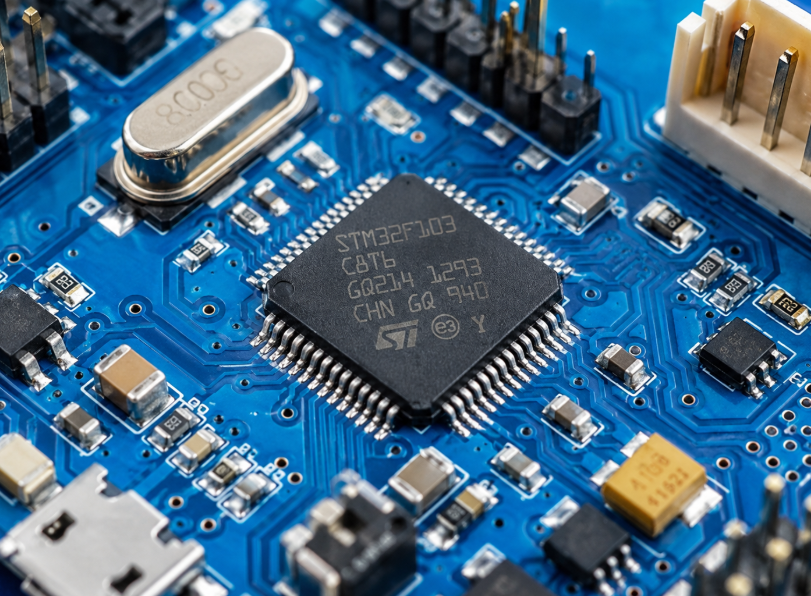
Send the complete manufacturer part number rather than a shortened family name. STM32F103, for example, identifies a product family, not one orderable device. Memory size, package, pin count, temperature range, packing method, and product revision may be represented in the full suffix.
The same rule applies to ST sensors, power transistors, EEPROMs, amplifiers, interface ICs, diodes, and automotive-grade devices.
You can review common STMicroelectronics components and part-number categories before preparing your inquiry. Include every suffix shown in your approved BOM.
Ask About Older and Hard-to-Find ST Devices
Some buyers need a part that is still active but has limited channel inventory. Others are maintaining equipment designed many years ago and cannot redesign the board immediately.
Ask whether the distributor can search for shortage parts, previous-generation devices, obsolete components, and inventory held outside public online catalogs. The supplier should still confirm lifecycle status and explain the source type. “We found it” is only the start of the review.
Evaluate Complete BOM Capability
A capable electronic component distributor should be able to process multiple ST part numbers in one request. It should also support a BOM containing other semiconductor brands, passive components, connectors, relays, oscillators, and protection devices.
Look at how the distributor handles incomplete part numbers, duplicated lines, mismatched quantities, old revisions, and unclear package information. A sourcing team that asks detailed questions early is less likely to ship the wrong material later.
6. Are Lead Times and Delivery Schedules Clearly Communicated?
Terms such as “available,” “incoming,” and “factory order” can describe very different situations. Ask the distributor to define the stock status in plain language.
| Stock Status | What It Usually Means | Evidence to Request | Main Scheduling Risk |
|---|---|---|---|
| Physical stock | Goods are already in a warehouse | Current label photos, quantity and lot confirmation | Warehouse processing or inspection delay |
| Partner stock | Goods are held by another supply-channel partner | Source confirmation and transfer schedule | Quantity may change before reservation |
| In-transit stock | Goods have shipped toward the distributor or source warehouse | Shipping record and expected arrival date | Customs, transport, or receiving delay |
| Incoming allocation | Quantity is expected from a future supply batch | Written allocation and estimated receipt date | Manufacturer schedule may move |
| Order-based supply | Goods will be sourced after order confirmation | Source type and estimated procurement stages | Availability is not yet physically secured |
Ask for Dates, Not Vague Time Ranges
The distributor should separate sourcing time, incoming inspection time, testing time, packing time, and international transit time. A statement such as “delivery in two weeks” is incomplete if it does not explain when the countdown starts and whether the stock has already been secured.
Request an estimated ready-to-ship date. Ask when the first confirmation update will be provided. For partial availability, agree on whether the order can ship in stages or must remain together.
Plan for Quantity Changes and Delays
The supplier should explain how it handles a source reducing the available quantity, changing the date code, or withdrawing the stock. No substitute, split lot, or package change should be accepted without your written approval.
Good communication does not mean that a schedule can never change. It means that changes are reported early, supported with facts, and followed by a workable option.

7. Can the Distributor Help With Cross-References and Alternative Parts?
When an original ST part is unavailable, an alternative may keep a project moving. That does not make every similar device a safe replacement.
Compare More Than the Main Function
For an MCU, compare the core architecture, flash and RAM, package, pinout, supply voltage, clock system, timers, ADC performance, communication interfaces, security features, boot method, temperature grade, development tools, and software migration requirements.
For analog and power products, review operating voltage, current, power dissipation, switching behavior, accuracy, noise, thermal characteristics, protection features, package dimensions, and qualification level.
A distributor may identify possible candidates, but the design engineer must approve the replacement. The sourcing team should provide datasheets and clearly mark every known difference rather than describing a device as “the same.”
This microcontroller selection guide explains several technical areas that should also be reviewed when comparing STM32 alternatives.
| Comparison Area | Questions to Ask |
|---|---|
| Mechanical fit | Is the package identical? Do the footprint and pin assignments match? |
| Electrical limits | Are voltage, current, timing, thermal, and tolerance limits compatible? |
| Functional behavior | Are peripherals, memory, protection functions, and startup behavior equivalent? |
| Software impact | Will firmware, drivers, configuration tools, or programming equipment need changes? |
| Qualification | Does the replacement meet the required industrial, automotive, medical, or other approval level? |
| Lifecycle | Is the alternative active, mature, approaching end of life, or already obsolete? |
Watch for Partial Part-Number Matches
A search result may return a device with a nearly identical name. One character can represent a different package, memory capacity, temperature range, packing method, or qualification.
Ask the distributor to compare the requested part number and proposed alternative character by character. The supporting datasheets should match the exact orderable codes, not only the general product family.
8. What Quality Control Process Is Used Before Shipment?
Quality control should cover the full material flow, from receiving to final packing. Testing alone cannot correct poor warehouse handling.
Receiving, Storage, Picking, and Outgoing Inspection
Incoming goods should enter a controlled receiving area. Labels, quantities, seals, and packaging conditions should be checked before the material is accepted into stock. Questionable goods should be separated from approved inventory.
Warehouse records should preserve the relationship between the physical material and its lot information. When an order is picked, the warehouse team should confirm the manufacturer, full part number, quantity, packaging, and lot requirements again.
Before shipment, an outgoing check should compare the prepared goods against the purchase order and approved quotation. Photos and inspection records should be attached to the correct order rather than stored without a clear reference.
ESD and Moisture Protection
ST integrated circuits, sensors, memories, and other semiconductor devices may be sensitive to electrostatic discharge or moisture. Ask whether the distributor uses grounded workstations, ESD-safe trays, conductive packaging, wrist straps, controlled handling areas, and trained warehouse staff.
For moisture-sensitive devices, the supplier should check the moisture sensitivity level, bag condition, desiccant, humidity indicator card, seal date, and floor-life information where applicable. Repacking should use suitable moisture-barrier materials. Baking should only be performed under an approved procedure that matches the package and manufacturer guidance.
Long-term inventory needs closer attention. Date code by itself does not tell you whether a component is usable. Storage temperature, humidity, seal integrity, oxidation, packaging condition, and handling history all affect the review.
Compliance Documents
For projects requiring RoHS or REACH information, ask the distributor to provide manufacturer declarations tied to the exact part number or product family. A general company statement may not be enough.
Buyers supplying products into the European market can check the official ECHA Candidate List of substances of very high concern when reviewing current REACH obligations.
The distributor should not claim its own certification when it is only forwarding a manufacturer document. The document owner, part-number scope, revision date, and issuing organization should remain clear.
9. What Support Is Available for BOM and Volume Purchasing?
A distributor’s real value often becomes clearer when you send a complete BOM rather than one easy part number.
BOM Review and Part-Number Normalization
A sourcing team should check manufacturer names, complete part numbers, package formats, quantities, lifecycle information, and required delivery dates. It should flag shortened codes, invalid suffixes, duplicated lines, and descriptions that do not match the listed component.
For an ST-heavy BOM, the team should also identify which items need engineering review, which can be sourced from regular channels, and which require a wider market search.
A good BOM response is organized line by line. Availability, lead time, packaging, date-code conditions, source type, traceability, and alternative status should not be mixed into one unclear comment.
Samples and Production Quantities
Sample orders and production orders require different controls. A small sample can confirm solderability, programming, board compatibility, and basic function. It does not automatically confirm that a later production lot will have the same source, date code, revision, or test result.
Ask whether production quantities can be reserved from the same lot after sample approval. When this is not possible, require the next lot to pass the agreed incoming inspection process again.
For repeat orders, the distributor should retain part-number history, approved source conditions, packaging requirements, testing instructions, and previous quality records. This reduces repeated explanations and prevents an old assumption from being applied to a new lot.
Consolidating Multiple Brands
Many electronic products contain ST devices alongside components from other manufacturers. A distributor that supports multi-brand BOM sourcing can reduce the number of separate shipments, supplier conversations, and document sets you need to manage.
Consolidation should not weaken source transparency. Each BOM line still needs its own manufacturer, part number, source status, traceability level, and inspection plan.

10. What Happens If There Is a Quality or Delivery Problem?
Problems are easier to manage when the response process is agreed before shipment.
Review the Return and Complaint Procedure
Ask for the distributor’s written quality-claim procedure. It should explain the claim window, evidence required, return authorization process, testing responsibilities, and available resolution paths.
Useful evidence may include outer-package photos, label photos, affected quantities, production records, failure symptoms, board references, test conditions, electrical measurements, and independent laboratory findings. Keep unused units from the same lot separated until the investigation is complete.
The supplier should identify a responsible sales contact and a quality contact. For serious issues, ask whether it can provide a structured corrective-action response, such as containment findings, root-cause analysis, affected-lot review, and preventive steps.
Define the Response to Delivery Changes
Delivery problems also need clear rules. The distributor should contact you before changing the quantity, lot structure, date code, packaging, shipping schedule, or component itself.
An alternative part should never be shipped as the requested part without written engineering approval. A partial shipment should not be treated as complete delivery unless both sides agreed to that plan.
Fast replies help, but a useful reply must contain evidence and a next action. “We are checking” is only an opening response.
Conclusion
Choosing an STMicroelectronics distributor is a supply-chain decision, not a simple stock search. Start by confirming whether the company is authorized or independent. Check the source of the goods, available traceability, inspection process, physical stock status, lot details, storage conditions, lead-time basis, and problem-resolution procedure.
For higher-risk applications, place more weight on authorized channels, lot-level traceability, controlled storage, documented testing, and written quality responsibilities. When you need shortage stock, legacy devices, mixed BOM support, or a wider market search, a qualified independent distributor may provide another sourcing path. The added flexibility should always be matched with stronger verification.
The right supplier will not rush past your technical questions. It will ask for the full part number, package, quantity, application, date-code requirements, testing needs, compliance documents, and target delivery schedule before confirming the order.
If you are also sourcing electronic components, Duolink Electronics is an independent electronic component supplier offering integrated circuits, semiconductors, passive components, connectors, and other electronic parts. Our team supports BOM sourcing, part-number checks, inventory searches, and hard-to-find component procurement. You can leave your requirements on our website, and our team will review the details with you.
Frequently Asked Questions
Is It Safe to Buy STMicroelectronics Parts From an Independent Distributor?
It can be appropriate when the authorized channel cannot support the required part number, quantity, date code, or delivery schedule. The buyer should require clear source information, traceability records, current stock photos, risk-based inspection, proper packaging, and written quality terms. High-reliability applications may require independent laboratory testing or stricter source restrictions.
Which Traceability Documents Should I Request for ST Components?
Request original labels, lot codes, date codes, packing information, country-of-origin details, source records, inspection reports, and any manufacturer or distributor certificates available for the stock. The document package should connect directly to the physical goods being shipped. A generic authenticity statement is not a replacement for lot-level records.
Does an Older Date Code Mean the ST Component Is Unusable?
No. The date code only shows the manufacturing period. Storage conditions, moisture-barrier integrity, oxidation, ESD handling, packaging condition, solderability, and manufacturer guidance also need review. Older stock may remain usable when it has been stored correctly, though sensitive or high-reliability applications may require additional inspection and testing.
What Tests Can Be Used to Check STM32 Authenticity?
The process may include label review, visual inspection, dimensional checks, X-ray comparison, electrical measurements, device identification, programming tests, memory checks, interface testing, and functional verification. Decapsulation may be used on selected samples when the risk level supports destructive analysis. The test plan should match the exact STM32 part number and application.
Can an ST Distributor Recommend a Drop-In Replacement?
A distributor can identify possible alternatives and provide comparison data. Engineering approval is still required. Package, pinout, voltage limits, peripherals, memory, timing, temperature grade, qualification, firmware impact, and lifecycle status should all be checked before the substitute enters production.
What Information Should Be Included in an STMicroelectronics RFQ?
Provide the complete manufacturer part number, required quantity, package, acceptable date-code range, lot requirements, target ready date, shipping destination, application type, compliance needs, testing requirements, and whether alternatives are allowed. For a BOM, include manufacturer names and clear line-item quantities. Better input usually leads to a more accurate sourcing response.