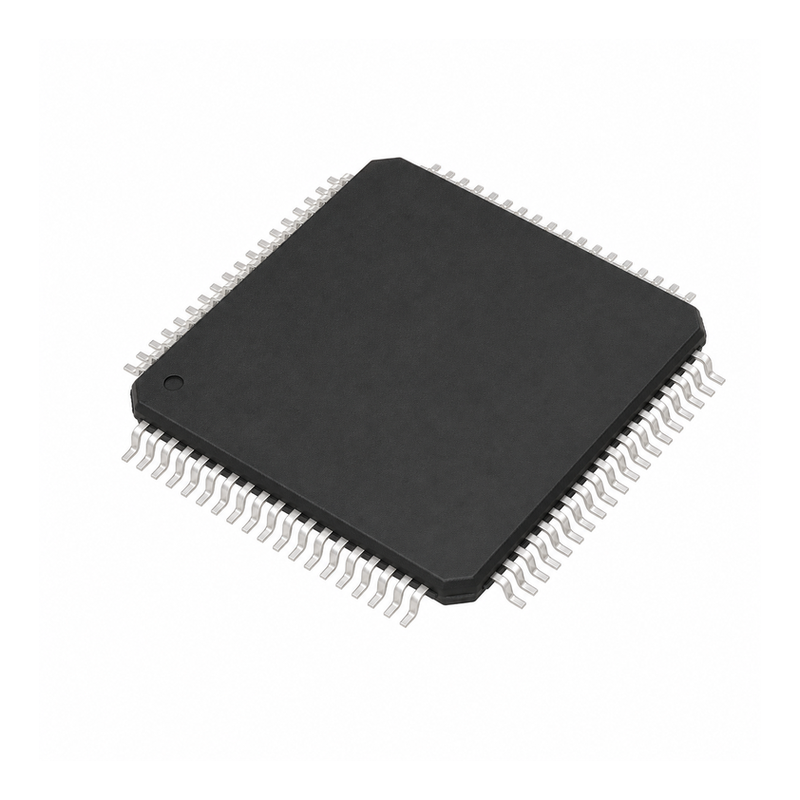
Electronic component part numbers often look like compact strings of letters, numbers, suffixes, slashes, dashes, and special symbols. They are easy to copy. They are also easy to damage.
One missing character can change the package, temperature grade, voltage option, pin arrangement, tolerance, qualification level, or shipping format. A buyer may think two codes describe the same device because the base model looks identical. The manufacturer may treat them as separate orderable products.
That gap creates real purchasing risk. The delivered component may not fit the PCB footprint. Its pinout may differ from the approved design. The electrical limits may fall below the application requirement. A reel code may be confused with a device code. Production then has to stop while purchasing, engineering, quality, and the supplier work out what happened.
The direct result can include rejected incoming material, return handling, extra freight, line rescheduling, rework, and a delayed shipment to the end customer. The deeper cost is loss of control. Once an incorrect part enters the material flow, every document tied to it may need review: the purchase order, receiving record, inspection report, inventory label, work order, and production issue record.
After more than 15 years in electronic component sourcing, I treat part number verification as an engineering-supported purchasing control, not a spelling check. The goal is not only to confirm that a code exists. The goal is to confirm that the code identifies the exact component your design, factory, compliance plan, and delivery format require.
This matters whether you are buying a single replacement device, sourcing integrated circuits and related electronic parts, or sending a multi-brand BOM to an Electronic Component Distributor. A correct purchase begins with a complete and verified manufacturer part number.

What Information Is Hidden in an Electronic Component Part Number?
A manufacturer part number, usually called an MPN, is the manufacturer’s orderable identity for a component. It may look short, but it can carry several layers of product information.
There is no universal part-number grammar across the electronics industry. Each manufacturer builds its own system. One company may place the package code at the end. Another may put the temperature grade before the package. A third may use a separate ordering suffix for tape-and-reel packaging. That is why buyers should never decode a part number by habit alone.
A full MPN may identify the following details:
| Part-number element | What it may identify | Why must purchasing check it |
|---|---|---|
| Manufacturer and series | Brand, device family, product generation | Similar family names can hide different functions or revisions |
| Electrical option | Voltage, current, frequency, power, memory, capacitance, resistance, gain, or interface | The wrong option may operate outside the approved design limits |
| Package code | SOIC, TSSOP, QFN, BGA, LQFP, SOT, TO, through-hole, or another package | Package differences affect PCB footprint, height, assembly, and thermal behavior |
| Pin or channel configuration | Pin count, channel count, pin mapping, polarity, or contact arrangement | A device can share a function but not the same board connection |
| Temperature grade | Commercial, industrial, automotive, military, or a manufacturer-defined range | A lower grade may not meet the operating environment |
| Accuracy or tolerance | Resistor tolerance, voltage reference accuracy, oscillator stability, ADC resolution, or sensor error | Small specification changes can affect calibration and system performance |
| Qualification level | Automotive qualification, enhanced reliability, or application-specific screening | Qualification must match the project requirement, not just the device function |
| Packaging method | Cut tape, tape and reel, tube, tray, bulk, or ammo pack | Packaging affects automated assembly, moisture control, quantity multiples, and handling |
| Material or compliance status | Lead-free finish, RoHS option, halogen-free option, or plating variation | The ordered version must match compliance and assembly requirements |
| Revision or ordering status | Die revision, product change, legacy code, or replacement ordering code | A revision can affect firmware, errata, timing, or approved-vendor status |
The base model is only the starting point. It may tell you the product family, but it may not tell you which orderable variant will arrive.
Take a simple hypothetical example: ABC123 and ABC123-Q1 may belong to the same family, while the “Q1” suffix may indicate an automotive-qualified version. That suffix could be essential for an automotive program. It could also be irrelevant for a commercial product. The point is not that “Q1” always means the same thing across brands. It does not. The point is that a suffix may carry a requirement your project cannot afford to lose.
The same issue appears in passive components. A resistor family may offer the same resistance value in several tolerances, temperature coefficients, power ratings, case sizes, and packaging formats. A capacitor family may use suffixes to separate dielectric, voltage rating, termination finish, reel size, or qualification grade. Connectors may vary by contact count, keying, orientation, plating, latch style, mounting method, and packaging.
Do not ask only, “Is this the same series?” Ask, “Does this exact orderable code match the approved technical and purchasing requirements?”
Common Part Number Mistakes in Electronic Component Purchasing
Most part number errors are not caused by a lack of effort. They happen because information moves through many hands and systems. Engineering exports a BOM. Purchasing cleans the file. A contract manufacturer adds internal codes. A supplier returns a quotation. An ERP system removes punctuation or leading zeros. Each handoff can change the original identity.
A strong process looks for predictable failure points before the purchase order is released.
Missing or Incorrect Suffixes
Suffix errors are among the most serious because the base part number often still looks correct. A search result may return the same product family, and a quick visual review may not reveal the difference.
A missing suffix can change package type, pin count, reel format, temperature range, lead finish, quality grade, or qualification status. It may also separate a standard product from a moisture-sensitive, automotive, or extended-temperature version.
Buyers should be careful when a BOM line ends at the base model while the manufacturer’s ordering table shows several valid suffix combinations. In that situation, the BOM is incomplete even when the base code is real.
The safest action is to compare the BOM entry with the manufacturer’s ordering information and the approved datasheet revision. If engineering has approved several orderable suffixes, list them as approved manufacturer parts rather than letting the supplier choose an unspecified version.
Typing and Formatting Errors
Part numbers contain characters that are easy to confuse. The number 0 can look like the letter O. The number 1 can look like I or lowercase l. A capital B may be mistaken for 8. Dashes, slashes, spaces, periods, and leading zeros may disappear during manual entry.
Formatting errors deserve attention even when a search engine appears to “understand” the intended code. Search engines often normalize punctuation or suggest a popular match. A manufacturer’s ordering system may not. More importantly, the suggested result can be a nearby but different device.
Copy the MPN from a controlled source whenever possible. Avoid reading it from a low-resolution image, handwritten note, cropped screenshot, or faded package label. When manual entry is unavoidable, use a second-person check or a system rule that compares the entered code with an approved parts database.
Spreadsheet cleanup can also create errors. Automatic number formatting may remove leading zeros, convert long codes to scientific notation, or change date-like strings. Import the MPN column as text before editing the BOM.
Using Generic Part Numbers
A generic description is useful for engineering discussion but weak for purchasing control. “10 kΩ, 1%, 0603 resistor” describes a requirement. It does not identify one approved manufacturer part.
Many components that match a short description still differ in voltage rating, power derating, temperature coefficient, pulse capability, termination, sulfur resistance, qualification, and packaging. The same problem appears with phrases such as “5 V regulator,” “32 MHz crystal,” “USB-C connector,” or “N-channel MOSFET.”
A procurement-ready BOM should include the manufacturer, full MPN, quantity, package or footprint, and any approved alternatives. When the design intentionally allows commodity sourcing, engineering should define the minimum technical limits and an approved manufacturer list. Purchasing should not create those limits during quotation.
Generic lines slow the RFQ because every responsible supplier must ask questions. An irresponsible source may simply quote the nearest match.
Confusing Similar Manufacturer Part Numbers
Different manufacturers can use similar names, shared industry roots, or familiar number patterns. That similarity does not prove interchangeability.
Two devices may have the same broad function and package outline but different pinouts, enable logic, threshold levels, timing, thermal limits, startup behavior, or test conditions. A second-source part may be designed as a replacement yet still require review of errata, application notes, or layout guidance.
Brand confusion can also happen when a distributor stock record shows an internal SKU more clearly than the original manufacturer part number. Your purchase order should identify the original manufacturer and MPN as separate fields. Do not rely on a supplier’s house code as the only identity.
When cross-brand replacement is allowed, maintain an approved manufacturer list or approved vendor list linked to the BOM revision. This gives purchasing a controlled choice without turning every shortage into a new engineering debate.
Using Outdated or Obsolete Part Numbers
A part number can remain in an old BOM long after the manufacturer changes its status. It may become Not Recommended for New Designs, reach End of Life, move to Last Time Buy, become obsolete, or receive a replacement order code.
Lifecycle wording differs by manufacturer, so the label alone is not enough. Check the date of the status, the last-order date, the last-ship date, and any product discontinuance notice. Confirm whether the proposed replacement is a direct order-code change, a functionally similar device, or a redesign candidate.
Old maintenance BOMs need special care. They often contain legacy components that cannot be changed without equipment validation. A current product page may point to a newer part, yet the newer part may not be drop-in compatible with the installed board.
Treat lifecycle review as part of verification, not as a separate activity after the order is placed.
The Risks of Ordering Components Without Proper Verification
Ordering from a product name, a marketplace title, or the first search result may feel fast. It is not a controlled purchasing method. Product descriptions may be shortened, copied from another seller, or attached to a related variant. The exact MPN must lead the decision.
These risks often overlap. One incorrect suffix can create an electrical problem, a PCB problem, a compliance problem, and a production delay at the same time.
| Risk area | What can go wrong | What should be verified before purchase |
|---|---|---|
| Electrical compatibility | Voltage, current, frequency, power, logic level, accuracy, timing, or protection limits do not match | Full datasheet limits, test conditions, derating, and application requirements |
| Package and PCB compatibility | Wrong body size, lead pitch, pin count, height, thermal pad, or pin map | Package drawing, land pattern, pinout, orientation, and assembly process |
| Reliability and safety | Temperature or qualification grade is below the project requirement | Operating range, qualification status, reliability data, and approved use case |
| Compliance | Material declaration or project-required standard is missing or applies to another variant | Exact MPN on the declaration, document revision, scope, and customer specification |
| Counterfeit and traceability | Label, marking, date code, lot code, or paperwork does not match the ordered identity | Source history, chain of custody, packaging, markings, documents, and inspection results |
| Financial and production | Material is rejected, returned, reworked, or held while the line waits | Verified MPN, quantity, packaging, lifecycle, lead time, and receiving criteria |
Electrical Compatibility Risks
A component can have the right function and still be electrically wrong. A regulator may have a different output option. An oscillator may use another frequency stability grade. A MOSFET may meet the voltage rating but have unsuitable gate charge or on-resistance at the actual drive voltage. An ADC may share the resolution but differ in input range, reference architecture, speed, or interface timing.
Datasheet headlines are not enough. Check the conditions behind the headline value. Maximum ratings do not describe normal operating performance. Typical values do not guarantee production limits. A parameter measured at 25°C may shift across the full temperature range.
Verification should focus on the design-critical parameters identified by engineering. Purchasing does not need to redesign the circuit, but it does need a clear set of non-negotiable requirements.
Package and PCB Compatibility Risks
Package names can hide physical variation. “QFN-32” does not always mean one universal body size, pitch, exposed-pad shape, or pin map. “SOIC-8” may differ in body width. BGA devices with the same ball count can use different ball maps and pitches.
The correct check uses the manufacturer’s package drawing and pin assignment for the exact MPN. Compare body dimensions, lead pitch, standoff, thermal pad, pin-one indicator, and recommended land pattern with the PCB footprint.
Packaging method matters too. Tube, tray, and tape-and-reel versions may use different ordering suffixes. A factory set up for automated placement may reject loose pieces or cut tape that lacks enough leader and trailer. The silicon may be correct while the delivery format is unusable.
Reliability and Safety Risks
Temperature grade is not a marketing detail. It defines the range over which the manufacturer specifies the component. Qualification grade can also indicate a different validation path, change-control expectation, or reliability target.
For automotive electronics applications, a buyer may need an exact automotive-qualified order code rather than a commercial relative from the same family. AEC-Q100, for example, defines stress-test qualification requirements for packaged integrated circuits; it does not mean every part in a product family is automatically qualified. The qualification must be tied to the exact device and supporting manufacturer records.
Industrial control, medical equipment, communications infrastructure, and aerospace systems also demand careful review. The correct grade depends on the project specification and risk analysis. Do not upgrade or downgrade a part by assumption.
Compliance Risks
Part number verification and compliance verification are linked, but they are not the same task.
The European Commission’s RoHS guidance explains that EU rules restrict specified hazardous substances in electrical and electronic equipment. REACH obligations address chemical risks more broadly, and buyers often review the current ECHA Candidate List of substances of very high concern when requesting supplier declarations.
A document marked “RoHS compliant” is only useful when you can connect it to the exact manufacturer, part number, material declaration, and document revision. A family-level statement may not cover every plating, termination, package, or legacy order code. The same rule applies to REACH declarations and customer-specific restricted-substance lists.
Qualification standards need the same discipline. AEC-Q100 status, for example, should be confirmed for the exact automotive component. IPC requirements may apply to fabrication, assembly, workmanship, documentation, or traceability, depending on the contract. The IPC standards overview is a useful starting point, but your purchase order should name the specific standard and revision your project requires.
Never assume that a distributor, manufacturer, or component holds a certification that has not been documented.
Counterfeit and Traceability Risks
An incomplete or incorrect MPN weakens traceability because it breaks the link between the purchase order, manufacturer documentation, label, package marking, and received material.
A counterfeit check should not depend on one sign. Buyers and inspectors may compare the manufacturer logo, printed part number, barcode, lot code, date code, package description, datasheet description, and physical appearance. NIST supply-chain guidance identifies mismatched lot and date codes, missing or inconsistent manufacturer labels, barcode-to-part-number mismatches, and conflicts between packaging descriptions and datasheets as warning signs for delivered components.
That does not mean every mismatch proves a counterfeit. Manufacturers change label formats, subcontract assembly, revise markings, and use region-specific packaging. A mismatch means the material needs explanation and evidence before release.
Part-number accuracy gives quality teams a stable reference for that investigation.
Financial and Production Risks
The cost of a wrong component extends beyond the unit itself. Receiving may place the shipment on hold. Engineering may need to compare datasheets. Production planning may reshuffle jobs. The supplier may need to arrange a return. Replacement material may require a new lead time and another inspection cycle.
If the mistake reaches the line, the effect grows. Operators may load the wrong reel. Pick-and-place programs may need correction. Boards may require rework or scrap. Finished goods can miss shipment dates.
This is why part number verification should happen before quotation approval and again before purchase order release. A few careful checks at the front of the process protect many expensive steps later.
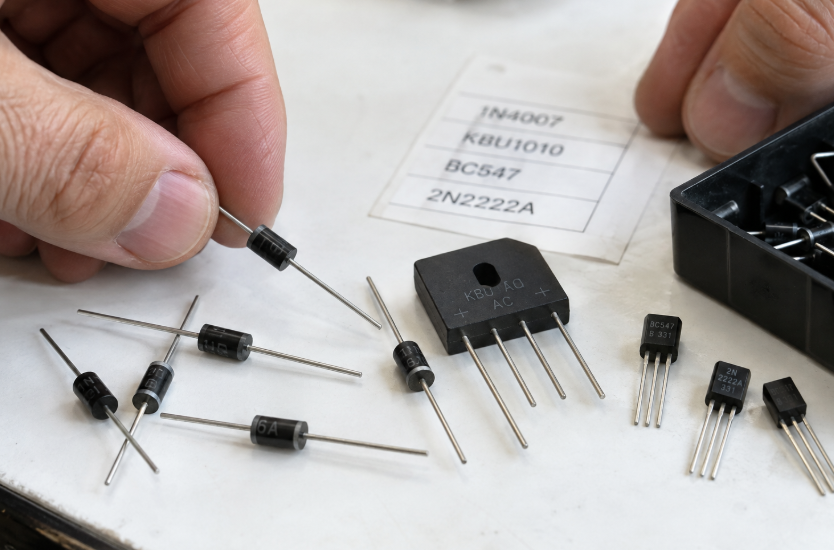
How to Verify an Electronic Component Part Number Before Purchasing
A good verification process is simple enough to repeat and strict enough to stop weak information. The seven steps below work for single-part RFQs and full BOM sourcing.
The order matters. Start with identity, then move into technical fit, logistics, lifecycle, and documentation. Do not jump to stock availability before you know which exact item you are trying to source.
Step 1: Confirm the Manufacturer
Write the manufacturer name in its own BOM field. Do not leave it buried in the description.
Check whether the brand name is current, whether a merger or acquisition changed the product-page location, and whether the part was transferred to another manufacturer. Some legacy parts keep familiar markings after a corporate change, while others receive a new ordering code.
Watch for manufacturer names that are actually distributor names, internal customer codes, or abbreviations. “TI,” “ADI,” and similar short forms may be clear to an experienced buyer, but a controlled BOM should use the full approved manufacturer name.
If the design accepts multiple manufacturers, list each approved MPN separately. “Any equivalent brand” is not an engineering approval.
Step 2: Check the Complete Manufacturer Part Number
Compare every character in the BOM with the manufacturer’s official ordering information. Include prefixes, suffixes, dashes, slashes, spaces, and leading zeros.
Use a character-by-character review for long or similar codes. For a high-volume BOM, automated normalization can help identify obvious formatting differences, but the system should not silently delete characters. It should flag them for review.
Separate the manufacturer part number from supplier SKUs, customer material numbers, and internal ERP numbers. Each code has a purpose. Only the MPN identifies the manufacturer’s orderable product.
When the BOM contains a shortened family code, stop the RFQ and request clarification. A fast quote against an incomplete identity creates false progress. An Electronic Component Distributor should return a clarification request rather than quote a guessed variant.
Step 3: Compare the Part Number with the Official Datasheet
Open the official manufacturer datasheet or product page for the exact MPN. Avoid relying only on third-party descriptions because they can be old, shortened, or mapped to the wrong variant.
Find the ordering-information table. Confirm that the full code is valid and see how each suffix is defined. Then check the package drawing, pinout, electrical tables, operating conditions, and revision date.
Datasheets can change. Save or record the revision used for approval when the project requires configuration control. If a manufacturer posts a product-change notice or revised datasheet, engineering may need to determine whether the change affects the approved design.
A distributor’s product page can support discovery, but the manufacturer’s current technical documentation should remain the primary reference for design verification.
Step 4: Verify Key Technical Parameters
Build a short list of parameters that decide whether the part is acceptable. The list will differ by component type.
Semiconductor checks often include supply voltage, current, power dissipation, frequency, interface, logic thresholds, timing, memory size, channel count, protection features, and operating temperature. Resistor review should cover resistance, tolerance, power rating, temperature coefficient, voltage rating, package size, and special pulse or sulfur requirements. Capacitor verification should include capacitance, voltage, dielectric, tolerance, temperature behavior, ESR, package, and termination.
Crystals and oscillators need frequency, load capacitance, stability, tolerance, drive level, supply voltage, output type, and temperature range. Connectors require contact count, pitch, orientation, keying, current rating, voltage rating, plating, mounting, mating part, and mechanical life.
Do not compare only nominal values. Review minimum and maximum limits under the application’s test conditions.
Step 5: Confirm Package and Packaging Type
Package and packaging are different.
The package is the component’s physical form: TSSOP, QFN, BGA, LQFP, SOT-23, TO-220, 0603, radial, axial, and many others. The packaging type is how the supplier delivers it: tape and reel, tray, tube, cut tape, bulk, or another shipping format.
Confirm the package code, body dimensions, pitch, pin count, thermal pad, moisture-sensitivity requirements, and footprint. Then confirm the delivery format, reel size, minimum pack quantity, orientation, leader and trailer needs, and whether dry packing or a humidity indicator card is required.
This step prevents a common purchasing failure: ordering the right device in a format the assembly line cannot use.
Step 6: Check Lifecycle and Availability
Confirm whether the exact MPN is Active, NRND, EOL, Last Time Buy, or Obsolete. Record the source and date of the lifecycle information because status changes.
Availability must also match the exact suffix. A search may show stock for the family while the required temperature grade or reel code has no supply. Ask the supplier to confirm the manufacturer, full MPN, quantity, packaging, location or supply route, and realistic lead time.
When a part is near end of life, involve engineering and planning early. The team may choose a last-time buy, redesign, controlled alternate, or maintenance stock strategy. Purchasing should not wait until the final available lot disappears.
Step 7: Review Documentation and Traceability Requirements
Define required documents before the order. Common requests include the datasheet, Certificate of Conformance, RoHS declaration, REACH declaration, test report, packing list, traceability statement, country of origin, lot code, and date code.
Not every order needs every document. The requirement should match the project risk, customer contract, regulatory scope, and source type.
Check whether the document must name the exact MPN and lot. Confirm whether mixed date codes are allowed. Decide whether the customer needs photographs of labels and packaging before shipment. For sensitive parts, define inspection or testing expectations before the supplier ships, not after a problem appears.
A practical release checklist can look like this:
| Verification gate | Buyer’s question | Evidence to retain |
|---|---|---|
| Identity | Is the manufacturer and full MPN exact? | Approved BOM line, manufacturer ordering table |
| Technical fit | Do critical ratings and functions meet the design? | Datasheet revision, engineering approval |
| Physical fit | Does package, pinout, and footprint match? | Package drawing, PCB footprint reference |
| Delivery format | Can the factory receive and place the material? | Packaging code, reel/tray/tube requirement |
| Lifecycle | Is the part active and supportable for the project horizon? | Manufacturer status, PCN/PDN when applicable |
| Compliance | Do declarations cover the exact ordered item? | RoHS/REACH or customer-required documents |
| Traceability | Can the shipment be tied to source, lot, and labels? | CoC, packing records, label photos, inspection record |
What to Do When the Original Part Number Is Unavailable
A shortage or obsolete status does not make the nearest search result an acceptable substitute. Replacement work begins with the original function and design limits, then moves outward to possible alternatives.
First, decide what “unavailable” means. The part may be temporarily out of stock, on allocation, limited to a long factory lead time, discontinued, blocked by a package shortage, or available only through a source that does not meet your risk policy. Each situation supports a different response.
A brokered lot of the original MPN may preserve the design but increase traceability and inspection needs. Switching to a new manufacturer order code may require little technical change. Cross-brand alternatives can need a full engineering review. In some situations, a redesigned circuit is the safest long-term answer for a dead component, even though it takes more work now.
Compare potential alternatives across these areas:
Function and Application
The alternative must perform the same required job in the actual circuit. Product-category labels are too broad. Two motor drivers, sensors, transceivers, or regulators may target different topologies and control methods.
Review startup behavior, fault response, default states, protection features, diagnostic outputs, and application limits. A part can match headline ratings yet behave differently during power sequencing or a fault.
Electrical Ratings
Compare operating voltage, absolute maximum ratings, continuous and peak current, power dissipation, frequency, gain, noise, timing, logic levels, accuracy, and derating.
Aim for equal or better performance where it matters, but do not assume “higher” is always safer. A device with a different gate charge, capacitance, bandwidth, or current limit can change system behavior.
Pin Configuration
A pin-compatible claim must be verified pin by pin. Check power pins, grounds, no-connect pins, exposed pads, multifunction pins, enable polarity, and internal pull-ups or pull-downs.
The same package with the same pin count can still use a different map. Even a drop-in replacement may need firmware or resistor changes.
Package Dimensions
Compare the full mechanical drawing, not only the package family name. Body width, lead pitch, height, thermal pad, ball pitch, and coplanarity can affect assembly.
For power devices, thermal resistance and mounting area may matter as much as outline dimensions. A physically smaller package may fit the pads but run too hot.
Temperature Range
Match the specified operating and storage ranges to the real environment. Consider ambient temperature, self-heating, enclosure conditions, airflow, and board location.
Automotive, industrial, medical, communications, and aerospace programs may impose qualification or change-control requirements beyond temperature alone.
Speed or Frequency
Check clock rate, bandwidth, propagation delay, rise and fall time, data rate, oscillator stability, and interface timing. A slower part can fail performance. A much faster part can create signal-integrity or electromagnetic compatibility issues.
Tolerance and Accuracy
Review guaranteed limits, drift, linearity, offset, reference error, temperature coefficient, and calibration impact. Typical values should not replace guaranteed specifications.
For passives, tolerance is only one part of accuracy over life. Voltage coefficient, aging, temperature behavior, and bias effects may dominate in the application.
Qualification and Compliance
Confirm RoHS, REACH, automotive qualification, flammability, customer specifications, and any industry requirements tied to the project. The alternative’s documents must cover its exact MPN.
Do not transfer compliance evidence from the original part to the substitute. They are separate products.
Firmware or Software Compatibility
Microcontrollers, processors, memory, programmable logic, sensors, codecs, and communications devices may require code changes. Compare register maps, device IDs, boot behavior, memory timing, drivers, development tools, and errata.
A hardware-compatible part can still fail because the software expects another revision or device response.
Final approval belongs with the engineering team, especially in automotive electronics, industrial control, medical equipment, telecommunications, and other high-reliability applications. Purchasing and the distributor can gather data, identify candidates, and highlight gaps. They should not declare a substitute approved without the customer’s technical authority.

How a Reliable Component Distributor Supports Part Number Verification
A reliable Electronic Component Distributor does more than repeat the code from an RFQ into a quotation. The distributor should challenge incomplete information, separate confirmed facts from assumptions, and keep the exact MPN connected to every supply detail.
From a distributor’s side, I expect a disciplined review to cover the following work.
Review the Submitted Part Number and Quantity
The first task is to check whether the MPN appears complete and valid. Quantity matters because the requested amount may conflict with factory packaging, reel multiples, minimum order quantities, or available lot sizes.
A careful distributor flags uncertainty before quoting. Examples include a missing suffix, a quantity that suggests the buyer may need a full reel, or a code that maps to several package options.
Confirm Manufacturer, Package, Parameters, and Lifecycle
The distributor should compare the requested identity with manufacturer information, then confirm the quoted material matches the required package and key specifications.
This review does not replace engineering approval. It reduces avoidable sourcing errors and gives the buyer a clearer quotation.
Duolink Electronics describes its role as an independent purchasing partner that supports manufacturer part-number review, packaging requirements, lifecycle checks, documentation, and possible alternatives when the original item is unavailable.
Confirm Stock, Lead Time, and Packaging Requirements
A stock statement should identify the exact MPN, available quantity, packaging type, and realistic delivery condition. Family-level stock is not enough.
The distributor should also tell the buyer when availability depends on a specific lot, warehouse, supply route, or lead time. Clear limits are more useful than a fast but vague promise.
Check Labels, Markings, Appearance, and Packaging Information
Before shipment, the inspection team can compare labels, manufacturer markings, package condition, date codes, lot codes, and outer packaging with the order and available documentation.
Visual inspection cannot prove every technical characteristic or guarantee authenticity by itself. It is one layer in a risk-based control process. Higher-risk sources or applications may require deeper inspection, testing, or third-party laboratory work.
Duolink’s published sourcing process includes checks for packaging, labels, markings, appearance, lifecycle status, and requested documentation before delivery.
Support Obsolete, Shortage, and Long-Lead-Time Sourcing
When the original MPN is difficult to obtain, a broad supply network can help locate remaining stock or identify supply options. The distributor should disclose what is known about source, condition, packaging, date code, documents, and inspection possibilities.
The buyer can then compare the risk of secondary-market sourcing with the cost and schedule of redesign or waiting for new production.
Provide Possible Alternatives for Customer Evaluation
A distributor can screen possible alternatives by function, package, key ratings, and lifecycle. That saves the buyer time, but the output should be labeled as a candidate list, not an approval list.
A useful alternative proposal states the known matches, the known differences, and the points engineering still needs to confirm.
Support Single-Part RFQs and Complete BOM Purchasing
Part-number verification should scale. A buyer may need one obsolete IC for maintenance or hundreds of BOM lines for production. In both cases, the method remains the same: establish identity, confirm technical and physical fit, review lifecycle, define documents, and connect the quotation to the exact orderable code.
For a large BOM, an Electronic Component Distributor should return a clean line-by-line quotation that preserves manufacturer, MPN, quantity, packaging, availability, lead time, and any exceptions. Substitutions should never be hidden inside a description field.
Part Number Verification Protects the Whole Purchasing Process
The strongest purchasing teams do not treat part numbers as simple text. They treat them as controlled technical identities.
A complete MPN connects the design requirement to the datasheet, package drawing, compliance record, supplier quotation, purchase order, incoming inspection, inventory label, and production line. When that identity is accurate, every team can work from the same reference. When it is incomplete, uncertainty spreads through the process.
Before you buy, confirm the manufacturer, full part number, electrical limits, package, packaging format, lifecycle status, compliance needs, and traceability documents. When the original part is unavailable, compare alternatives systematically and ask engineering to approve the final choice.
Duolink Electronics is an independent Electronic Component Distributor supplying integrated circuits, semiconductors, passive components, connectors, and other electronic parts. The team supports BOM purchasing, part number lookup and verification, stock checks, and sourcing for obsolete, shortage, and hard-to-find components. These services are designed to help overseas buyers make the procurement process clearer and more controlled.
When you have a component requirement, send the complete MPN, quantity, target delivery date, packaging preference, and required documents through the component sourcing contact page. A better RFQ gives the supplier a better chance to verify the correct material before the order moves forward.
Frequently Asked Questions
Why Is the Full Manufacturer Part Number Important?
The full manufacturer part number identifies the exact component version. A missing suffix may change the package, temperature grade, electrical rating, qualification level, or packaging method.
Can Two Components with the Same Base Part Number Be Interchangeable?
Not always. Components with the same base number may belong to the same product family but have different packages, pin configurations, temperature ranges, or compliance grades. Always compare the complete part numbers and official datasheets.
What Should I Do If a Part Number Is Obsolete?
Check whether the manufacturer has provided a replacement part. Any alternative should be compared for function, electrical ratings, pinout, package, temperature range, compliance, and software compatibility before engineering approval.
Who Should Approve an Alternative Component?
The customer’s engineering team should approve the final alternative. A reliable Electronic Component Distributor can help identify possible replacements and compare specifications, but technical approval should remain with the authorized engineer.


 English
  German
  Spanish
  French
  Chinese
  Italian